
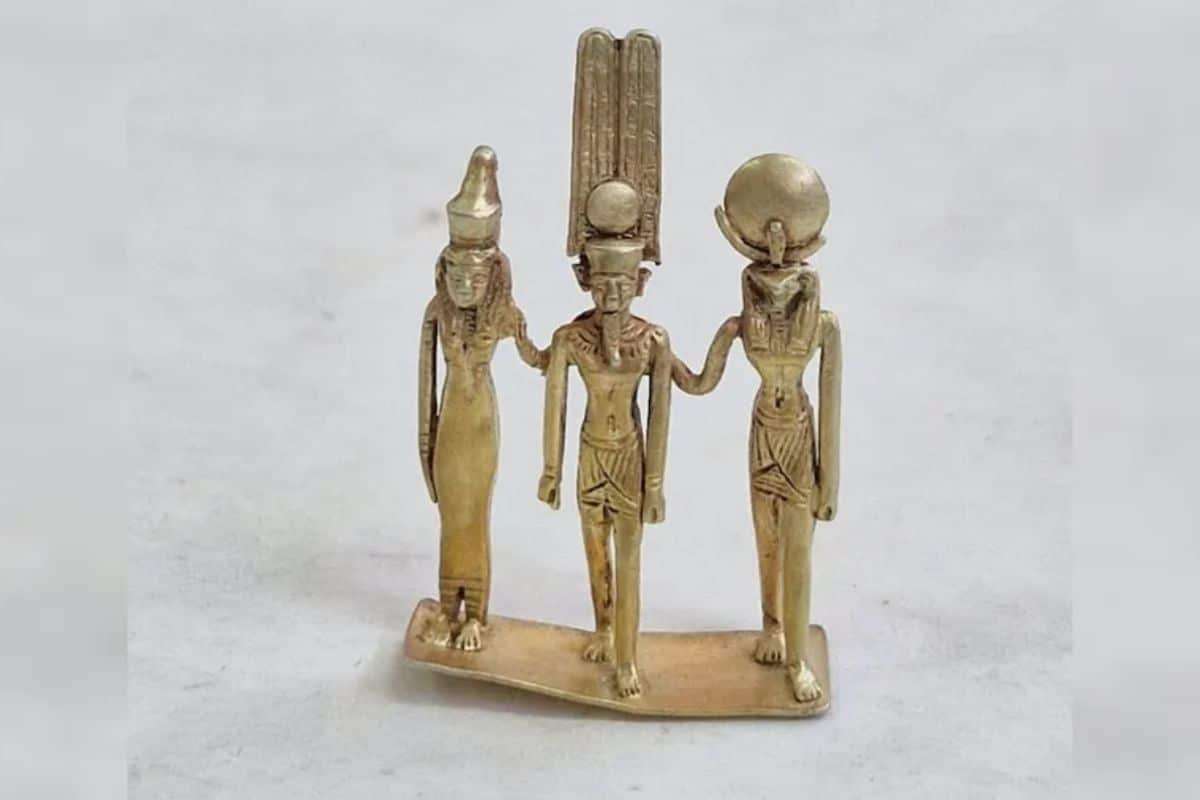
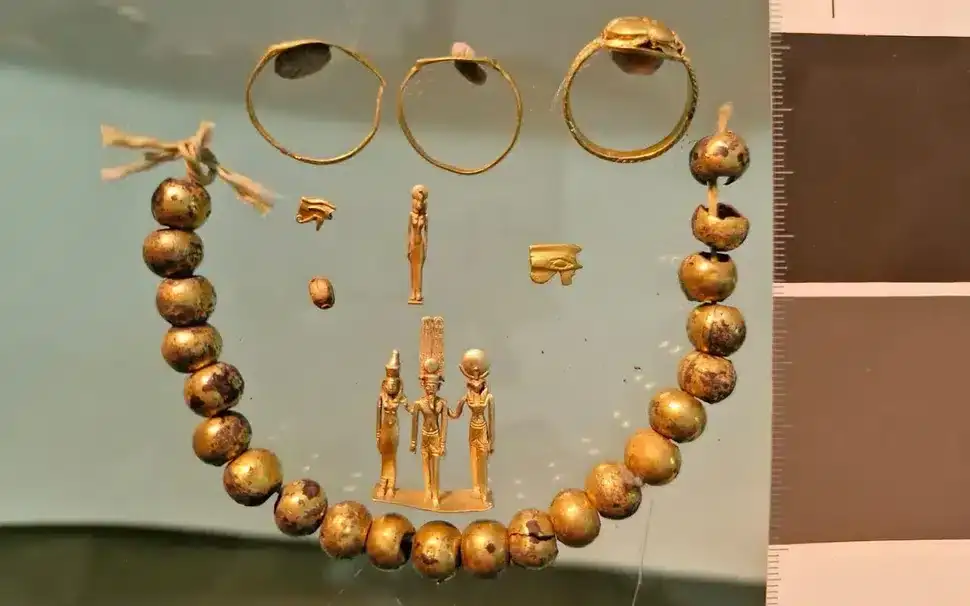
Researchers have uncovered a remarkable collection of gold jewelry and relics dating back approximately 2,600 years at Luxor’s Karnak Temple. Hidden within a ceramic vessel, the discovery includes an uncommon figurine portraying three Egyptian gods, which might have been used as a protective talisman. This find offers fresh perspectives on Egyptian religious customs and sparks new inquiries about the reasons behind concealing such valuable items.
An Enigmatic Find in the Heart of Karnak
Karnak Temple, a pivotal ancient Egyptian religious site, has been extensively investigated by archaeologists over the years. The recently uncovered objects were located in the temple’s northwestern area, historically thought to have served administrative and storage functions.
The haul contains gold beads, amulets, and a delicate gold figurine representing the Theban Triad — the gods Amun, Mut, and Khonsu — all intimately tied to Karnak’s spiritual heritage. These gods depicted a divine family unit: Amun, the principal god of Thebes; Mut, his consort and maternal goddess; and Khonsu, their offspring and moon deity.

Co-director of the excavation, Abdelghaffar Wagdy, suggested that the figurine was likely worn as an amulet to invoke divine safeguarding and blessings. “Featuring the Theban Triad, this amulet likely symbolized the wearer’s devotion to Amun, Mut, and Khonsu,” he remarked.
Emblems of Faith and Worship
The treasure trove also includes multiple wadjet amulets, commonly called the Eye of Horus. This emblem was believed to confer healing and renewal. In ancient Egypt, such charms were worn to protect against malevolent forces and promote spiritual health.
Egyptologist Shelby Justl explains that these items served purposes beyond decoration. “An amulet of this design was thought to shield the wearer and impart regenerative powers,” she said.
Since the artifacts were found within the temple precinct rather than a burial site, scholars think they might have been votive offerings presented to the gods by worshippers.
What Motivated the Burial of these Valuable Items?
Several hypotheses have been proposed regarding the motives behind hiding this treasure. Peter Brand, a historian affiliated with the University of Memphis, believes the gold artifacts were concealed to protect them during times of instability. “This collection resembles a rare kind of stash where precious items were deliberately buried for unknown reasons,” he commented.
Jewelry expert Jack Ogden points out that the gold pieces appear delicate and might not have been intended for everyday use. “From the images, the goldwork seems fragile, suggesting a primarily funerary purpose,” he noted.
Ogden further speculates the treasure could have originated from a tomb robbery in antiquity, hidden but never reclaimed. “One plausible theory is that an ancient grave robber concealed these valuables and was unable to retrieve them,” he proposed.
Exceptional Examples of Ancient Egyptian Artistry
The detailed craftsmanship and symbolic nature of these gold amulets highlight the impressive skill of ancient Egyptian artisans. The representations of deities and sacred motifs provide key insights into the religious beliefs that pervaded life in Thebes.
Justl emphasizes the significance of the Amun-Mut-Khonsu triad for Karnak. “This temple complex is dedicated to the worship of these three gods,” she said, underscoring the spiritual purpose these artifacts likely held within the temple community.
- Categories:
- Science











0 comments
Sign in to Comment