

In Norway, the steady melting of glaciers is unveiling a trove of ancient relics that have been locked in ice for hundreds to thousands of years. These remarkable findings, ranging from perfectly preserved arrows and hunting implements to surprising artifacts like a wooden whisk, are shedding light on the lifestyles, commerce, and survival strategies of bygone cultures.
Artifacts Frozen in Time
The diminishing glaciers across Norway are revealing incredible historical treasures previously encased in ice, some dating back millennia.
While similar occurrences happen elsewhere, Norway leads the world in glacial archaeological discoveries, contributing more than half of the known finds.

The project Secrets of the Ice, co-headed by archaeologist Espen Finstad, has recovered over 4,500 artifacts over the last twenty years.
These uncovered objects reflect how ancient people engaged in hunting, travel, and trade across Norway’s mountainous terrain, stretching from the Stone Age through the Viking and Medieval periods. The ice has preserved delicate materials such as wood, textiles, and leather that would typically have deteriorated.
Ancient Mountain Trade and Hunting Paths
Many recovered items suggest that Norway’s highland paths once functioned as vital trade corridors. Researchers believe these glacial crossings were frequently used for moving goods between coastal and inland settlements for millennia.
A common discovery at these frozen sites is hunting arrows, essential for reindeer hunts. During the Iron Age and Medieval times, hunting reindeer—animals that traveled to ice patches to avoid summer pests—was a major activity.
Some arrows are astonishingly intact, with their feather fletching still attached, an extraordinary preservation state rarely seen in archaeology.
Unexpected Finds in the 2024 Excavation Season
The summer of 2024 proved to be exceptionally fruitful for Norwegian glacial archaeology. Rapid ice melt late in the season led to numerous new discoveries. A group of about seven archaeologists investigated nearly a dozen locations across mountain ranges.
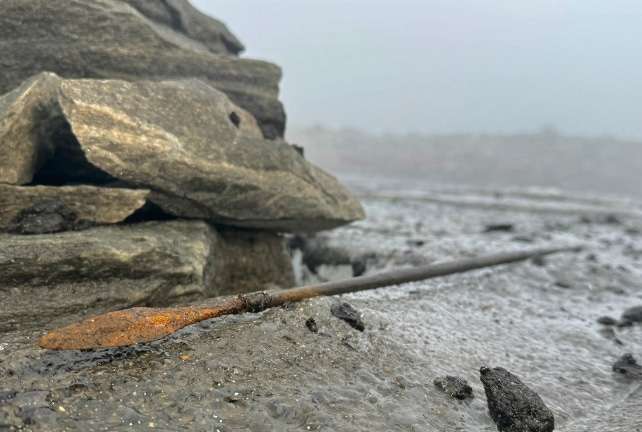
A highlight was the recovery of a 1,300-year-old arrow found resting directly on the ice surface, rather than embedded beneath it, an exceptionally rare find described as a “gift” by lead archaeologist Finstad.
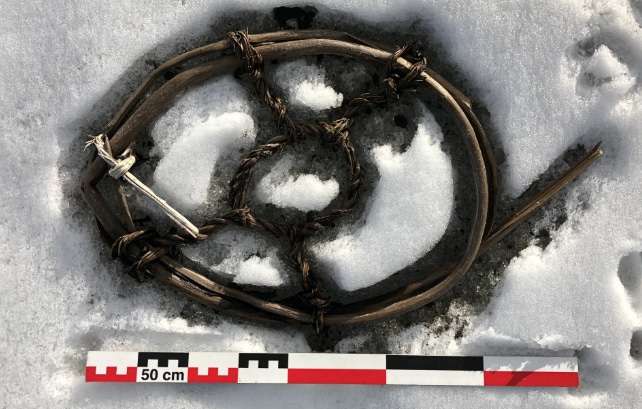
Aside from arrows, the team uncovered curious objects that remain unidentified, including a small wooden item with an unknown function.
The Enigma of Unidentified Artifacts
While many items found are well understood, several artifacts discovered at Lendbreen in 2024 puzzle researchers. These small wooden, textile, and leather pieces do not yet have definitive identifications.
Originating perhaps from the Viking Age or even earlier, they offer an uncommon window into everyday objects that would ordinarily have decayed beyond recognition.
Interesting finds include a leather fragment with sewn seams, possibly part of a shoe, along with a medieval horseshoe, illustrating continued mountain travel and commerce.
Other items defy classification, such as a whisk-shaped wooden tool unmatched by known historical artifacts.
Future Directions for Glacial Archaeological Research
Though the 2024 fieldwork season was highly productive, unexpected heavy snowfall ended excavations early, leaving several promising sites only partially explored. Archaeologists plan to return next summer to continue their work at these locations.
Accelerating glacier melt due to climate change increases the urgency of this research. While melting ice reveals invaluable historical treasures, it also threatens their preservation, as artifacts once safeguarded by ice are now vulnerable to decay and loss.
- Categories:
- Science












0 comments
Sign in to Comment