
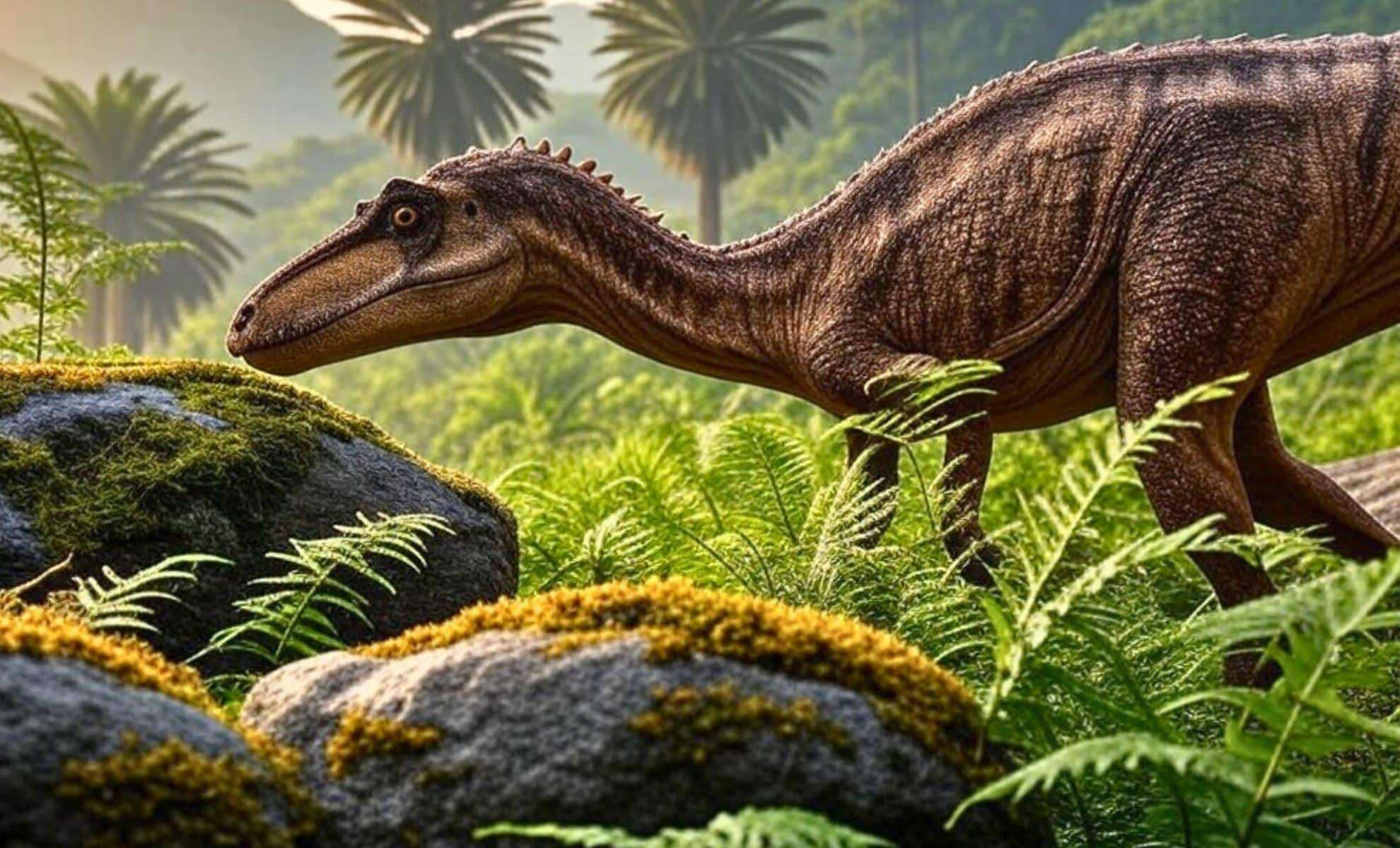
Scientists have uncovered Archaeocursor asiaticus, an Early Jurassic herbivore that reshapes our understanding of dinosaur evolution and dispersal. Found in southwestern China, this species extends Asia’s earliest ornithischian fossil record and suggests intricate migration routes dating back nearly 193 million years.
An Ancient Addition to Dinosaur Lineage
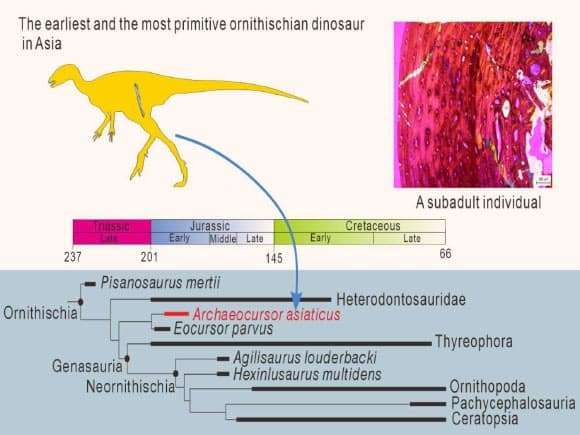
At around 1 meter (3.3 feet) long, Archaeocursor asiaticus represents an early member of the Ornithischia group, which later included stegosaurs, ankylosaurs, and ceratopsians. This specimen, the earliest known ornithischian from Asia, originates from the Early Jurassic period approximately 193 million years ago.
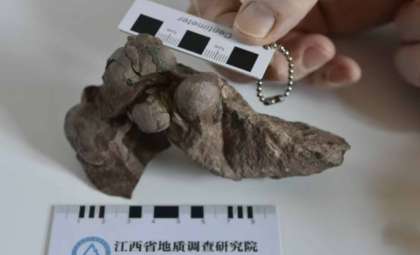
The fossil, primarily a well-preserved left femur, was excavated from the Ziliujing Formation in Chongqing. The bone’s characteristics provide valuable data about ornithischian evolution and their ancient geographic dispersal.

Connections to the Southern Supercontinent Gondwana
Anatomical traits of Archaeocursor asiaticus bear resemblance to Eocursor parvus from Gondwana, highlighting a probable dinosaur migration from Gondwana to Laurasia during the Early Jurassic. This migration predates the presence of armored dinosaurs in East Asia and suggests a distinct dispersal event for these early plant-eaters.
Researchers propose that Archaeocursor asiaticus is part of a widespread clade of ornithischians that colonized several continents independently from other dinosaur groups. This marks an important revision to dinosaur biogeography in the Early Jurassic.
“It points to an earlier dispersal event of Early Jurassic ornithischian dinosaurs from Gondwana to Laurasia, including East Asia, which appears to be independent of, and possibly earlier than, the dispersal of armored dinosaurs,” the study authors state.
Highlights from the research include:
- Discovery of a separate ornithischian migration pathway into East Asia during the Pliensbachian age.
- Evidence of evolutionary links bridging Gondwanan and Laurasian species, implying a widespread lineage of primordial dinosaurs.
- The suggestion of a globally distributed clade situated phylogenetically between Heterodontosauridae and Thyreophora.
Incomplete Fossils, Ambitious Implications
While the discovery is significant, the researchers note that conclusions are based on fragmentary evidence—the single femur serves as the primary fossil reference. This leaves potential for future findings to adjust interpretations of early dinosaur relationships and migration patterns.
The proposed cosmopolitan group of early ornithischians represents a major departure from previous assumptions about dinosaur evolution. Additional fossil discoveries are essential to confirm these evolutionary links and the proposed global dispersal routes.
The find of Archaeocursor asiaticus enhances Asia’s fossil record and provides new perspectives on dinosaur biogeography in the Early Jurassic. It stimulates further questions about how ancient ecosystems and environmental factors influenced early dinosaur adaptations and migrations.




0 comments
Sign in to Comment