
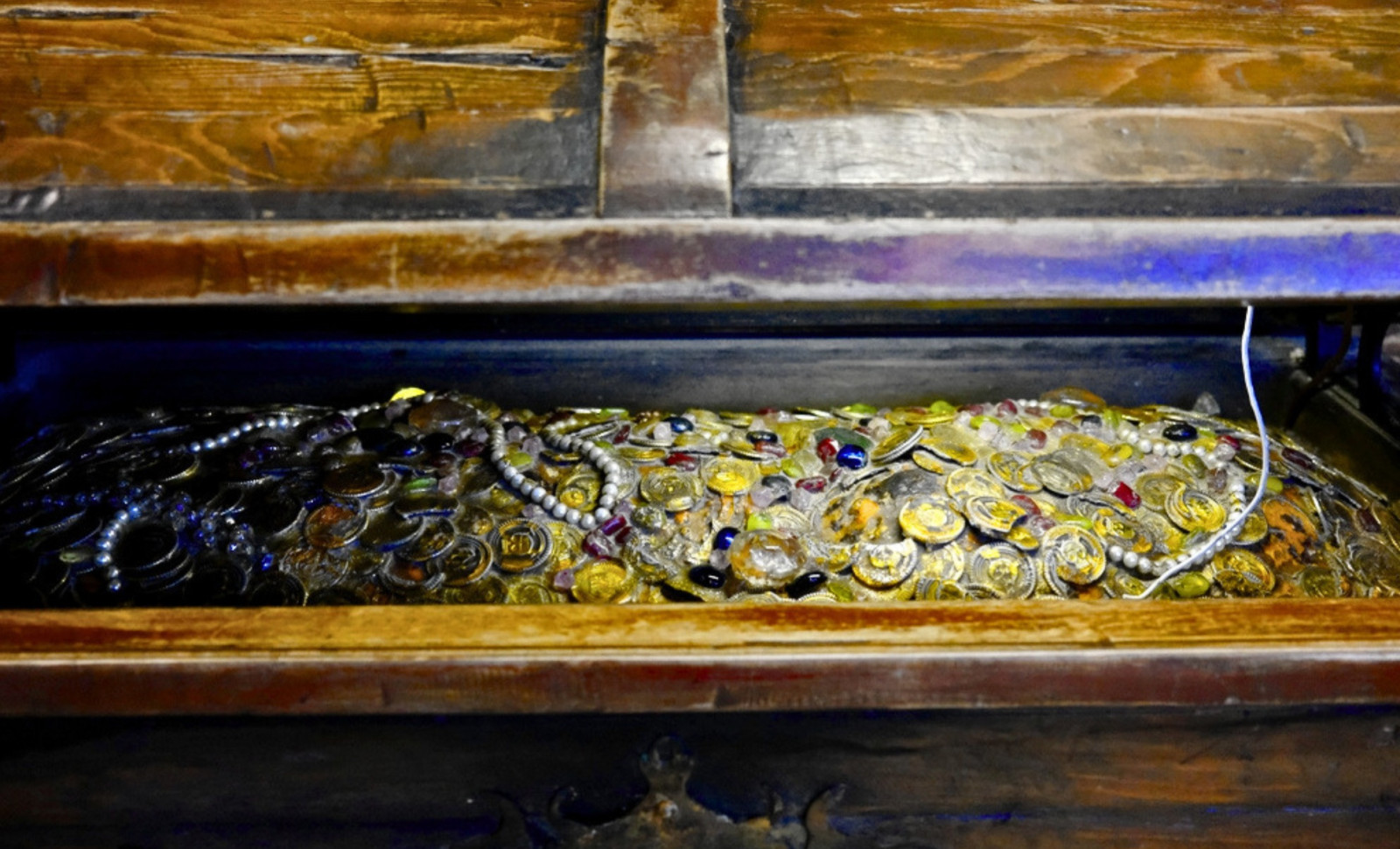
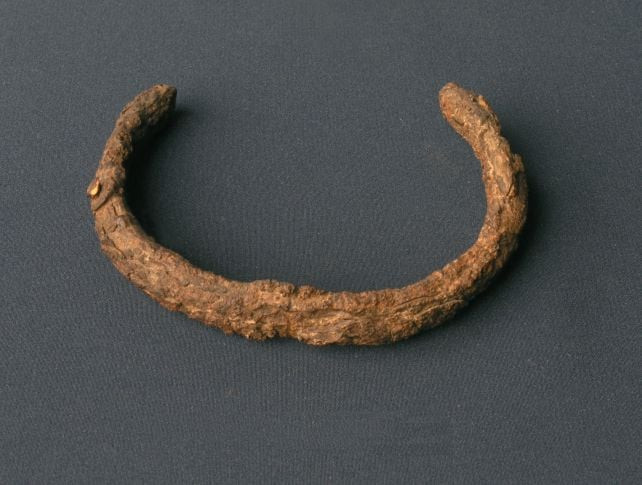
For six decades, two heavily corroded iron items remained a mystery alongside a dazzling array of Bronze Age gold artifacts. Though clearly made of iron, the pieces—a bracelet and a gilded hollow hemisphere—did not align with known regional iron smelting timelines, as ironworking had yet to emerge locally when the treasure was buried.
Recent research has solved this enigma, revealing an extraterrestrial origin for the metal.
The iron was delivered from space. Under the guidance of Salvador Rovira-Llorens, former chief conservator at Spain’s National Archaeological Museum, scientists verified the cosmic source by conducting chemical analyses. Their results, published in Trabajos de Prehistoria, identify these two artifacts as the earliest confirmed examples of meteoritic iron crafted on the Iberian Peninsula.

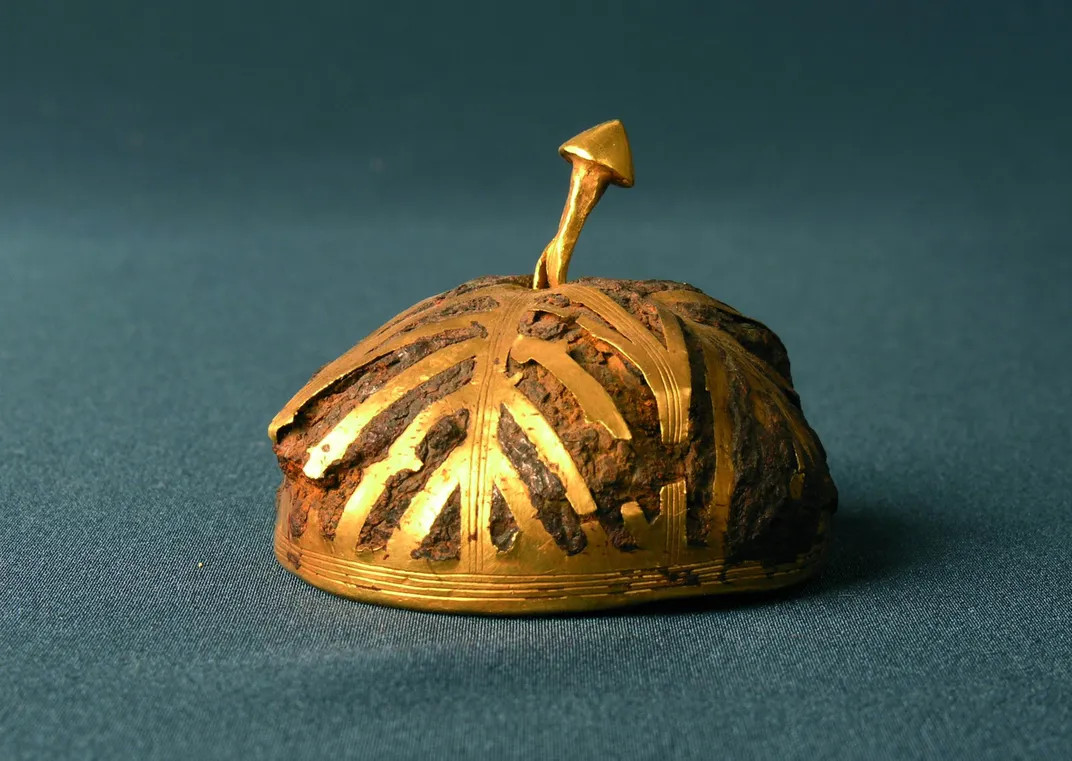
"Current evidence indicates the cap and bracelet from the Villena collection represent the first known instances of meteoritic iron in the Iberian Peninsula," the researchers stated, "dating back to the Late Bronze Age, before iron smelting became common in the region."
Discovering a Hidden Legacy
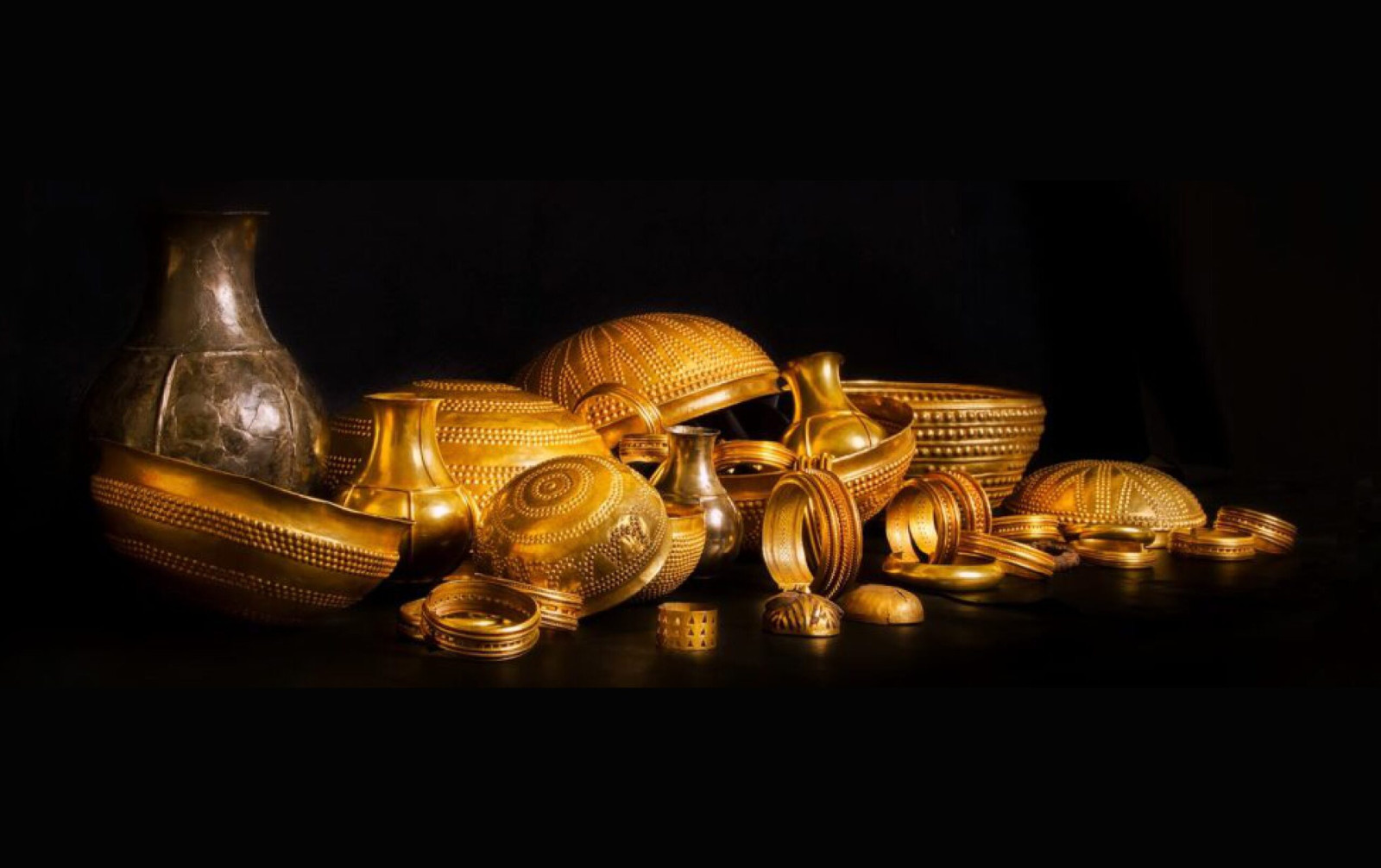
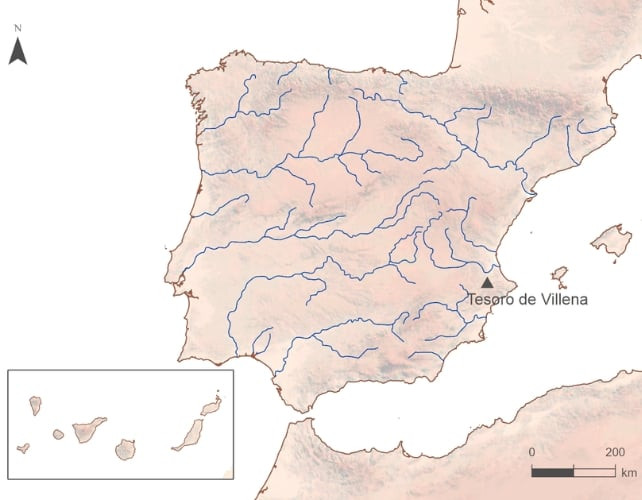
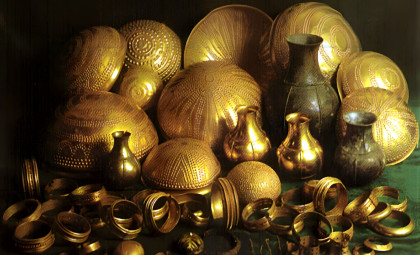
The Treasure of Villena came to light on December 1, 1963, when civil engineer José María Soler unearthed a rich prehistoric hoard near Villena, Alicante, Spain. This spectacular find contained 66 artifacts weighing nearly 10 kilograms of gold, including bowls, bracelets, bottles, and ornamental objects.
These treasures are currently housed at the José María Soler Archaeological Museum in Villena. The museum proudly showcases the collection as a highlight of western Mediterranean prehistoric culture, with gold surfaces that shimmer much as they did three millennia ago. Most artifacts originated from Bronze Age sites in the area, particularly the settlement of Cabezo Redondo.
However, the iron artifacts did not fit the expected chronology. The gold items were securely dated between 1500 and 1200 BCE, an era when bronze tools dominated the Iberian Peninsula. Yet local iron production only began around 850 BCE, marking the start of the Iron Age when smelted iron gradually replaced bronze.
For years, museum specialists cataloged these iron pieces as unexpectedly early ironwork, leaving their origin unresolved.
The Distinctive Nickel Composition
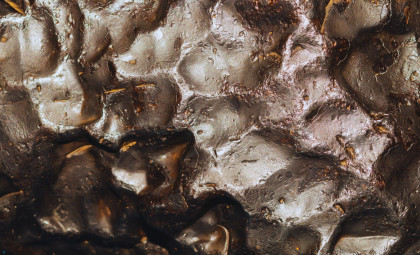
Meteoritic iron reveals a distinctive chemical fingerprint: markedly higher nickel concentrations than terrestrial iron, along with trace elements consistent with iron meteorites. These space rocks are remnants of small planetary cores that never fully formed planets.
Rovira-Llorens and his team at the Instituto de Historia of the Consejo Superior de Investigaciones Científicas in Madrid obtained permission to analyze samples from both artifacts. Employing mass spectrometry, they quantified nickel levels and overall elemental composition, strongly supporting an extraterrestrial source despite corrosion effects accumulated over thousands of years.
The bracelet shows clear evidence of careful hammering and forming. The hollow hemisphere, possibly a scepter or sword hilt component, retains a smooth, nearly mirror-like finish. Both objects are small, intricately crafted, and exhibit remarkable resistance to corrosion typically devastating to ancient iron. This unusual durability serves as an additional marker: meteoritic iron corrodes differently than smelted ore iron.
Meteoric Metal in Ancient Societies
The Villena artifacts add to the exclusive roster of Bronze Age items fashioned from meteorite material. The most famous example is King Tutankhamun’s dagger, interred around 1323 BCE. Similar bronze-age meteoritic iron weapons have been found throughout Eurasia and North Africa, where they were valued as prestigious possessions.
There is no indication that Iberian metalworkers understood the celestial origin of these materials. Nonetheless, they likely recognized the metal’s unusual hardness and fine finish potential. The research team hypothesizes the meteorite fragment was either locally sourced or introduced via Mediterranean trade, then transformed into elite ritual or status symbols for a Late Bronze Age culture.
The study’s authors caution that severe corrosion hampers definitive chemical conclusions and recommend applying advanced, non-destructive methods for further research to deepen understanding without damaging the artifacts.
Nonetheless, these findings reshape interpretations of prehistoric craftsmanship in the Iberian Peninsula. They illustrate that ancient artisans shaped iron sourced from meteorites centuries before iron was extracted and processed on Earth locally, creating two small relics that now stand out in Villena’s archaeological collection as metal forged from cosmic origins long before humans worked terrestrial iron.
- Categories:
- News





0 comments
Sign in to Comment