
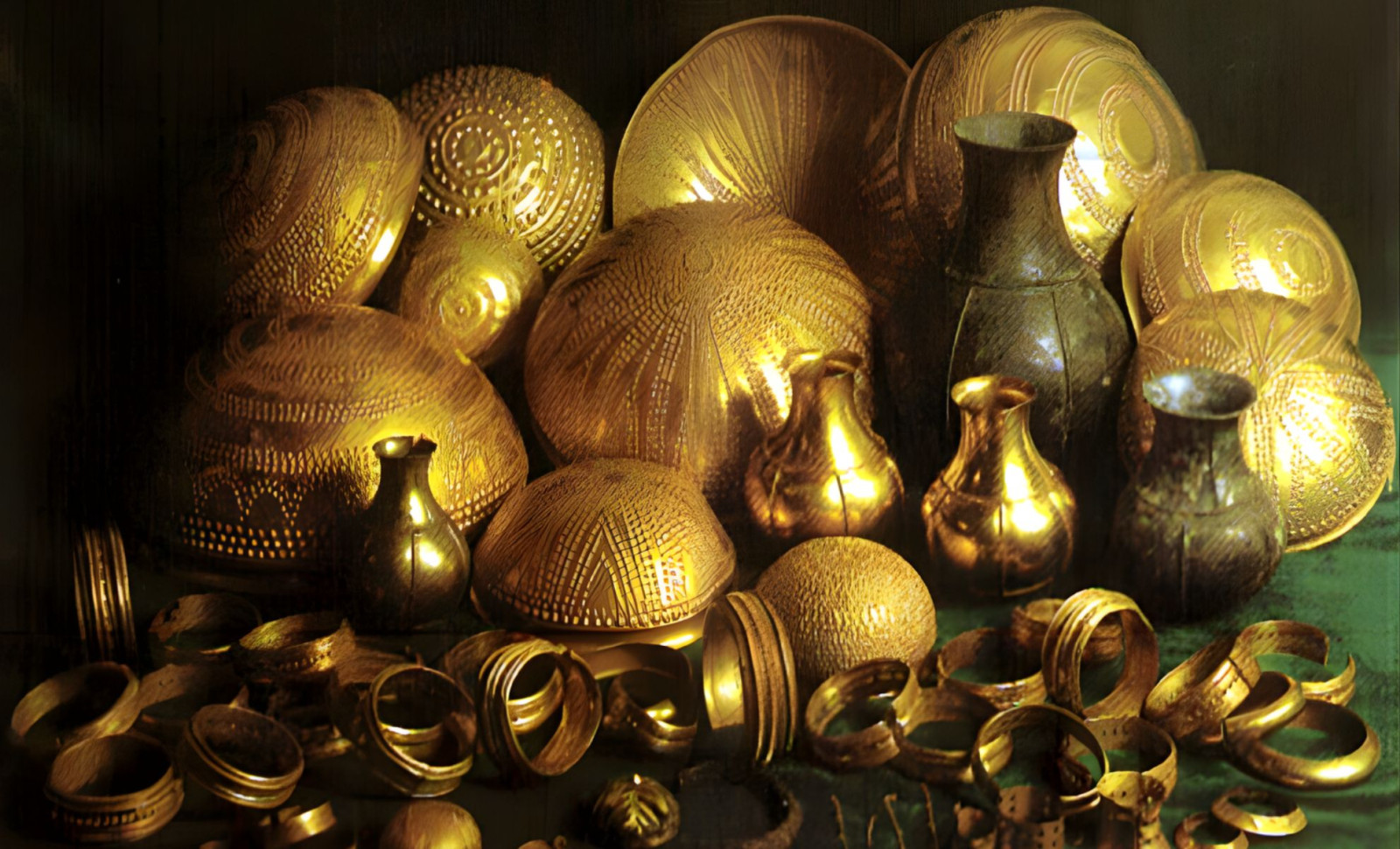
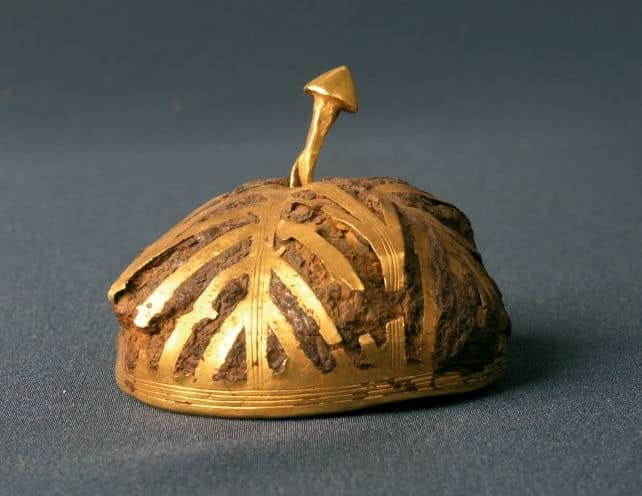
Recent findings in Spain reveal that Bronze Age inhabitants of the Iberian Peninsula crafted items using iron sourced from meteorites. Two intriguing artifacts recovered from the Villena hoard are composed of this extraterrestrial metal, offering fresh insights into early metallurgy. Among these are a corroded bracelet and a small hollow orb that continue to puzzle experts.
This discovery challenges existing assumptions about metal use during the Bronze Age, showing that as early as 1400 BCE, people in the region were skillfully working with meteoritic iron long before iron became a common material.
Unearthing a Curious Treasure
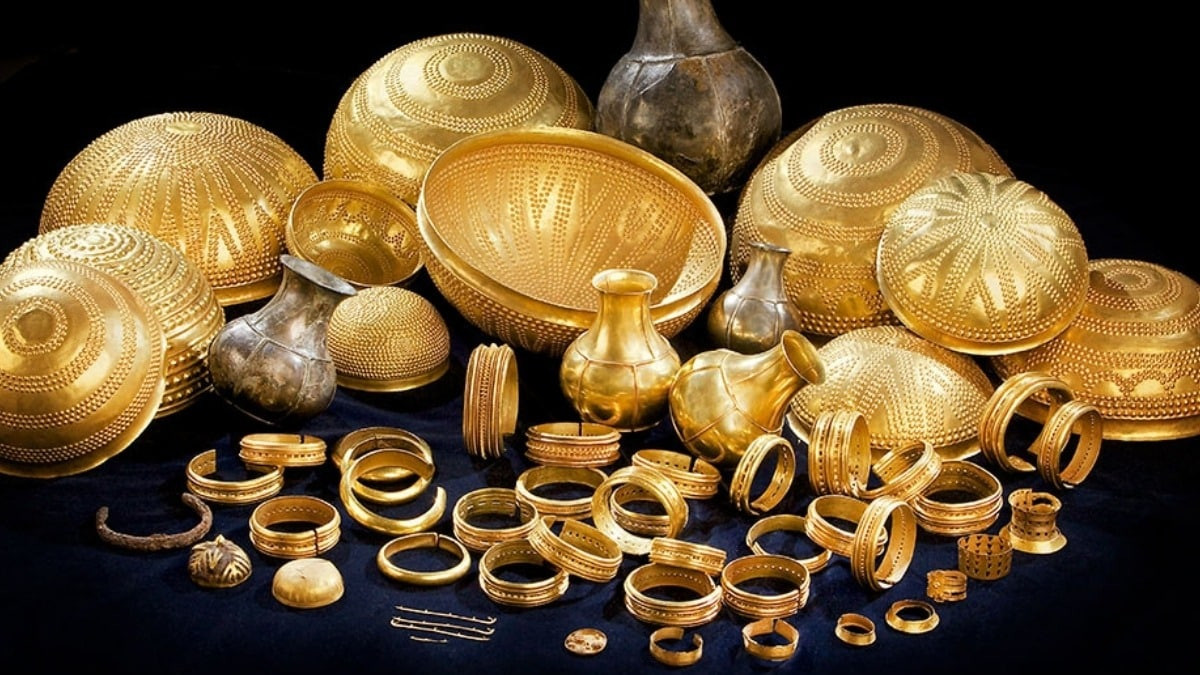
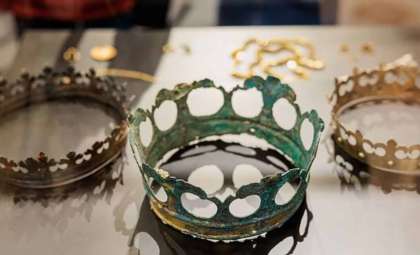
The Treasure of Villena, unearthed in 1963 near Alicante, Spain, ranks among Europe's most remarkable Bronze Age finds. Comprising 66 artifacts, mostly crafted from gold, it reflects the exceptional craftsmanship of ancient artisans. However, two objects stood out as iron-like, a metal seldom seen in Europe before the Iron Age.

“In this case, [the items] were … probably hidden treasure that could have belonged to a whole community and not to a single person. There were no kingdoms in the Iberian Peninsula at this historical period,” explained Ignacio Montero-Ruiz, one of the study’s authors.
The intrigue heightened because while the treasure dates from roughly 1500 to 1200 BCE, the Iron Age in Europe started only about 850 BCE. This discrepancy led scientists to speculate that these iron-like artifacts might be crafted from a metal of celestial origin.
Iron with an Extraterrestrial Origin
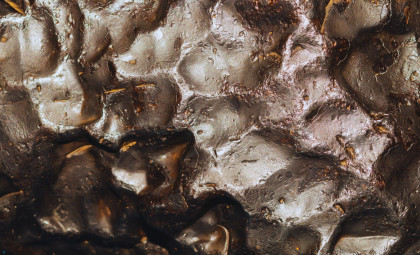
To determine the true nature of these pieces, researchers analyzed their chemical makeup, paying close attention to nickel levels. As detailed in the publication Trabajos de Prehistoria, meteoritic iron contains significantly more nickel than terrestrial iron. In 2024, tests confirmed that the artifacts were indeed forged from meteoritic iron.
This finding resolved the mystery: the objects were produced contemporaneously with the rest of the treasure, likely between 1400 and 1200 BCE, marking the earliest known use of meteoritic iron in this region.
“For this reason, they were considered worthy of becoming part of this spectacular ensemble with numerous delicate gold objects. Who manufactured them and where this material was obtained are still questions that remain to be answered,” he added.
The Rarity of Meteoric Iron in Ancient Artifacts
The presence of meteoritic iron continues to captivate the scientific community. Salvador Rovira-Llorens, the lead investigator of the research, asserts that this discovery indicates a far more sophisticated metallurgical expertise in Bronze Age Iberia than previously assumed. It also raises the possibility of ancient trade networks or cultural interactions where knowledge of meteoritic iron use was exchanged.
Despite damage from corrosion that obscures some details, these artifacts clearly hail from the Late Bronze Age. Their creation reflects an impressive level of craftsmanship well before iron technologies became widespread.
- Categories:
- News




0 comments
Sign in to Comment