
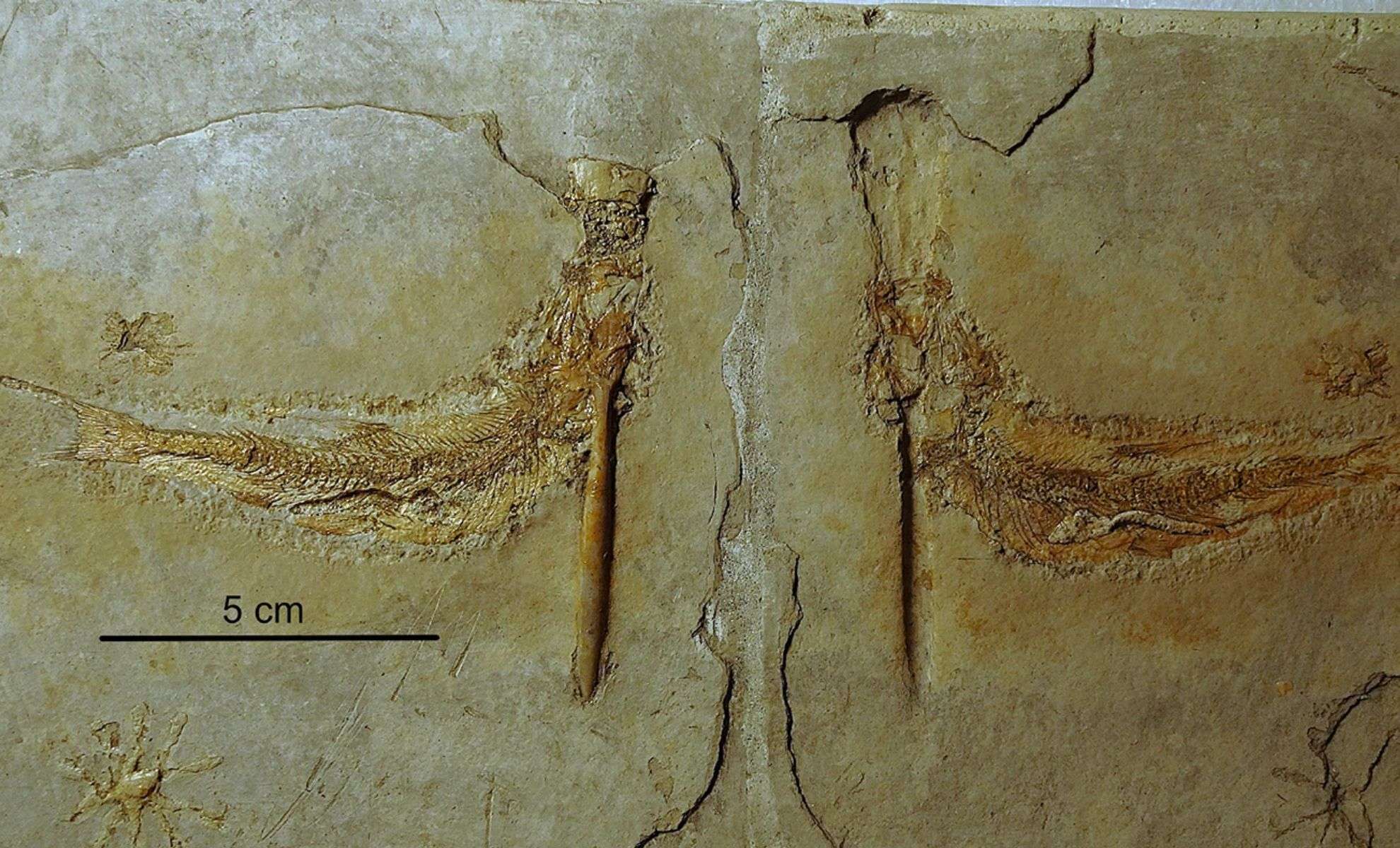
New research into ancient fish fossils has uncovered a startling cause of death among an extinct group of ray-finned fish called Tharsis. These carnivorous fish, which swam the seas during the Jurassic era, were often found fossilized with belemnites—large squid-like creatures—lodged in their throats. This unusual fatal choking incident reveals intriguing insights into the feeding behaviors and perils these prehistoric fish encountered.
The Fatal Encounter of Jurassic Tharsis Fish
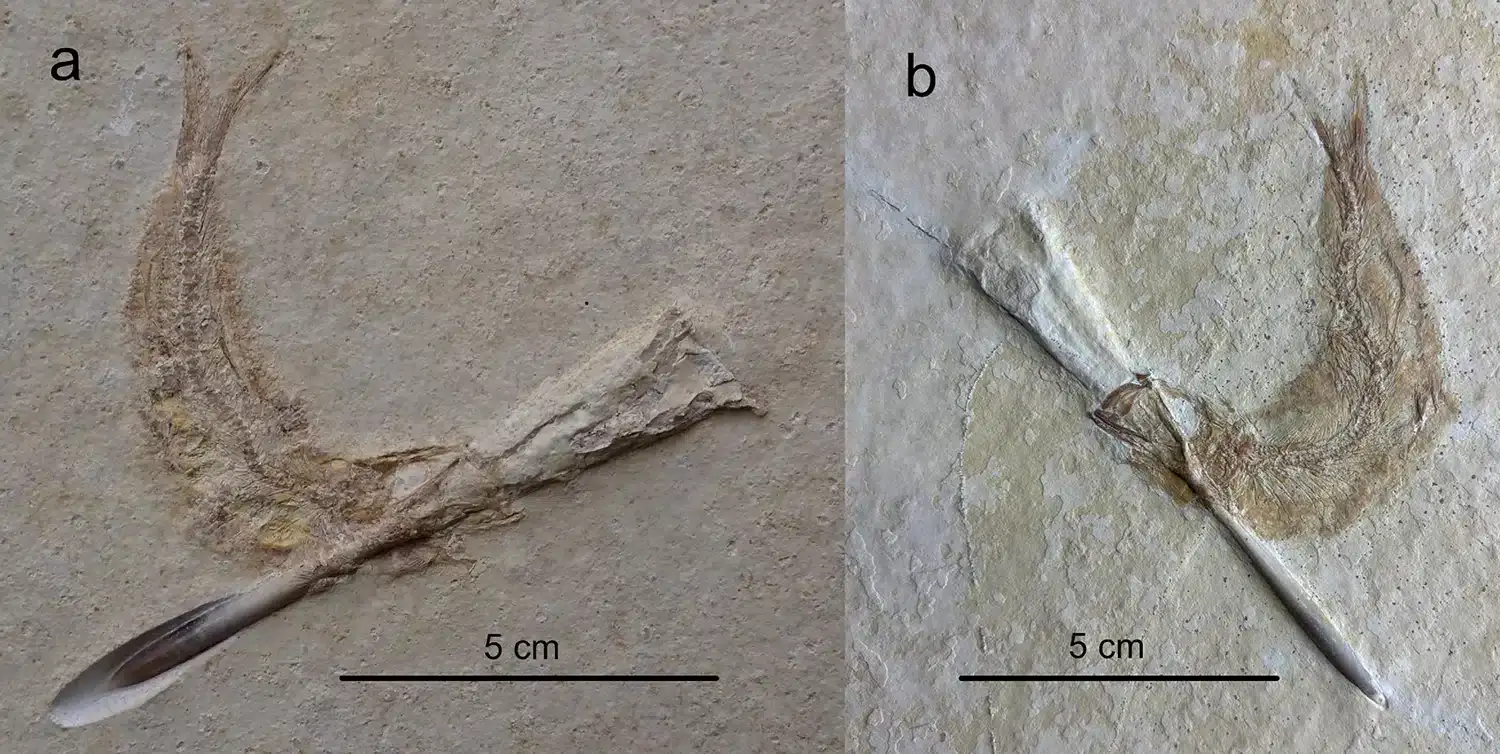
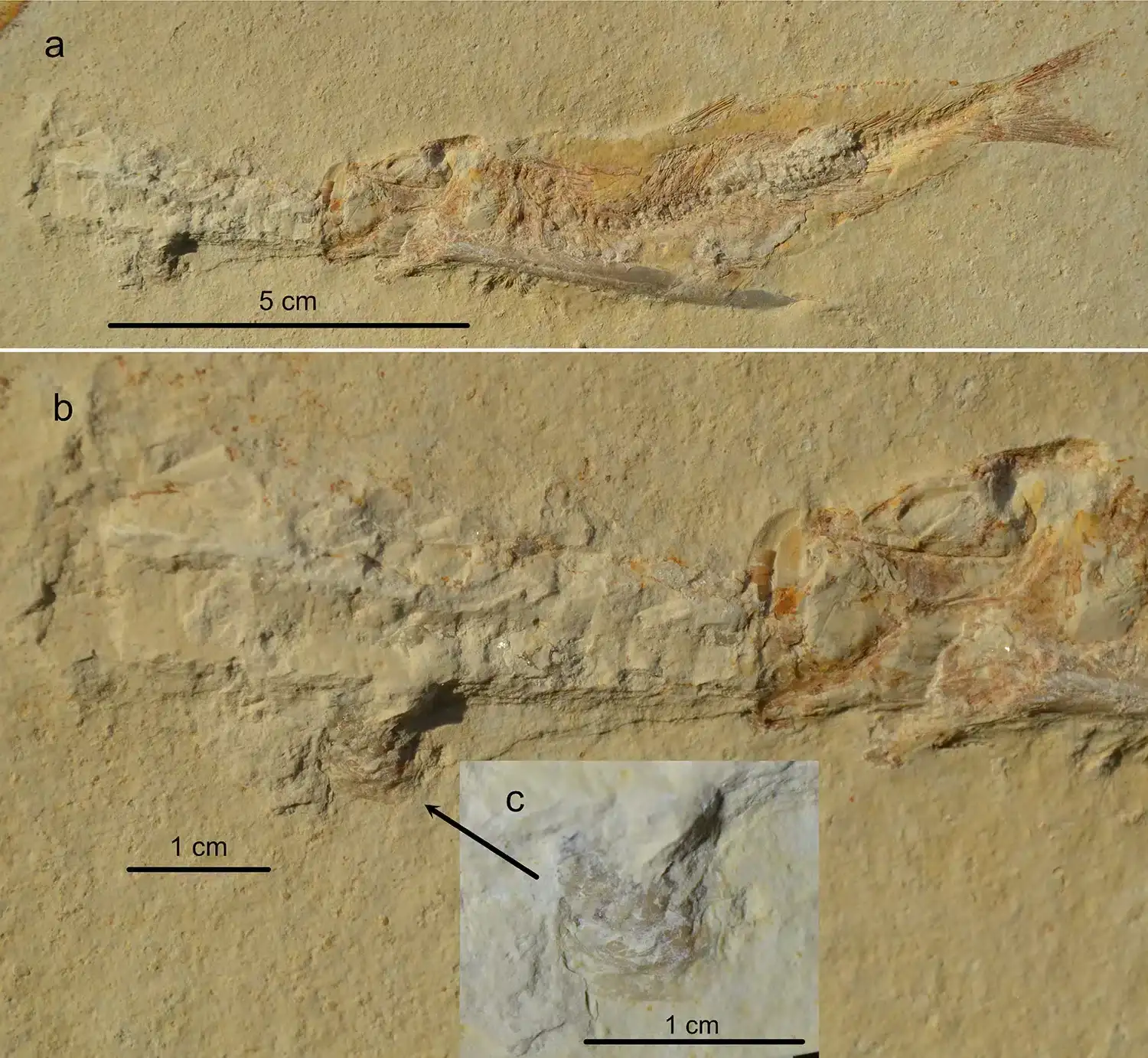
Specimens of the Tharsis fish from Germany’s Solnhofen Plattenkalk formation, dating back some 152 million years, have been meticulously analyzed by paleontologists Martin Ebert and Martina Kölbl-Ebert. Their studies revealed numerous fossils where belemnites were trapped inside the fish’s oral cavity. In certain cases, the cephalopod’s pointed rostrum penetrated through the fish’s gill openings, while its internal shell, known as the phragmocone, was wedged tightly in the throat area. These incidents were repeatedly observed, indicating a common fatal feeding hazard rather than isolated events.
Unintended Consequences of a Feeding Strategy
The team suggests that Tharsis fish were micro-carnivores, primarily hunting tiny prey such as larvae and zooplankton. These fish employed suction feeding to capture their meals, with fossils indicating they were fairly numerous during their time. However, their feeding approach sometimes led to deadly mistakes.

Instead of directly preying on belemnites, the fish likely fed on decomposing soft tissues, algal matter, or bacterial colonies attached to floating debris. Occasionally, the sharp, hydrodynamic rostrum of a dead belemnite would be accidentally inhaled, causing an obstruction that blocked the fish’s throat and ultimately resulted in its demise.
What Made Belemnites Particularly Dangerous?
Notably, belemnite fossils from the Solnhofen and Eichstätt regions often show evidence of colonization by bivalves, implying these cephalopods were long dead before fish encountered them. Their gas-filled internal shells kept them buoyant, allowing these carcasses to float in the water column, becoming accessible to scavengers like Tharsis fish. When a fish accidentally inhaled the belemnite’s pointed rostrum, it got stuck and could not be expelled, causing suffocation as it tried to push the item through its gills.
The combination of this specialized feeding method and the presence of drifting dead belemnites created a unique lethal scenario rarely documented in fossils. This extraordinary fate highlights the unpredictable challenges faced by even the most adept predators in their ecosystems.
- Categories:
- News








0 comments
Sign in to Comment