
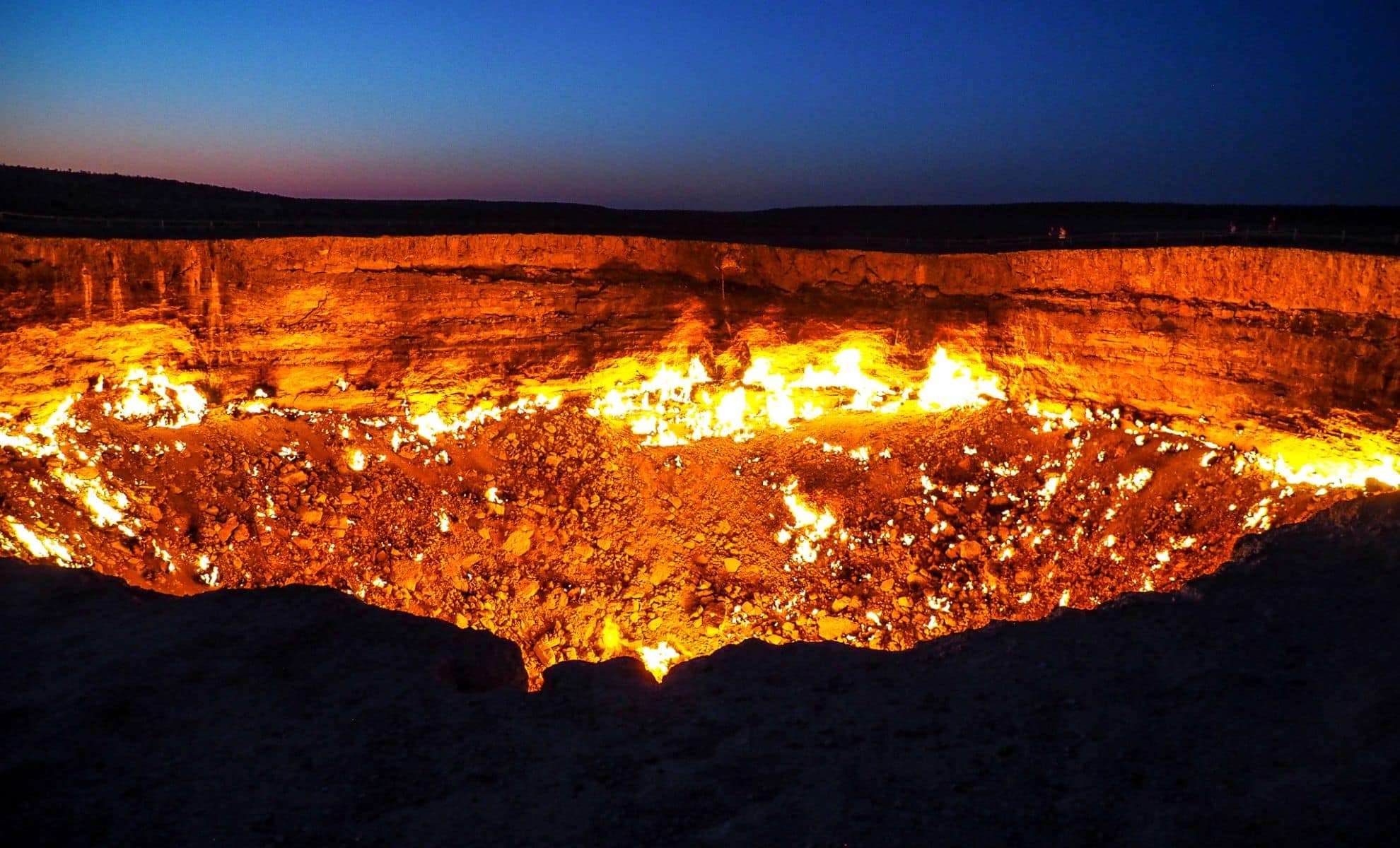
Located in Turkmenistan’s blazing desert, the Darvaza gas crater, known widely as the “Gate to Hell,” has been alight for more than half a century. This enormous fire pit, once fiercely ablaze, has fascinated both explorers and researchers. Today, satellite data reveal the once roaring inferno is fading into slow embers.
The Birth of the ‘Gate to Hell’
Although details remain partly unclear, the Gate to Hell originated from an accident involving Soviet engineers in the 1980s. Reports indicate that during an oil drilling operation, a rig collapsed, exposing a large underground pocket of natural gas. This event created a massive 70-meter-wide, 30-meter-deep crater leaking methane. To prevent toxic gas spread, Soviet workers ignited the gas, expecting the flames to subside within weeks — an expectation ultimately proven wrong as the fire burned continuously for decades, becoming a haunting landmark of the region.
Dwindling Flames: Government Actions
As of 2024, the once blazing spectacle is noticeably diminishing. Satellite images exhibit the once extensive fire now emitting only a faint glow across the desert landscape. This reduction is linked to recent governmental efforts to limit the natural gas supply feeding the blaze.

Irina Luryeva, representing the Research Institute of Natural Gas of Turkmengas Concern, explained that increased gas extraction nearby has enabled officials to manage the underground gas pressure, gradually decreasing fuel for the crater’s fire.
Since August 2023, reports from the AKI news agency indicate the fire’s intensity has dropped to less than a third of its previous level, signaling the gradual extinction of this iconic flame. The government’s intention to snuff out the fire reflects concerns over resource conservation and ecological impact.
Back in 2010, former President Gurbanguly Berdimuhamedov advocated for extinguishing the crater, highlighting environmental harm and risks to local residents. In 2022, he reaffirmed this stance, emphasizing the necessity to preserve valuable energy resources for economic and social benefits.
A Destination with Environmental Consequences
Despite its hazardous beginnings, the Darvaza gas crater has evolved into a notable tourist venue in Turkmenistan. International visitors come to witness the surreal sight of the flaming chasm, which glows eerily after nightfall. This glow even attracts desert fauna like spiders, which tragically perish in the extreme heat.
Nonetheless, the crater’s continuous methane combustion contributes significantly to greenhouse gas emissions, raising alarms regarding its ecological footprint. Sitting atop the world’s sixth-largest natural gas reserves, Turkmenistan faces criticism for losing this resource to combustion rather than harnessing it productively.
Closing the Fiery Chapter
The fate of the Darvaza crater remains uncertain. Though flames persist, experts anticipate they will soon extinguish as the government curtails its gas supply further. The crater’s legendary blaze, which defined it for decades, appears to be fading, bringing an end to the iconic “Gate to Hell.” While its origins remain partly enigmatic, the fiery phenomenon is expected to close its chapters irreversibly in the near future.
- Categories:
- News









0 comments
Sign in to Comment