

Have you ever spotted faint, drifting outlines crossing your sight, particularly against bright backgrounds like the sky or a plain wall? These subtle shadows or thread-like shapes that seem to move away when you try to look directly at them are widespread and perfectly normal.
So, what exactly causes them? They aren’t foreign particles resting on your eye. Instead, these are known as myodesopsias, or more commonly, “floaters.”
The Science Behind the Optical Effect
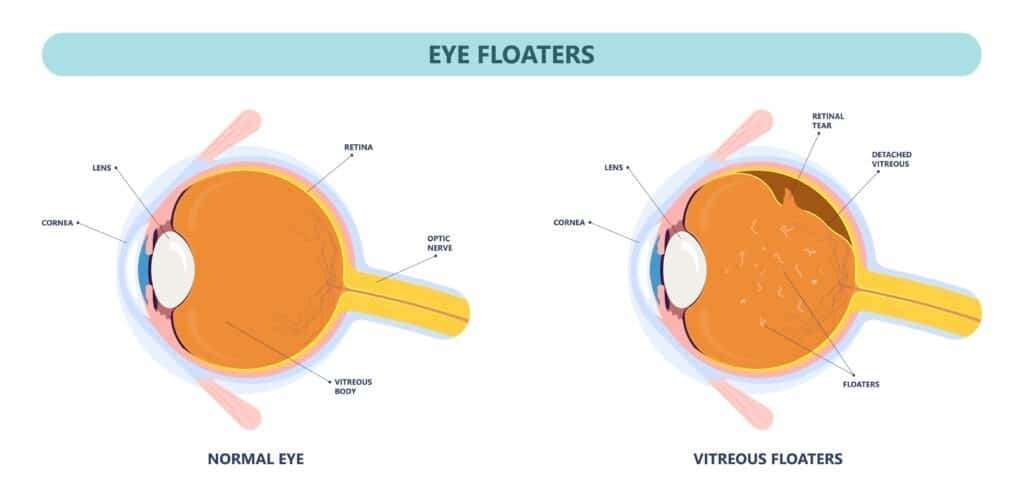
These tiny moving spots are not imaginary tricks your brain plays. They originate from protein clumps suspended in the vitreous humor, the transparent, jelly-like material that fills your eyeball and helps keep its shape stable. Over time, these proteins aggregate into thin strands or clusters that float around in this gel-like fluid.

When light passes through your eye, these clumps cast shadows on the retina, producing the appearance of flickering dots or lines drifting across your vision. The interesting part is that these spots shift when you try focusing on them because they float inside the moving vitreous humor.
Generally Harmless, But Stay Alert
There’s usually nothing to fear! Approximately 70% of individuals notice floaters during their lifetime. In the majority of instances, they pose no health risk and are simply a natural part of aging. As the vitreous humor slowly contracts with age, it forms more visible protein strands.
Nonetheless, a sudden spike in floaters might indicate a more serious condition, such as:
- Bleeding within the eye
- A retinal tear or detachment
- An eye infection
If you notice a rapid increase in floaters accompanied by flashes of light or sudden loss of partial vision, it’s vital to consult an eye care professional immediately. In some cases, surgery might be necessary to avoid further damage.
Options for Treating Floaters
Typically, your brain adjusts over time and learns to filter out these visual intrusions. But if they become too bothersome, several treatments exist:
- Laser vitreolysis, which breaks floaters into smaller, less noticeable particles.
- Vitrectomy, a surgical procedure that removes and replaces the vitreous humor with a clear saline solution. This is seldom performed due to possible complications.
Intriguing Yet Common Visual Disturbances
Floaters remain a curious visual phenomenon that many experience yet rarely contemplate. While they might be annoying, they’re predominantly benign and represent the eye’s natural aging process. One thing is certain: these drifting shapes continue to captivate anyone who pauses to observe them against a bright background.
- Categories:
- News












0 comments
Sign in to Comment