
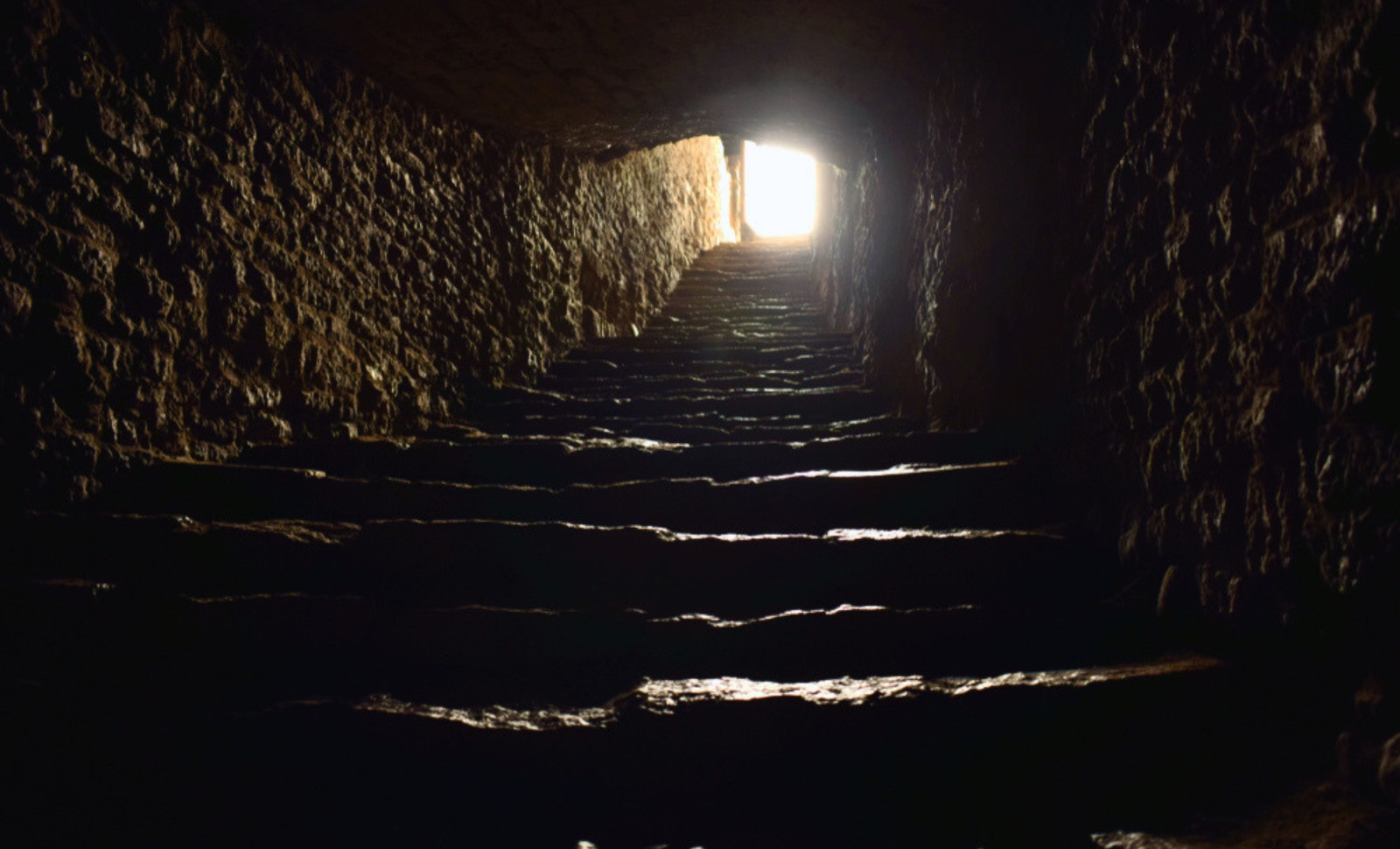
Underneath a bustling residential area in Jerusalem lies a remarkable discovery: a 600-meter ancient stone roadway once walked by Jewish pilgrims during the Second Temple era, leading to the Temple Mount. Excavated over more than ten years by the Israel Antiquities Authority, this historic street is now accessible at the City of David National Park, inviting visitors to experience the ancient path their ancestors used nearly two millennia ago.
This excavation is the most ambitious and costly archaeological operation ever undertaken in Israel. Recently published research in ‘Atiqot’ reveals the discovery of a Byzantine-period stone street nearby, also following the same Tyropoeon Valley route. This confirms the corridor’s importance as a major north-south artery through multiple historical eras.
Constructed During Roman Governance
Known as the Pilgrimage Road or Stepped Street, this route connects the Pool of Siloam in the City of David with the southwestern edge of the Temple Mount. Previously, scholars believed King Herod was responsible for its build. However, coins discovered beneath the road shifted this timeline dramatically.

Researchers from the Israel Antiquities Authority dated the construction to the Roman prefect Pontius Pilate, placing it between 30 and 40 CE. Notably, the Jewish historian Josephus recorded Pilate’s controversial use of Temple funds for an aqueduct, which triggered unrest. The road suggests that Pilate was overseeing multiple construction projects in Jerusalem simultaneously.
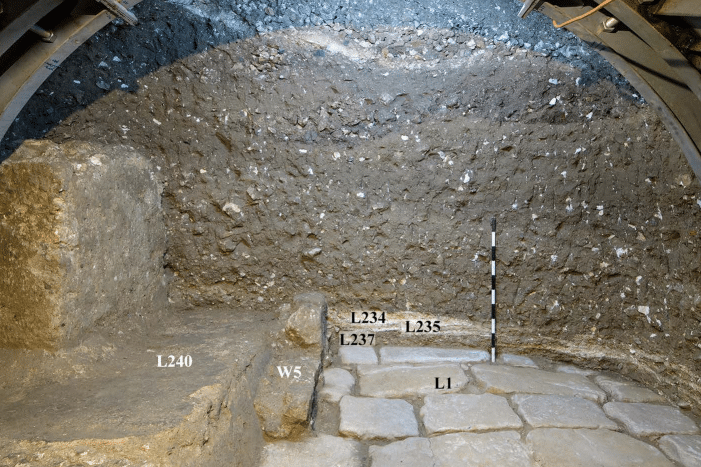
"Following the Temple Mount, this stands as Jerusalem's second major urban construction," stated Szanton. Each paving stone measured about 2 meters in length, 1.5 meters in width, and weighed close to 2.5 tons. In total, around 10,000 cubic meters of stone were quarried from north of Jerusalem and transported for use.
The street, approximately 7.5 meters wide and flanked by residential buildings, accommodated pilgrims during religious festivals and locals in other seasons. Vendors often set up along its edges, selling food and sacrificial animals. Partway along the route, archaeologists found a stepped platform, possibly serving social or administrative purposes, though its exact role remains uncertain.
Innovative Excavation Beneath a Living Neighborhood
Digging out the ancient road posed unique challenges since it lies directly beneath occupied homes, preventing standard vertical excavation methods.
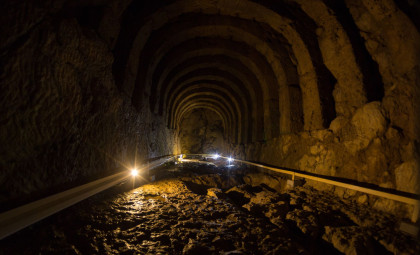
"We developed a new technique," Szanton explained. Instead of digging straight down, archaeologists worked horizontally underground, removing half a meter increments at a time. Every 1.5 to 2 meters, metal arches were installed to support the street overhead before proceeding. Electricians and ventilation experts collaborated closely with the archaeologists to ensure safety.
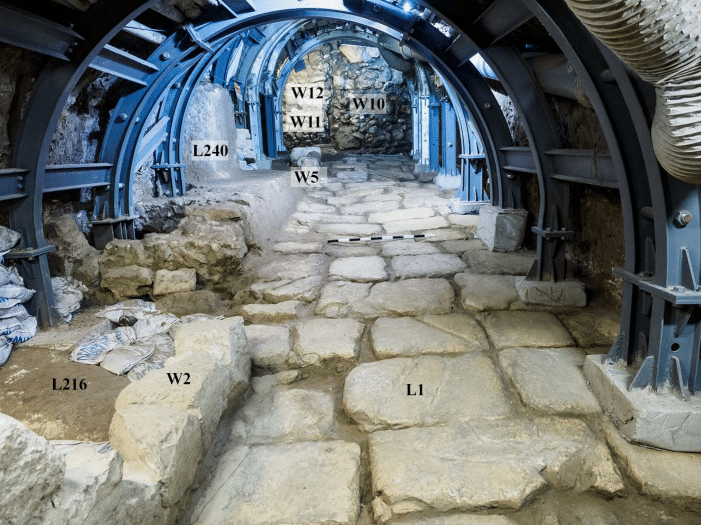
The decade-long excavation involved hundreds of contributors, resulting in a tunnel-like passage beneath the modern city. The pathway is fully lit and accessible, allowing visitors to walk upon the original stone paving.
Layer of Destruction and Hidden Water Management
A notable feature of the Pilgrimage Road is the destruction layer dating back to the Roman siege of Jerusalem in 70 CE. When Roman troops set the city ablaze, the adjacent buildings collapsed onto the street, burying pottery, glassware, stone containers, wooden artifacts, and coins of that era beneath the rubble, preserving them intact.
Below the roadway, archaeologists discovered a drainage system built simultaneously with the street to divert rainwater during wet seasons. Evidence indicates Jewish rebels used the channel as a refuge during the Great Revolt. Excavator Eli Shukron retrieved a Roman sword there, alongside trade tokens likely linked to offerings and a golden pomegranate ornament perhaps meant for the High Priest’s robe.
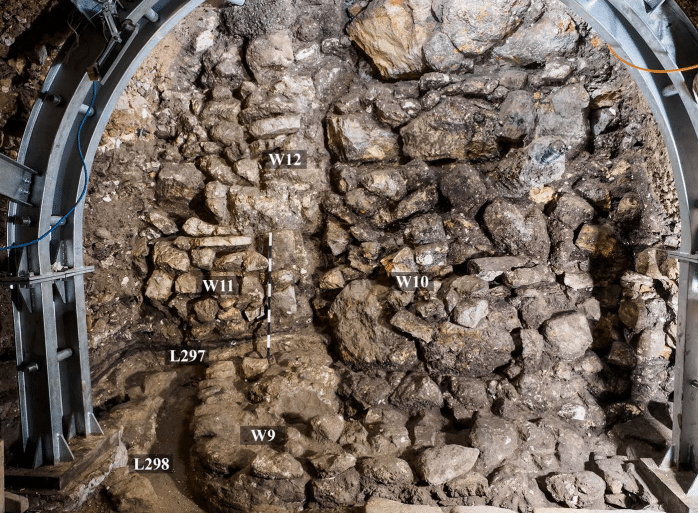
Interestingly, about two-thirds along the road, the large stone slabs vanish, reappearing near the Temple Mount’s southwest corner. Researchers theorize these stones were removed and reused in a later period, though the details remain uncertain.
The Givati Parking Lot Excavation and Byzantine Avenue
The ongoing Givati Parking Lot dig, considered Jerusalem’s largest active archaeological site since 2007, has uncovered artifacts spanning from the First Temple period to the early Islamic age. Significant findings include cellars of a Second Temple mansion potentially linked to Queen Helena of Adiabene, a Jewish convert residing in Jerusalem then, and a cache of 264 gold coins from 613 CE in a Byzantine building, hidden just before the Persian takeover.
A 2026 report describes the excavation of a separate Byzantine stone-paved street nearby, stretching between the Givati Parking Lot and the Ottoman-era walls of Jerusalem’s Old City. Six settlement layers were uncovered, ranging from the Early Roman through to the Early Islamic eras. This street, following the Tyropoeon Valley, probably served as a ceremonial route connecting several important churches, including Siloam Church, the Nea Church, and the Church of the Holy Sepulcher.
The Pilgrimage Road concludes at the foot of the Temple Mount, just south of the Western Wall Plaza inside Davidson Archaeological Park, where its stone surface meets the ruins of the wall destroyed in 70 CE by the Romans.
- Categories:
- News






0 comments
Sign in to Comment