
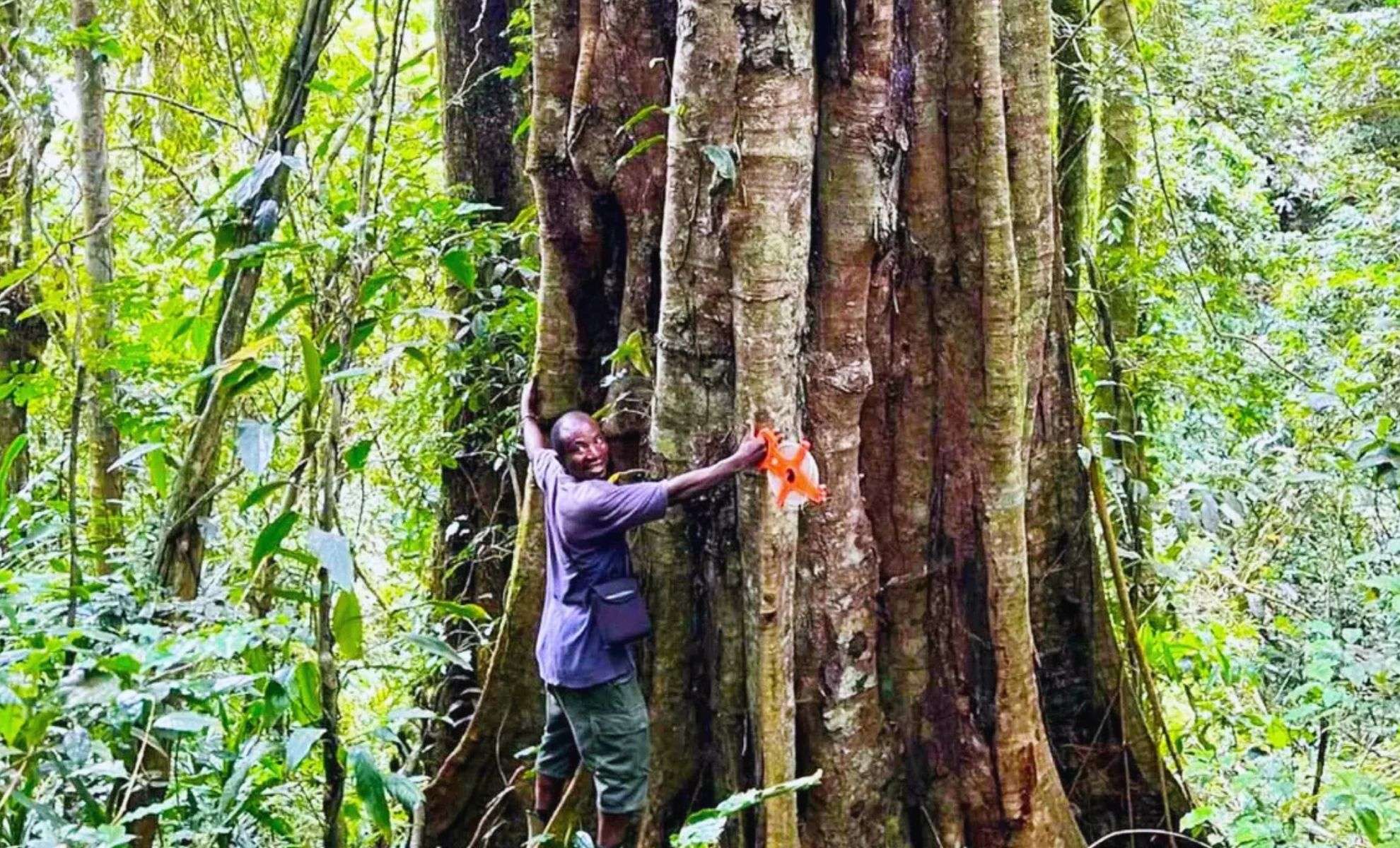
Researchers have unveiled a remarkable species of ancient giant trees in Tanzania's Udzungwa Mountains. Dubbed Tessmannia princeps, these colossal trees reach heights of up to 131 feet and are believed to be between 2,000 and 3,000 years old. The study, spearheaded by horticulturist Andrea Bianchi from the Muse Science Museum in Trento, involved collaboration with local botanical experts. Their groundbreaking report published in Phytotaxa reveals a species previously unknown to science.
Uncovering the Tessmannia Princeps
During a 2019 survey mapping plant life in the Boma la Mzinga and Uluti Village Land Forest Reserves, Bianchi’s team came across an extraordinary tree species. This encounter occurred while exploring the remote and ecologically rich Udzungwa Mountains. The tree’s distinctive gray bark immediately indicated it was something out of the ordinary.
“That moment sent chills down my spine—finding an unknown species is always thrilling,” Bianchi says, recalling the discovery that marked the start of their investigation into a new tree species. This discovery unlocked a fascinating chapter in botanical research.

Subsequent fieldwork identified multiple trees forming a small cluster rather than a solitary specimen. These towering trees were officially named Tessmannia princeps, with the term “princeps” reflecting their majestic height and prominent crowns towering above surrounding forest greenery.
Height and Longevity: Windows into Ancient Ecosystems
Tessmannia princeps ranks among Earth's oldest living organisms, with some specimens towering to 131 feet. Their trunks can reach nearly nine feet in diameter, supported by expansive buttress roots sinking approximately three feet deep into the nutrient-poor rainforest soil. These structural adaptations support their impressive height and stability.
Age estimates for these trees range between 2,000 and 3,000 years, based on growth ring analyses from a naturally fallen tree. Bianchi describes the ring counting as “patient work that feels like peering back through the lifetimes of civilizations.” The species’ slow growth rate and immense longevity are reminiscent of ancient trees like bristlecone pines and giant sequoias.
Structure and Role Within the Forest
Classified as canopy emergents, Tessmannia princeps rise above the main forest layer, basking in full sunlight to maximize photosynthesis and influence the forest’s microclimate below. Their crowns are adorned with glossy leaves featuring numerous leaflet pairs critical for energy absorption.
The tree’s massive buttress roots radiate broadly from the base, with some roots reaching heights of up to 49 feet. These roots provide mechanical support against the weight of the giant canopy and stabilize shallow rainforest soils, preventing erosion that could jeopardize the ecosystem.
Despite their impressive size, Tessmannia princeps trees lack physical defenses like thorns and instead rely on chemical deterrents, though these properties remain largely unexplored. The species produces creamy white flowers with yellow gland tips, emitting a distinctive scent that local guides recognize from a distance, aiding reproductive success.
Environment and Protection Measures
This species inhabits the Eastern Arc Mountains, a biodiversity hotspot known for its unique flora fostered by stable climatic conditions and rugged landscapes. Found at altitudes between 4,200 and 5,000 feet, these trees are situated away from agricultural and human developments, benefiting from the area’s designation as a protected reserve in 2016.
Nevertheless, Tessmannia princeps is currently listed as "Vulnerable" by the IUCN due to its restricted habitat and small population size, estimated under 1,000 individuals. While logging is prohibited, threats from nearby farming, hunting, and road construction activities pose indirect risks. Soil compaction, fire hazards, and habitat disruption threaten the delicate equilibrium of this ancient forest ecosystem.
- Categories:
- News








0 comments
Sign in to Comment