
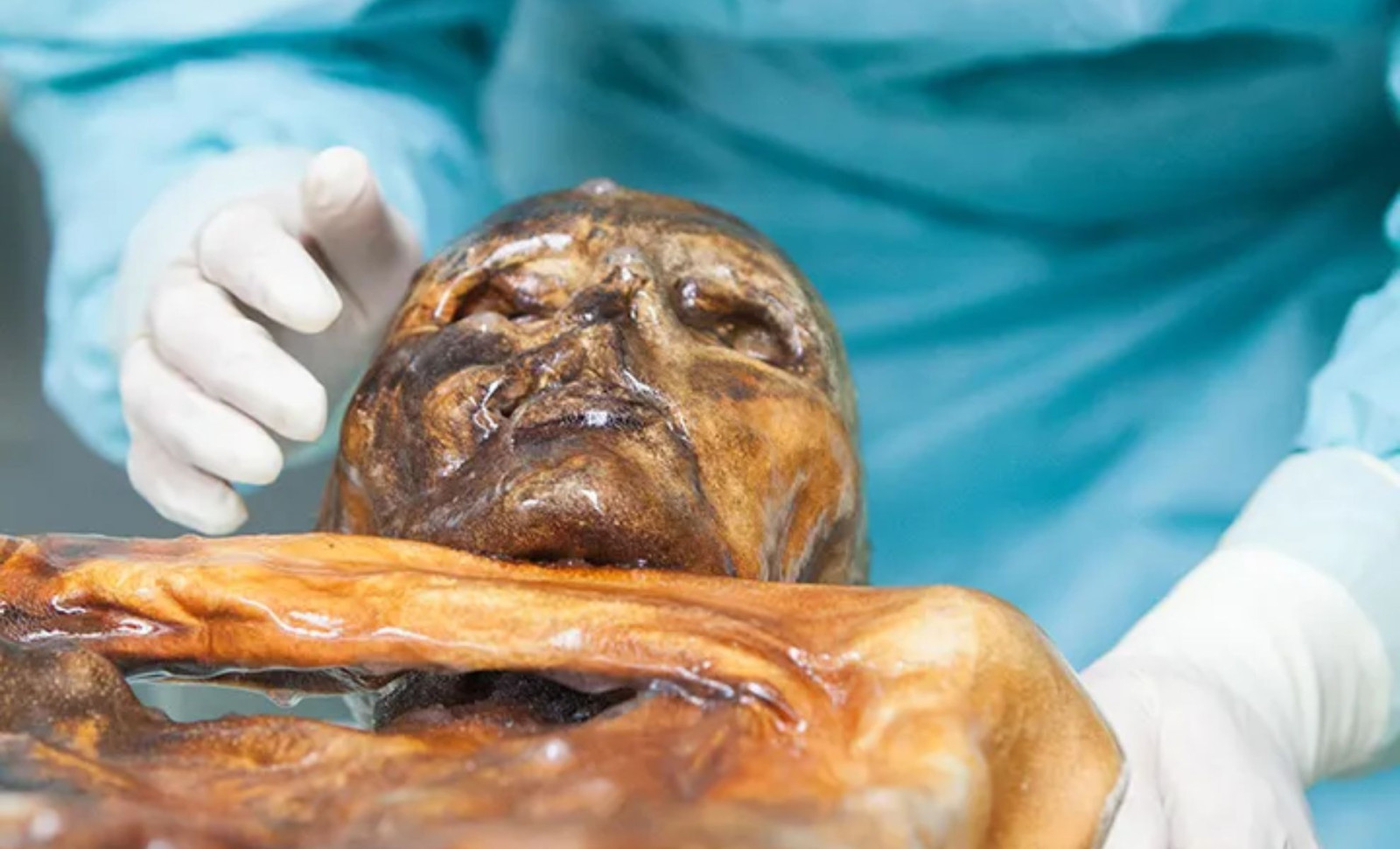
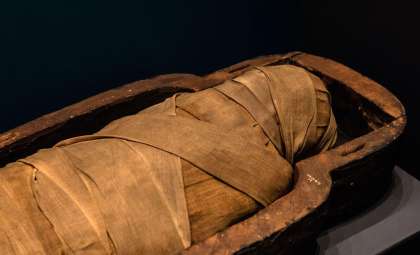
Scientists have managed to bake sourdough bread using yeast extracted from Ötzi the Iceman, a mummy preserved in Alpine ice for over 5,000 years. This remarkable feat was part of a comprehensive study revealing that the ancient mummy still harbors an unexpectedly active microbial ecosystem.
Discovered in 1991, Ötzi has provided invaluable insights into Copper Age life. The glacier-preserved body uncovered in the Ötztal Alps has exposed details regarding prehistoric diet, health, attire, tools, and circumstances surrounding his death.
Recent work has shifted focus to the mummy’s microbial community, aiming not just to detect remnants of ancient microbes but to determine if some remain viable and capable of growth under the cool, humid conditions used for Ötzi’s preservation today.

A Distinct Blend of Ancient and Modern Microorganisms
Ötzi passed away roughly 5,300 years ago after an arrow wound to the back. His body was frozen in glacial ice until melting ice revealed the remains near the Italy-Austria border.
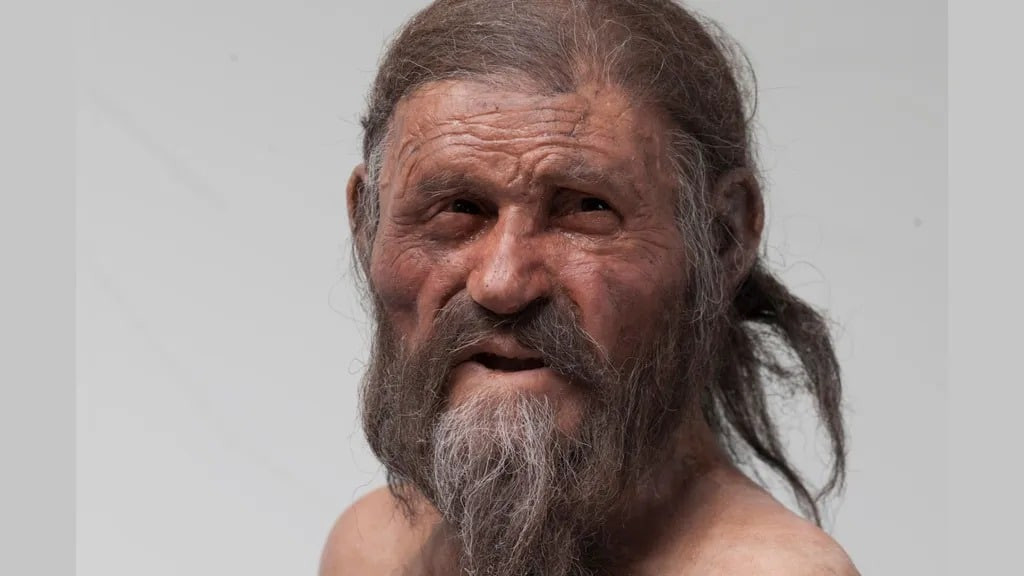
Currently housed at the South Tyrol Museum of Archaeology in Bolzano, Italy, Ötzi is kept at a steady minus 6 degrees Celsius with high humidity to mimic conditions that halted decomposition for thousands of years.
Scientists collected samples from Ötzi’s skin, stomach fluids, surrounding water, air inside the museum, and soil from the discovery site. Through DNA analysis, they identified two main groups of microbes: those that colonized the body postmortem during glacial entombment and others introduced by human contact or conservation after the mummy was found.
Mohamed Sarhan, a lead microbiologist at Eurac Research, highlighted the uniqueness of this microbial community.
“A mummy’s microbiome is unique because we are dealing with microbes that are over 5,000 years old and, at the same time, with modern microbes that have been introduced since the discovery.”
Unexpected Discovery of Cold-Adapted Yeasts
Among the results published in the journal Microbiome, the team isolated four species of psychrophilic yeasts from Ötzi’s skin, stomach contents, and surrounding meltwater: Glaciozyma, Mrakia, Phenoliferia, and Goffeauzyma.
These yeasts thrive in extremely cold habitats like the Arctic, Antarctic, and high mountainous areas. Speaking with AFP, Sarhan remarked that discovering live yeast in Ötzi’s microbiota was surprising.
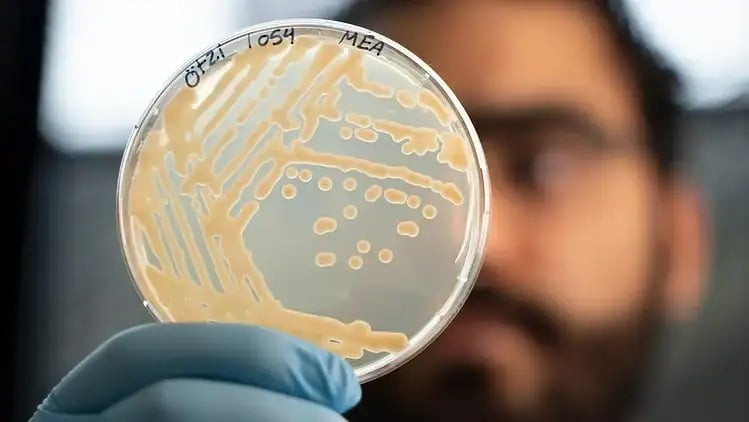
Genetic analysis revealed damage patterns in yeast DNA consistent with great age, suggesting these organisms either colonized Ötzi soon after death or descended from ancient microbes that did. Comparing samples collected in 2010 and 2019, researchers observed an increase in abundance of Glaciozyma, hinting at possible ongoing growth over the years.
The more recent samples contained less degraded DNA, which the team interprets as potential evidence that these yeasts continue to grow in the mummy’s environment.
Bringing Ancient Yeast to Life in the Kitchen
Following successful cultivation, the researchers tested whether the recovered yeast could leaven bread. Initial attempts faced challenges, requiring months of refinement before achieving consistent fermentation performance.
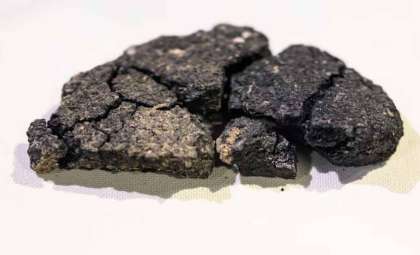
Eventually, the yeast generated a sourdough bread that impressed the scientists. Sarhan shared with Live Science:
“It worked,” he said. “As a dough, it was very, very good.”
The investigation also provided insights into Ötzi’s preservation. Genes involved in breaking down proteins, lipids, and collagen—components of human tissues—were identified among his microbes. Some microbes also possessed genes enabling them to degrade phenol, a chemical used in conservation to inhibit fungal growth.
However, opinions vary regarding interpretation of these findings. Nikolay Oskolkov from the Latvian Institute of Organic Synthesis, not involved in the study, cautioned that limited sampling points make it difficult to conclusively prove long-term yeast reproduction in the mummy; these microbes might be recent colonizers.
- Categories:
- News



0 comments
Sign in to Comment