
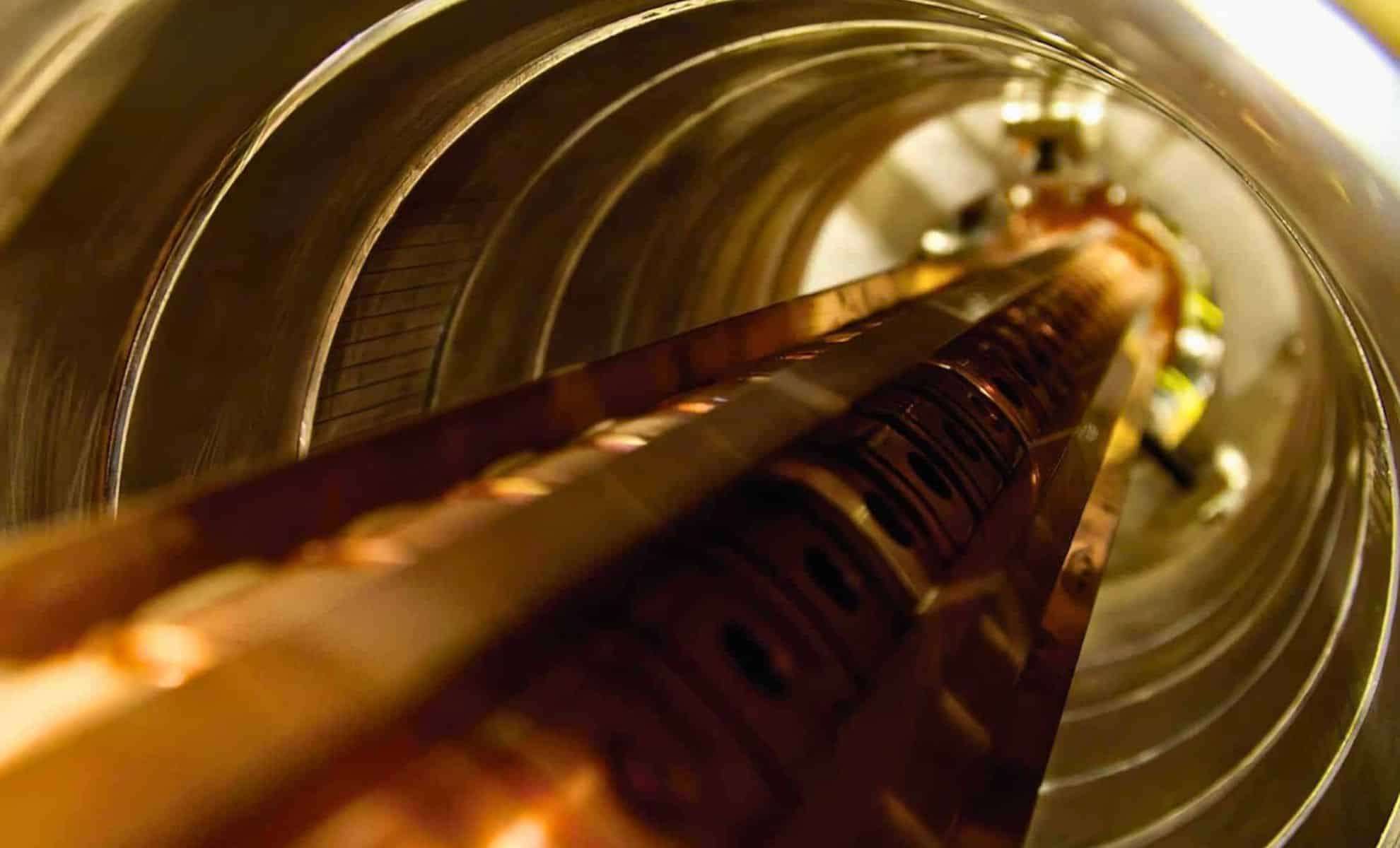
Located just south of Paris, a cutting-edge facility houses a groundbreaking laser system known as Apollon. This device currently holds the title for the most powerful laser on the planet, emitting bursts so intense that they replicate conditions akin to those present in deep space and the dawn of the cosmos. To date, no other apparatus worldwide matches its output.
Meanwhile, researchers in the United States recently garnered attention by achieving a new milestone, though momentary, in laser performance. The team at the SLAC National Accelerator Laboratory in Menlo Park, California, announced the successful generation of a 1-petawatt laser pulse employing an innovative particle acceleration approach. This accomplishment highlights the escalating global race in laser technology and its promising scientific prospects.
Innovative Compression Method Drives U.S. Laser Breakthrough
The intense, albeit brief, laser produced by SLAC was achieved through a pioneering process coined the “flipper” technique. Electrons were accelerated close to light speed and then tightly compressed using radiofrequency pulses combined with magnetic manipulation. These compact electron groups were directed through an undulator magnet, where their interaction with an external laser beam boosted the energy to unprecedented levels.

Popular Mechanics described the resulting laser flash as momentarily matching the output of one million nuclear reactors. Although the pulse lasted only fractions of a second, it underscores the vast potential of compressed electron beams in producing ultrahigh laser intensities.
SLAC's researchers aspire to advance their technology further, aiming for electron beams generating currents of 1 megaampere. Achieving this would enable exploration of energy phenomena under conditions comparable to those near black holes. However, realizing continuous, practical applications of this technology demands major breakthroughs in energy storage and safety engineering.
France’s Apollon Maintains Supreme Laser Power
The Apollon laser in Palaiseau, a suburb of Paris, remains unmatched in its class. Delivering a power output ten times stronger than SLAC’s recent achievements, Apollon serves as the gold standard for ultra-intense light sources. Its laser pulses, lasting just a few femtoseconds (quadrillionths of a second), concentrate enormous energy in each fleeting burst.
This advanced system, created through collaboration between the École Polytechnique, CNRS, and industry leaders like Thales, is integral to a broader European research network focused on pushing the boundaries of high-energy physics. Scientists utilize Apollon to investigate gamma-ray bursts, accelerate particles under controlled laboratory conditions, and probe the inner mechanics of dense plasma states.
Its continuous availability and reliability distinguish Apollon from experimental ventures. This laser is fully operational and supports ongoing research across Europe, enabling precise and repeatable experiments.
Strategic Importance Beyond Scientific Inquiry
The impact of these high-power laser systems transcends fundamental science. Experts view them as symbols of technological prowess and strategic influence. Applications range from simulating nuclear explosions without detonation to exploring the quantum vacuum, a realm filled with ephemeral particles in seemingly empty space. These capabilities edge scientists closer to probing physics beyond the current theoretical frameworks.
In today’s geopolitical climate, nations capable of developing and controlling such advanced instruments position themselves at the forefront of a new era of scientific independence. Europe’s commitment to Apollon, involving coordination among governments and industry, exemplifies a strategic push to lead rather than follow.
The Expanding Worldwide Race for Laser Supremacy
Apollon is part of a growing list of ultra-powerful laser facilities. The Extreme Light Infrastructure – Nuclear Physics (ELI-NP) center in Măgurele, Romania, represents another European powerhouse in this arena. At the same time, Asian players such as China and South Korea have made significant investments in petawatt-scale lasers.
For now, France retains the leading position. As SLAC and others strive to achieve more extended and consistent laser pulses, the international spotlight remains trained on Apollon — both for its current capabilities and the trail it sets for future innovation.
- Categories:
- Science












0 comments
Sign in to Comment