
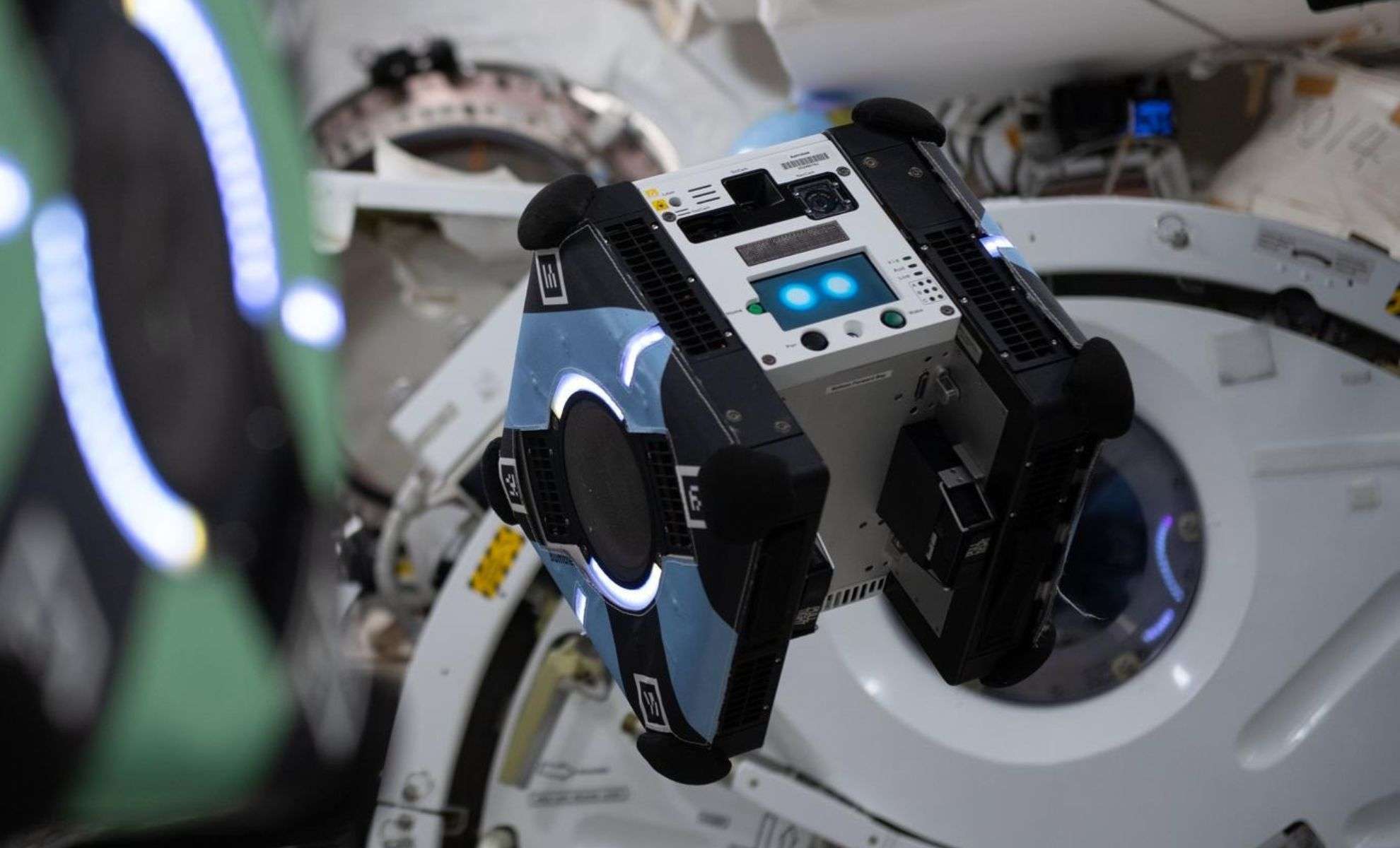
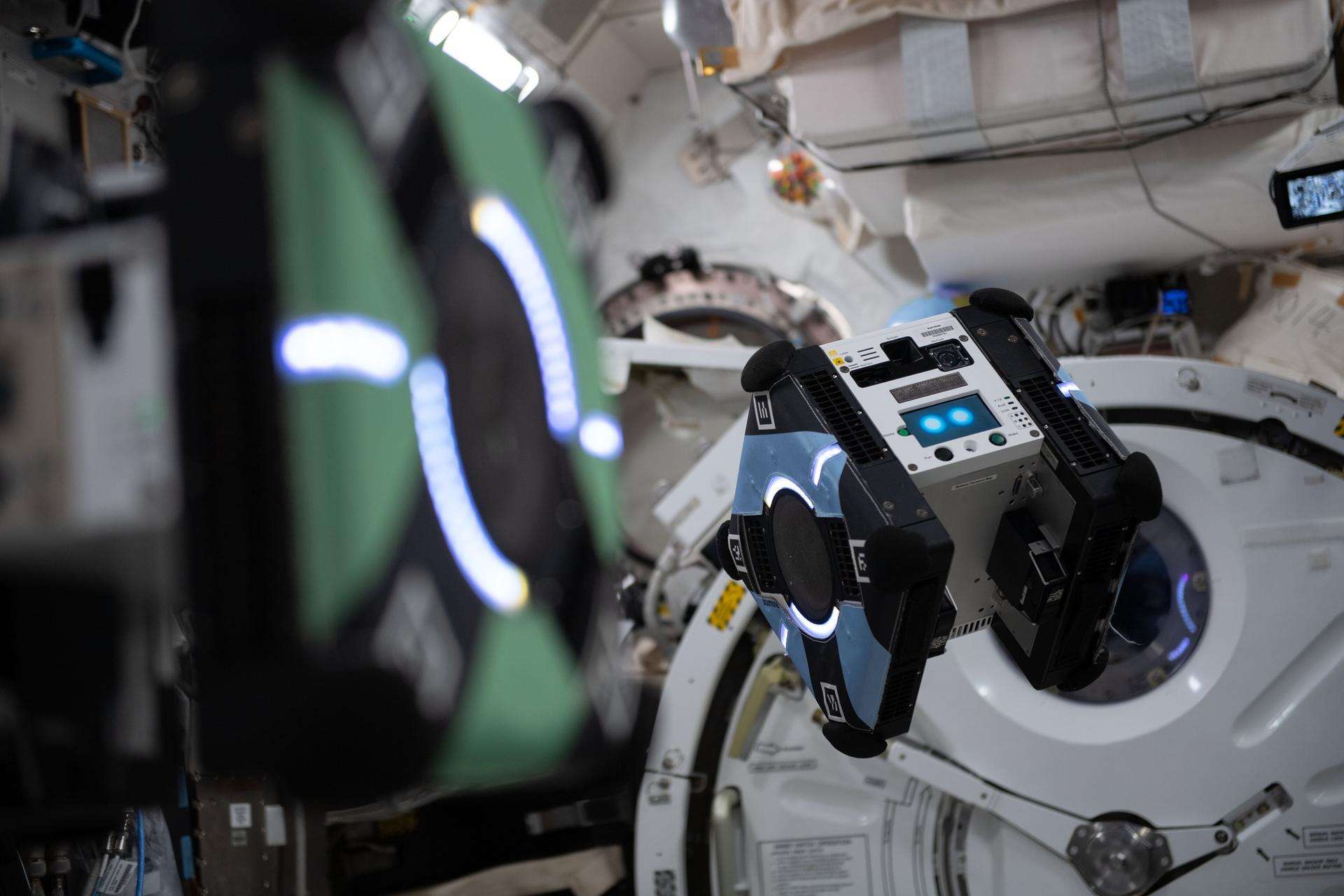
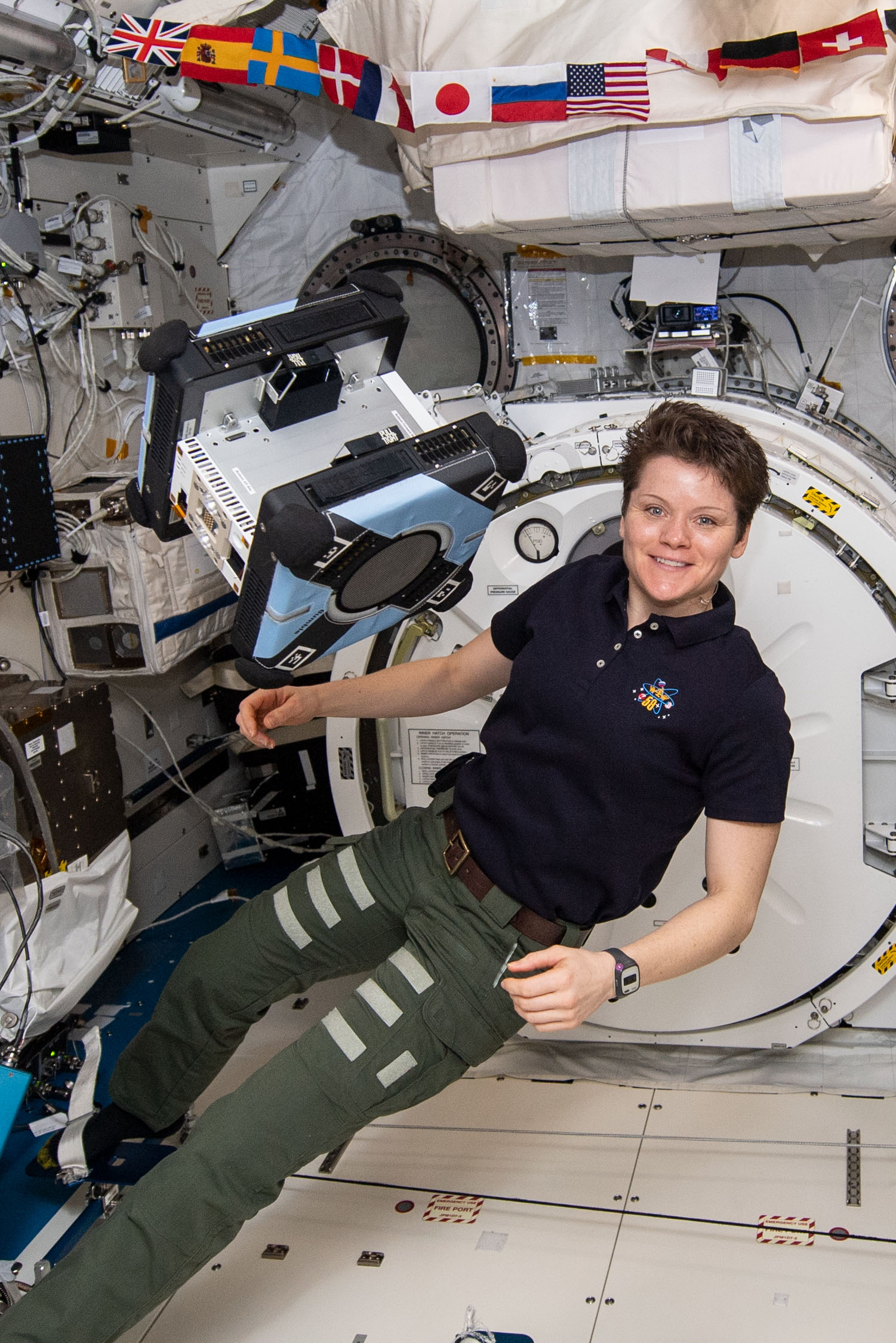
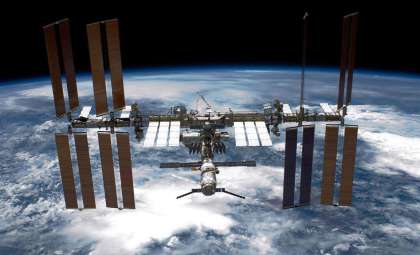
Within a serene section of the International Space Station, away from the constant activity of scientific trials and communications with Earth, three compact robotic cubes drift smoothly through the air, resembling slow-motion hummingbirds. These robots—named Bumble, Honey, and Queen—belong to Astrobee, NASA’s innovative robotics system that has accumulated over 1,000 operational hours in microgravity conditions.
Distinct from the robotic arms that often capture attention or rover vehicles exploring distant planets, Astrobee’s realm is the interior of spacecraft, where human activity is continuous, resources are limited, and precision is essential. Created by NASA’s Ames Research Center located in Silicon Valley, these 12.5-inch devices are packed with cameras, sensors, articulating arms, and fan-driven propulsion units. Their purpose is to relieve astronauts of mundane, repetitive chores that previously required manual effort.
“Advancing spaceflight depends heavily on automating onboard operations,” explained Jose Benavides, Astrobee’s project lead at NASA Ames. “Astrobee enables us to achieve that without jeopardizing safety or demanding astronaut attention.” Since their deployment in 2019, the team has overseen more than 130 experimental sessions, yielding results that are beginning to influence concepts for extended space missions.

At first glance, Astrobee might look like large smart speakers, but each cube is outfitted with a cutting-edge visual-inertial navigation system, a versatile payload bay, and a robotic gripper simulating a limb. These features allow Astrobee to conduct automated inspections, capture video footage, transport light objects, and autonomously dock itself for charging without any human intervention.
As space missions venture further into deep space and increase in duration, robots like Astrobee may become essential partners. With NASA gearing up for prolonged lunar missions and eventual Mars exploration, maximizing crew time and early anomaly detection could be critical contributors to mission success.
Robotic Automation in Zero Gravity
Operating independently in a microgravity environment involves unique hurdles. Astrobee relies on six integrated cameras, inertial sensors, and advanced mapping tools for navigation. Instead of conventional wheels, it uses electric fans to glide silently and safely through the station's air-filled compartments.
This design minimizes risks such as collisions or fluid leaks, which are critical concerns in delicate spacecraft interiors. For tasks demanding stability or energy efficiency, Astrobee employs its perching arm to securely attach to handrails, maintaining its position without continuous propulsion.
NASA’s choice to build Astrobee on the open-source Robot Operating System (ROS) platform has proven to be advantageous. This approach enables external researchers to incorporate custom algorithms and experimental hardware without reprogramming the core system. Such flexibility has supported diverse experiments, including RFID tracking, sound-based issue detection, and gecko-inspired adhesive technology—which imitates lizards’ footpads to gently secure the robot to smooth surfaces.
Astrobee as a Spaceborne Testbed
Astrobee functions not as a dedicated mission tool, but as a platform for research, inviting guest scientists and engineers to trial new technologies in actual space conditions. Through collaboration via NASA’s Guest Science Program, organizations can upload software, integrate equipment, and conduct experiments with Astrobee during designated periods aboard the ISS.
A notable project involved Stanford University’s Biomimetics Lab, which utilized Astrobee to test a soft robotic gripper lined with gecko-like adhesives. As highlighted in a 2022 issue of IEEE Robotics & Automation Magazine, the gripper produced 3.15 newtons of adhesive force. This strength allowed stable clinging during inspections or docking maneuvers, all without harming delicate surfaces.
Testing in microgravity offers invaluable real-world insights that ground simulations cannot fully replicate. Consequently, Astrobee has attracted interest from planners of both Gateway and Artemis missions, who view it as a forerunner for robotic caretakers in future long-duration habitats where humans might not always be present.
Enhancing Human-Robot Cooperation
Astrobee’s achievements symbolize a broader mindset shift at NASA and other agencies—acknowledging that human-robot teamwork is more than engineering; it’s a cultural evolution. Traditionally, robots operated under direct human commands, but with Astrobee’s ability for extended autonomous function, the dynamic is changing.
“Crew members increasingly consider Astrobee not merely a tool but a partner,” said Maria Bualat, deputy project manager at Ames. She oversees improvements to Astrobee’s user interface, enabling astronauts to trigger tasks straightforwardly while maintaining oversight of all robotic activities.
In keeping with NASA’s transparency goals, much of Astrobee’s documentation and source code is freely accessible on the NASA Open Source Portal. This openness empowers academic groups and startups to simulate operations, test innovations, and lower development expenses before direct NASA collaboration.
A Durable Presence in Space
Unlike earlier projects such as SPHERES, which operated for over a decade before being retired, Astrobee was designed for permanence. It serves as an adaptable infrastructure platform, evolving alongside the missions it supports.
NASA’s recent presentation at the 2023 International Space Station Research and Development Conference (ISSRDC) detailed Astrobee’s growing involvement in formation flying, independent navigation, and sensor integration research. The full NASA technical paper describes prospective studies on human-robot interactions and enhanced robotic autonomy aboard spacecraft destined for beyond-Earth missions.
- Categories:
- News




0 comments
Sign in to Comment