
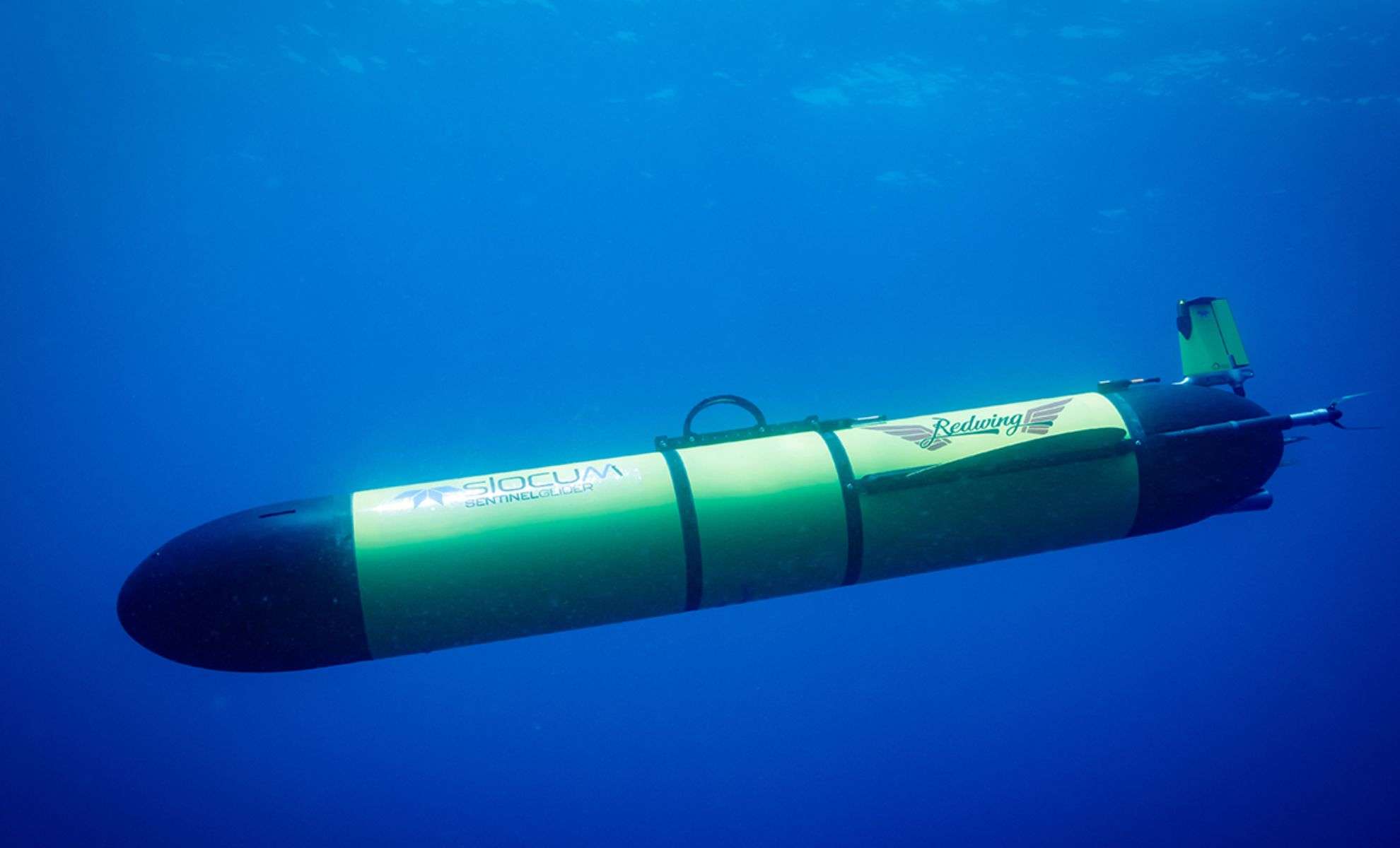
On October 10, a pioneering underwater voyage commenced off the Massachusetts shore, signaling a new era for marine exploration. As detailed by IFLScience, an autonomous gliding robot named Redwing has launched an unprecedented five-year mission aimed at becoming the first fully autonomous underwater vehicle to circle the globe.
An Undersea Route Inspired by Magellan
This expedition traces the path of the legendary Magellan circumnavigation from 1519 to 1522 but takes place beneath the waves. Unlike traditional vessels that rely on engines, Redwing moves by exploiting ocean currents and adjusting its buoyancy, gliding silently through the depths.
Starting at the Woods Hole Oceanographic Institution, the robot will drift along the Gulf Stream toward its initial destination in Gran Canaria, part of the Canary Islands. The journey continues around the southern tip of Africa near Cape Town, across the Indian Ocean to Australia's western shores, and then on to New Zealand.

The most challenging portion awaits in the Antarctic Circumpolar Current, the planet's most robust ocean current. Afterward, Redwing is set to head toward the Falkland Islands, potentially stop by Brazil and the Caribbean, before completing its circuit at the Eastern U.S. coast.
Advancing Marine Robotics with Redwing
The Slocum Sentinel Glider, known as Redwing, was developed by Teledyne Marine in partnership with Rutgers University–New Brunswick. Hailed as the most sophisticated commercial subsea glider yet designed, it is engineered to traverse extensive distances using minimal power.
Rather than conventional propulsion, Redwing leverages changes in gravity and buoyancy to move in smooth, arching patterns underwater. By delicately controlling its rising and sinking, it effectively rides ocean currents rather than fighting against them, enabling an average cruising speed near 0.75 knots. The glider is expected to cover roughly 73,000 kilometers (around 45,000 miles) throughout the five-year voyage.
Though primarily buoyancy-driven, Redwing is equipped with two thrusters including a propeller system to assist navigation in strong currents. Its operations are powered by an advanced lithium battery pack that also supports a range of scientific sensors.
Mapping the Ocean in Three Dimensions
The glider will regularly surface every 8 to 12 hours to transmit collected data via satellite in real time. Its array of instruments measures variables like temperature, depth, and salinity, contributing to a comprehensive three-dimensional understanding of ocean conditions.
Data from Redwing promise to enhance diverse research areas, including improved hurricane forecasting and monitoring of marine ecosystems.
Additionally, the glider houses a fish tracking module capable of detecting tagged aquatic species. This feature may uncover new insights into migration patterns that have previously been difficult to observe due to limited technology.
Education and Challenges on the Horizon
The ongoing mission will engage students and educators actively in tracking Redwing’s progress. Numerous undergraduate researchers plan to analyze the data live, integrating it into their scientific studies.
“This is a historic moment for ocean science,” said mission co-leader Scott Glenn, a Distinguished Professor in Rutgers’ Department of Marine and Coastal Sciences. “We’re deploying a robot that will travel the world’s oceans, gathering data. And we’re doing it with students, educators, and international collaborators every step of the way.”
The journey poses significant risks, including the threat of entanglements in fishing gear, navigating high-traffic shipping lanes, and enduring some of the ocean’s most extreme conditions. The team remains mindful of the unpredictable nature of the marine environment as Redwing embarks on this ambitious exploration.
- Categories:
- News










0 comments
Sign in to Comment