
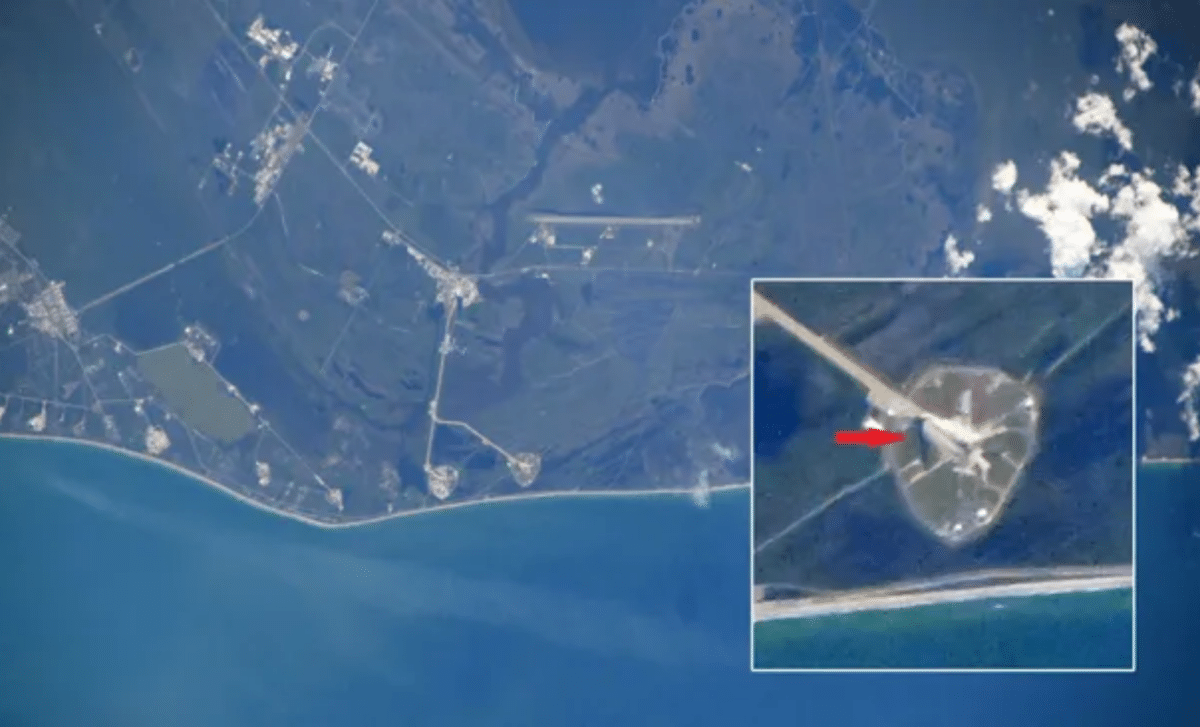
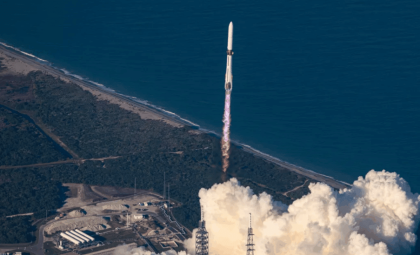
From his vantage point aboard the International Space Station (ISS), NASA astronaut Chris Williams captured a striking photograph of the Artemis 2 rocket, marking a pivotal moment for crewed lunar missions after more than five decades. The photo, showcasing the spacecraft stationed on Florida’s coastline, was shared on January 19 and quickly became an emblem of NASA’s ambitious return to lunar orbit.
A Unique Moment in Space: Viewing the Moon Rocket from Above
This wasn’t merely another orbital snapshot of Earth. At 6:42 p.m. EST on January 17, as the ISS cruised over Florida, Chris Williams focused his lens on Launch Pad 39B at the Kennedy Space Center. The image revealed the Space Launch System (SLS) rocket of Artemis 2, resting on the launch pad after being transported for 12 hours aboard the historic crawler-transporter, a vehicle dating back to Apollo and Shuttle missions.
In a heartfelt message shared on X (formerly Twitter), Williams explained:

“If you zoom in on the rightmost launch pad, you can see a shadow just to the left of the center of the pad,” he noted. “That shadow is from the rocket (and launch tower) that will soon take four of my friends on a trip around the moon.”
While Williams admits the image isn’t technically perfect—"Should have grabbed a different lens"—he emphasizes the profound historical and emotional significance it holds. After the unexpected medical evacuation of Crew-11, Williams is currently the sole American astronaut on the ISS, uniquely positioned to observe humanity’s next giant leap from orbit.
I took this photo of @NASAKennedy this weekend. It is not my best photo (should have grabbed a different lens) but it is special – if you zoom in on the rightmost launch pad, you can see a shadow just to the left of the center of the pad. That shadow is from the rocket (and… pic.twitter.com/vC7zbib9Uh
— Chris Williams (@Astro_ChrisW) January 19, 2026
Artemis 2: Advancing Toward Crewed Lunar Exploration
Scheduled as early as February 6, Artemis 2 will be the first mission to send astronauts near the moon since 1972. Over a 10-day journey, its four-person crew will verify spacecraft systems aboard the Orion capsule, conduct the trans-lunar injection burn, and orbit the moon before returning safely to Earth. This mission aims to validate critical technology and pave the way for a crewed lunar landing with Artemis 3, planned for 2027 or 2028.
This flight also marks Orion’s inaugural crewed voyage. Though uncrewed tests, such as Exploration Flight Test-1 in 2014 and Artemis 1 in 2022, confirmed the capsule’s design, this mission will put it through real-time astronaut evaluation.
The SLS rocket standing on the launch pad is a key pillar of NASA’s Artemis goals. It blends proven technologies with new advancements engineered for deep space missions. Launch timing depends on final preparations, including the crucial wet dress rehearsal to be completed by February 2.
The Artemis Program, Starship, and the Future of Lunar Exploration
As Artemis 2 approaches liftoff, anticipation grows for the subsequent mission: Artemis 3, which intends to achieve a crewed landing on the lunar surface. Success for Artemis 3 hinges on SpaceX’s Starship, still undergoing development and facing delays. Nevertheless, Artemis 2 lays essential groundwork for sustained lunar presence as NASA eyes Mars as a long-term destination.
More than a single voyage, the Artemis initiative represents a decades-long roadmap to deepen human experience in deep space. It tests vital hardware, studies human adaptability, and fosters global collaboration in lunar missions. The sight of the rocket from orbit captures both the spirit and the strategy behind humankind’s renewed lunar ambitions.
- Categories:
- Space









0 comments
Sign in to Comment