
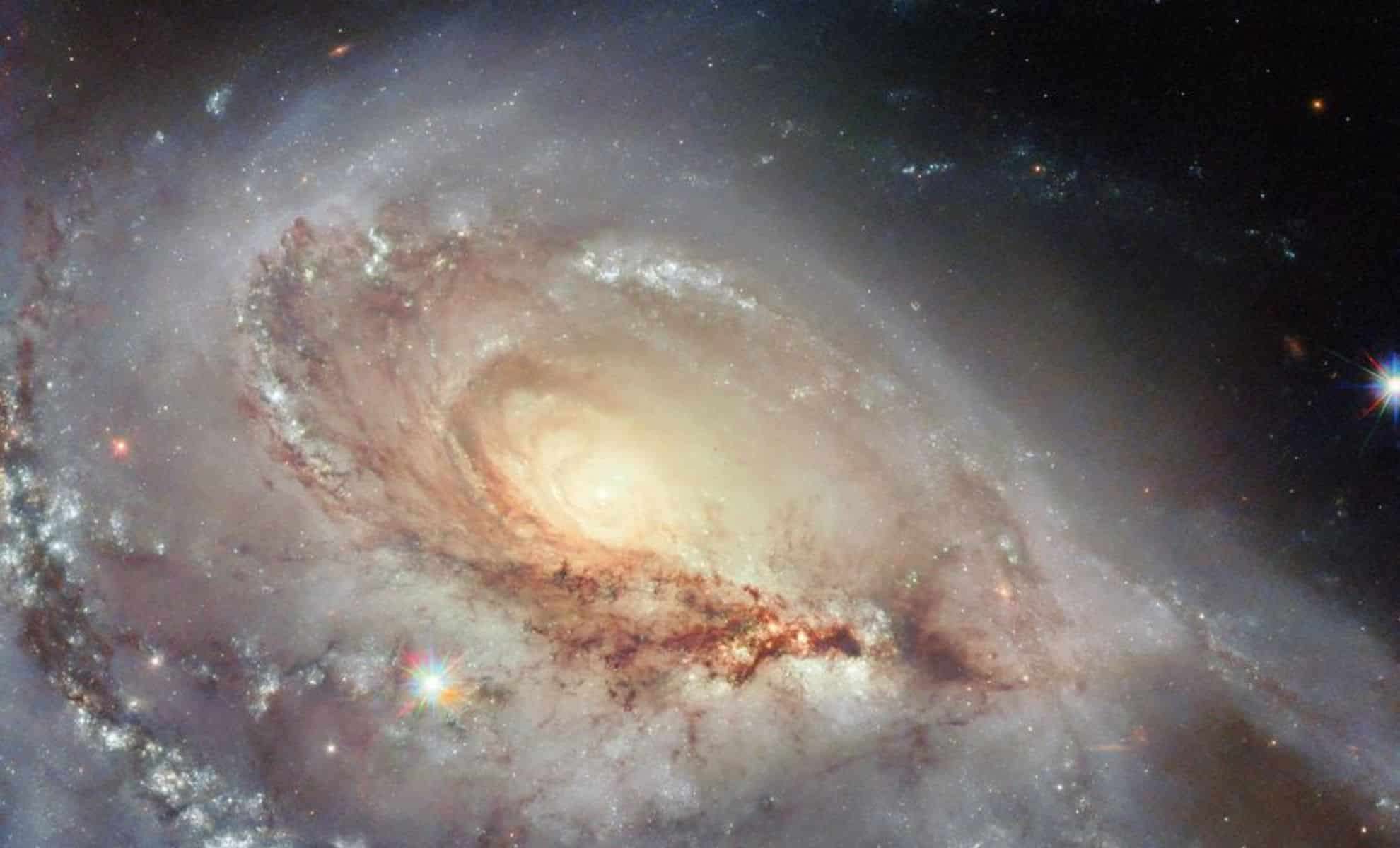
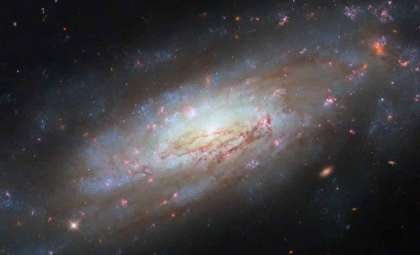
The Hubble Space Telescope has recently taken an extraordinary image revealing a faraway spiral galaxy with a unique, uneven shape. Located roughly 190 million light-years away within the boundaries of the Camelopardalis constellation, this galaxy is notable for its single, prominent spiral arm brimming with stars, which intriguingly reaches out in our direction.
Arp 184: Exploring the Structure of a Singular Spiral Galaxy
A recent announcement from NASA and ESA highlights both the visual allure and the astrophysical importance of Arp 184.
Arp 184’s hallmark is its distinctive asymmetric shape, characterized by just one dominant spiral arm extending far outward. This peculiar spiral galaxy appears in the Atlas of Peculiar Galaxies, cataloged by Halton Arp in 1966, featuring galaxies with unusual formations and behaviors.

In contrast to classic spiral galaxies with balanced arms encircling a bright core, Arp 184’s structure is notably uneven. One flank is dense with stars and gas, while the opposite side reveals only faint wisps of stellar material and gas.
Thanks to this unevenness, Arp 184 is affectionately dubbed the One-Armed Wonder. Astronomers speculate that gravitational influences from nearby galaxies or past galactic collisions might have influenced its unique layout.
Arp 184’s Supernova Activity: Insights into Stellar Life Cycles
Adding to its intrigue, Arp 184 has been identified as a hotspot for supernovae occurrences over recent decades.
The galaxy has witnessed four confirmed supernovae, marking the dramatic deaths of stars that culminate in powerful explosions.
These stellar cataclysms not only emit massive energy visible across the cosmos but also enrich the galaxy’s surroundings with heavier elements essential for future star and planet formation.
This active supernova history makes Arp 184 a compelling subject for ongoing research, enabling astronomers to study the aftermath of these powerful events and deepen understanding of stellar birth and destruction.
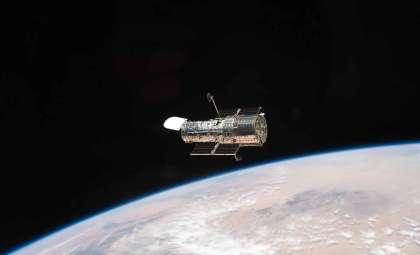
The Hubble Space Telescope has played a key role in monitoring these extraordinary stellar phenomena. The influence of supernovae extends beyond the explosions themselves; the energy released can heat interstellar gas, sometimes stimulating new star formation or, conversely, suppressing it.
Hubble’s Crucial Observations Illuminate Arp 184’s Secrets
This captivating snapshot of Arp 184 comes from Hubble’s acclaimed Picture of the Week series, which spotlights some of the universe’s most intriguing and eccentric celestial objects. Hubble’s sharp imaging capabilities have yielded a remarkably clear portrait accentuating the galaxy’s unusual one-armed spiral.
The image results from several observation campaigns focusing on galaxies with peculiar features like Arp 184. These short-term programs specifically target irregular galaxies, many of which are included in Halton Arp’s Atlas.
Hubble’s data also enriches studies of transient cosmic events such as supernovae and tidal disruptions, where stars are torn apart by the immense gravity of supermassive black holes.
Placing Arp 184 Among the Universe’s Peculiar Galaxies
Addition to the Atlas of Peculiar Galaxies situates Arp 184 amid some of the most unusual and mysterious galactic formations known. Compiled by Halton Arp in 1966, this catalog features 338 galaxies that defy conventional classification. Many are involved in ongoing mergers, gravitational encounters, or exhibit irregular physical traits.
The Atlas includes a broad range of objects, from diminutive irregular dwarf galaxies to larger systems like Arp 184, where interactions with neighboring galaxies have produced one-sided or disrupted structures.
- Categories:
- Space




0 comments
Sign in to Comment