
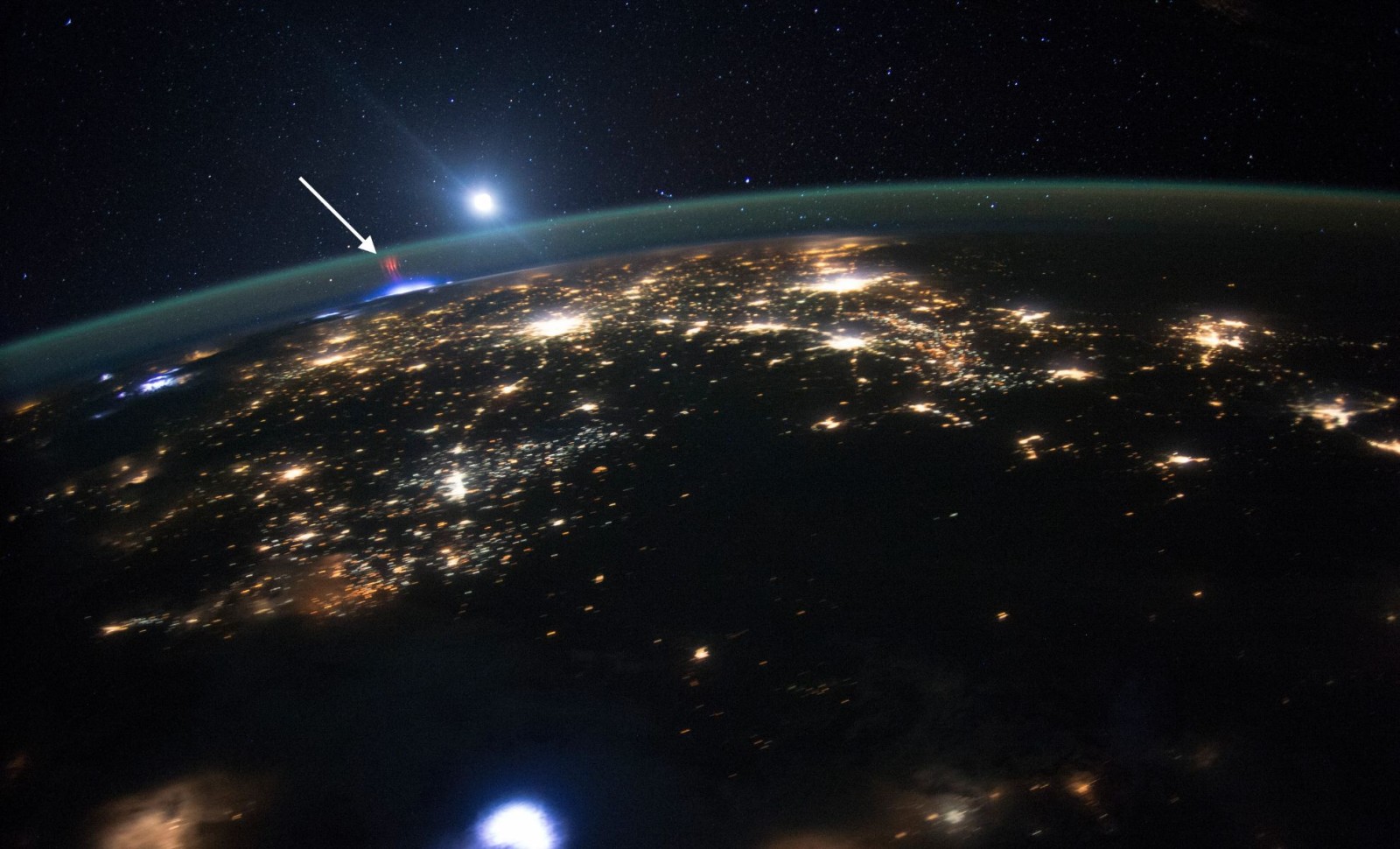
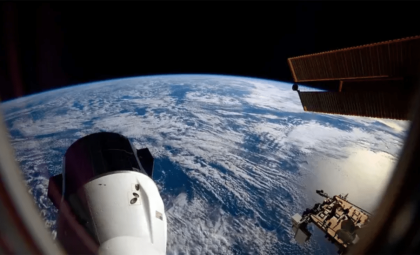
From her vantage point aboard the International Space Station (ISS), astronaut Nichole Ayers recently photographed a captivating natural phenomenon known as a "sprite." Captured some 250 miles above Earth, the image reveals brilliant red, branching streaks of a sprite shimmering above a thunderstorm.
Sprites are uncommon electrical occurrences that emerge roughly 50 miles above the planet’s surface, sparked by powerful lightning discharges within storm clouds. Despite their striking visuals, scientists continue to investigate the precise formation processes of these elusive phenomena.
Understanding Sprites
Sprites are fleeting, red-hued flashes that appear in the upper atmosphere amid active thunderstorms. Unlike conventional lightning bolts that strike downward, sprites extend upward from thundercloud tops, reaching altitudes near 50 miles above Earth. These events belong to the broader category of Transient Luminous Events (TLEs), which also include lightning, blue jets, and elves. NASA explains that sprites often emerge in groups, displaying complex, branching forms with a radiant red glow.

“Sprites are TLEs or Transient Luminous Events, that happen above the clouds and are triggered by intense electrical activity in the thunderstorms below,” explained Nichole Ayers in an X post. “We have a great view above the clouds, so scientists can use these types of pictures to better understand the formation, characteristics, and relationship of TLEs to thunderstorms.”
Although mesmerizing, the exact cause behind sprite formation remains a subject of ongoing research, making these luminous bursts a scientific puzzle. Ground-based observations struggle to capture sprites due to their high altitude, making space-based imaging from the ISS invaluable for advancing understanding.
Tracking Sprites from Orbit
Studying sprites from space enables scientists to gather unique insights unattainable from terrestrial vantage points. The ISS provides an unobstructed overview of the upper atmosphere, ideal for monitoring rare phenomena like sprites. According to Ayers, this specific sprite was spotted while the station passed over Mexico and the United States, with the glowing lightning contrasting against city lights below.
The station’s orbital path offers a distinctive opportunity to analyze sprites in relation to global weather systems. NASA’s citizen science initiative, “Spritacular,” which invites the public to submit sightings of TLEs, is further enriched by astronaut-captured data from space.
- Categories:
- Space







0 comments
Sign in to Comment