
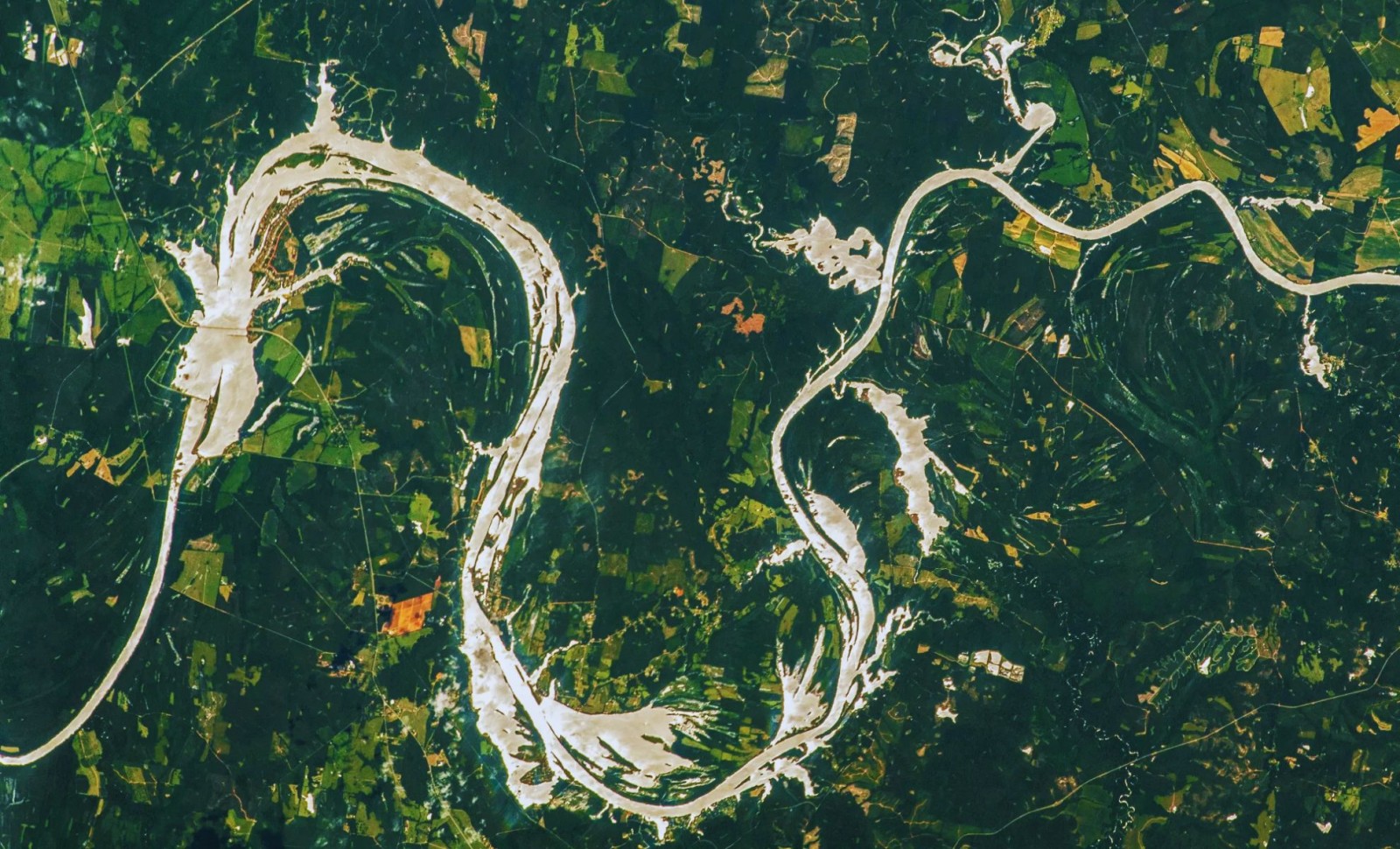
In June 2023, an extraordinary event occurred above the Alabama River when an unusual optical effect transformed it into a glowing golden dragon, visible solely from space. An astronaut aboard the International Space Station (ISS) captured the striking image, which quickly spread online, mesmerizing viewers with its surreal and dazzling appearance. For a fleeting moment, the river’s serpentine route combined with sunlight reflecting off the water’s surface to create an awe-inspiring natural spectacle.
This phenomenon is known as sunglint, which happens when sunlight reflects off calm water at a precise angle, producing a mirror-like shine. While sunglint frequently occurs over vast bodies of water such as oceans, witnessing it over a river, particularly one with Alabama River’s unique geography, is an uncommon event. So, why did the river resemble a magnificent golden dragon?
Understanding Sunglint
Sunglint is an optical effect, not an illusion meant to deceive, but a natural reflection phenomenon. It appears when water surfaces are smooth enough to bounce sunlight directly back to the observer's viewpoint. It's most often observed over expansive bodies like oceans or lakes, but rarely seen over rivers. The sunlight reflecting results in a shiny, almost mirror-like water surface.

Normally, sunglint appears silvery, but in this case, the reflected light displayed a golden tint. According to Live Science, this unusual coloration results from atmospheric light scattering that filters out blue wavelengths, leaving a warmer, yellowish luster. This effect gave the river an almost enchanted golden glow, reminiscent of imagery from folklore.
The Enchanting Dragon-Shaped River
The Alabama River features a notable U-shaped curve near Gee’s Bend, a site embedded with rich cultural and historical significance. When illuminated by sunglint, this bend resembled a mythical Chinese dragon. The dragon's head was formed by the flooded region surrounding the Dannelly Reservoir, created when the river was dammed in the 1960s. The river’s twisting course resembled the dragon’s body, with the floodplain's bright, irregular patches looking like shimmering scales.
Already significant due to its history and natural environment, the river took on a striking new identity under this golden illumination. The viral imagery sparked worldwide fascination, with many comparing it to legendary creatures from ancient myths.
Scientific Value Beyond Beauty
While sunglint is often admired for its visual impact, it also serves as a valuable tool for researchers. Astronauts capturing sunglint images aren’t just making beautiful pictures; these reflections can reveal subtle details about the water’s surface characteristics, shedding light on water transparency, environmental conditions, and human influences on ecosystems. NASA explains that sunglint assists in studying oceanic features like gyres and internal waves, and can help detect pollutants, oil spills, and even vessel disturbances.
In the Alabama River’s case, the sunglint emphasized the environmental alterations caused by the establishment of the Dannelly Reservoir.
“This resulted in flooding at several points along the river. These flooded zones are typical of floodplains—the low, flat areas immediately next to larger rivers”, stated the U.S. space agency in a report.
- Categories:
- News








0 comments
Sign in to Comment