
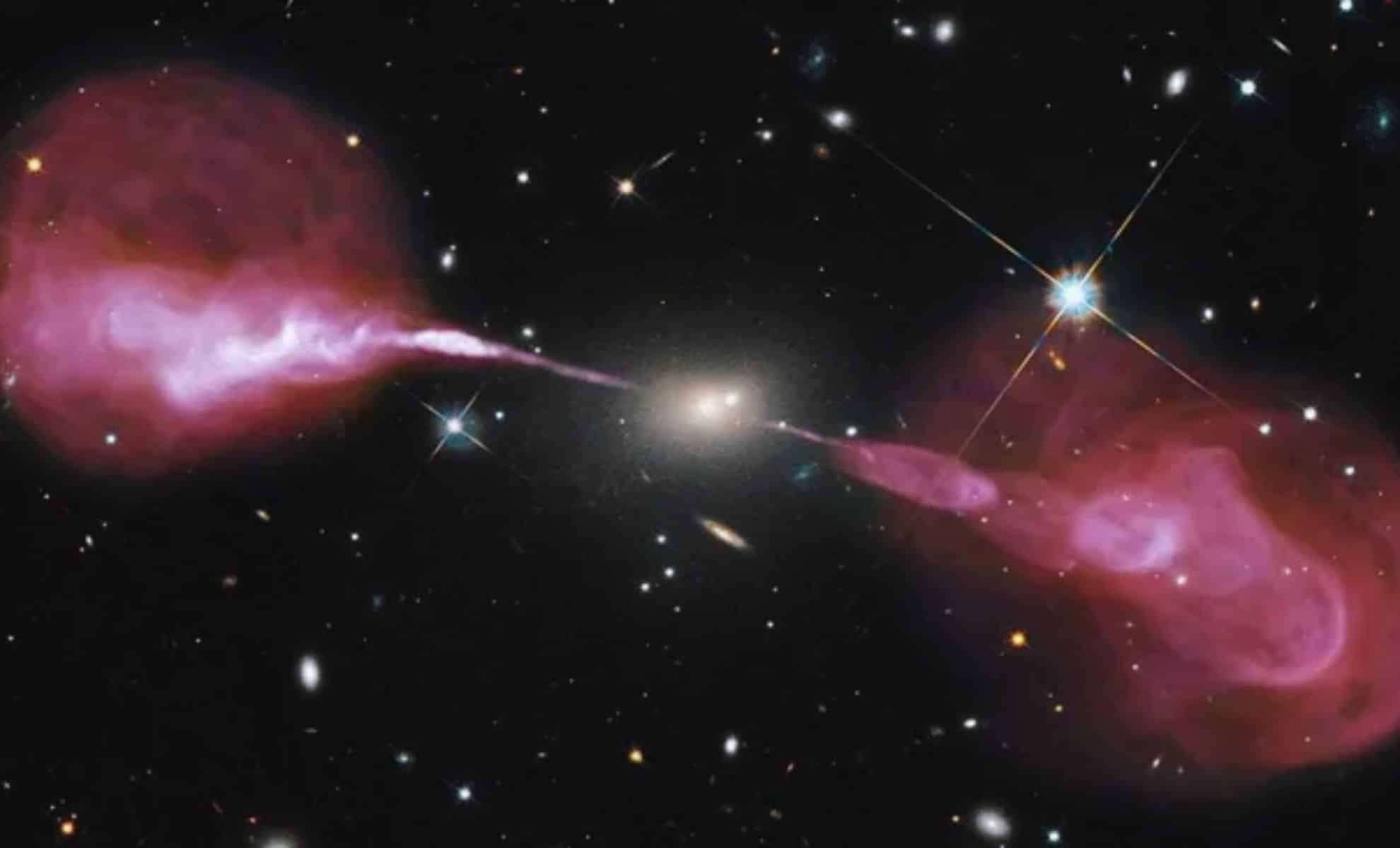
Astronomers operating the Square Kilometer Array Pathfinder (ASKAP) telescope in Australia have identified 15 new Giant Radio Galaxies (GRGs) within the Sculptor Field. These newly found behemoths rank among the universe's largest known objects, with some spanning over 12 million light-years. Detailed findings published on arXiv provide fresh insights into the formation and growth patterns of these immense galactic structures.
Massive Radio Galaxies: The Universe's Largest Celestial Structures
Giant Radio Galaxies are enormous elliptical galaxies dominated by central supermassive black holes. They emit colossal jets emitting radio waves, often seen as twin lobes extending from the core. Typically ranging from 2.3 million to 15.3 million light-years wide, their scale dwarfs familiar galaxies such as the Milky Way, which itself is roughly 105,700 light-years in diameter.
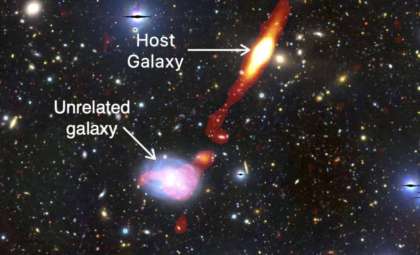
The most colossal GRG identified in this set, ASKAP J0107–2347, is so vast that the Milky Way could fit inside it 117 times over. This remarkable discovery advances comprehension of galactic scale limits and the mechanisms driving their expansion. Researchers, including Baerbel Silvia Koribalski from Western Sydney University, are investigating the factors enabling such giant growth, exploring both intrinsic galaxy properties and environmental influences.

Insights Into Supermassive Black Hole Activity
Every Giant Radio Galaxy harbors a supermassive black hole that powers its immense jets. As these black holes consume nearby matter, they produce Active Galactic Nuclei (AGN), unleashing vast jets that stretch millions of light-years. Koribalski explains, “Sometimes these supermassive black holes are feeding, and powerful radio jets are seen to emerge from near the black hole. Other times, the supermassive black hole is inactive, so we see no jets and the lobes that formed around the head of the jet slowly fade.”
The cycles of AGN activity influence GRG life spans and visibility. Jets may dim or disappear when the black hole goes dormant, yet they can reactivate, creating new bright lobes. Monitoring these changes helps astronomers determine how and when AGNs switch between active and inactive phases.
ASKAP’s Cutting-Edge Survey Capabilities
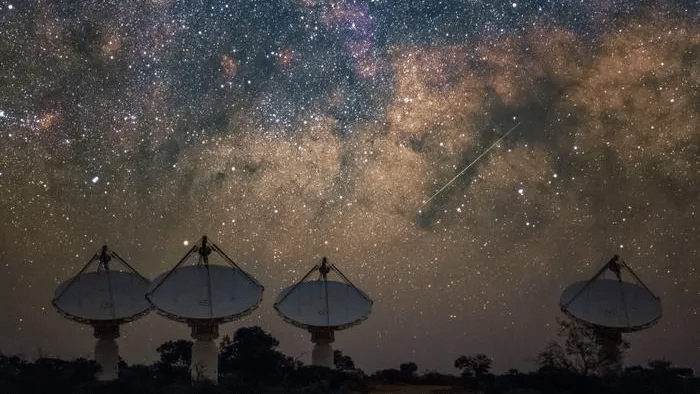
ASKAP’s innovative technology played a crucial role in this breakthrough. Koribalski notes, “Thanks to the new wide-field receivers, known as Checkerboard Phased Array Feeds that resemble a chessboard, ASKAP can perform expansive sky surveys. Each observation covers 30 square degrees, compared to about one square degree typically seen by older radio arrays. This makes each ASKAP image a rich source of discovery!”
Utilizing its advanced design, ASKAP captures high-resolution observations of distant, faint galaxies, such as those in the Sculptor Field centered on the NGC 253 galaxy. These images reveal the detailed morphology, symmetry, and age of GRGs, dramatically enhancing our understanding of their structure and evolution.
Exploring the Expansion of Giant Radio Galaxies
A key puzzle is what drives the immense enlargement of GRGs. Koribalski remarks, “If nothing obstructs lobe expansion, they keep growing, enlarging, and fading. Often, we observe old outer lobes alongside newer, inner lobes and jets formed after renewed black hole activity. This phenomenon allows us to study AGN on-and-off timescales.”
This reactivation of black hole jets produces fresh, vivid radio lobes and gives astronomers a valuable window into GRG growth mechanisms. External influences such as galaxy collisions or environmental conditions, sometimes called "cluster weather," could regulate their ultimate dimensions. The distinctive lobed structure of ASKAP J0107–2347 offers an exceptional case study to track how these enormous radio lobes develop throughout cosmic time.
- Categories:
- News









0 comments
Sign in to Comment