
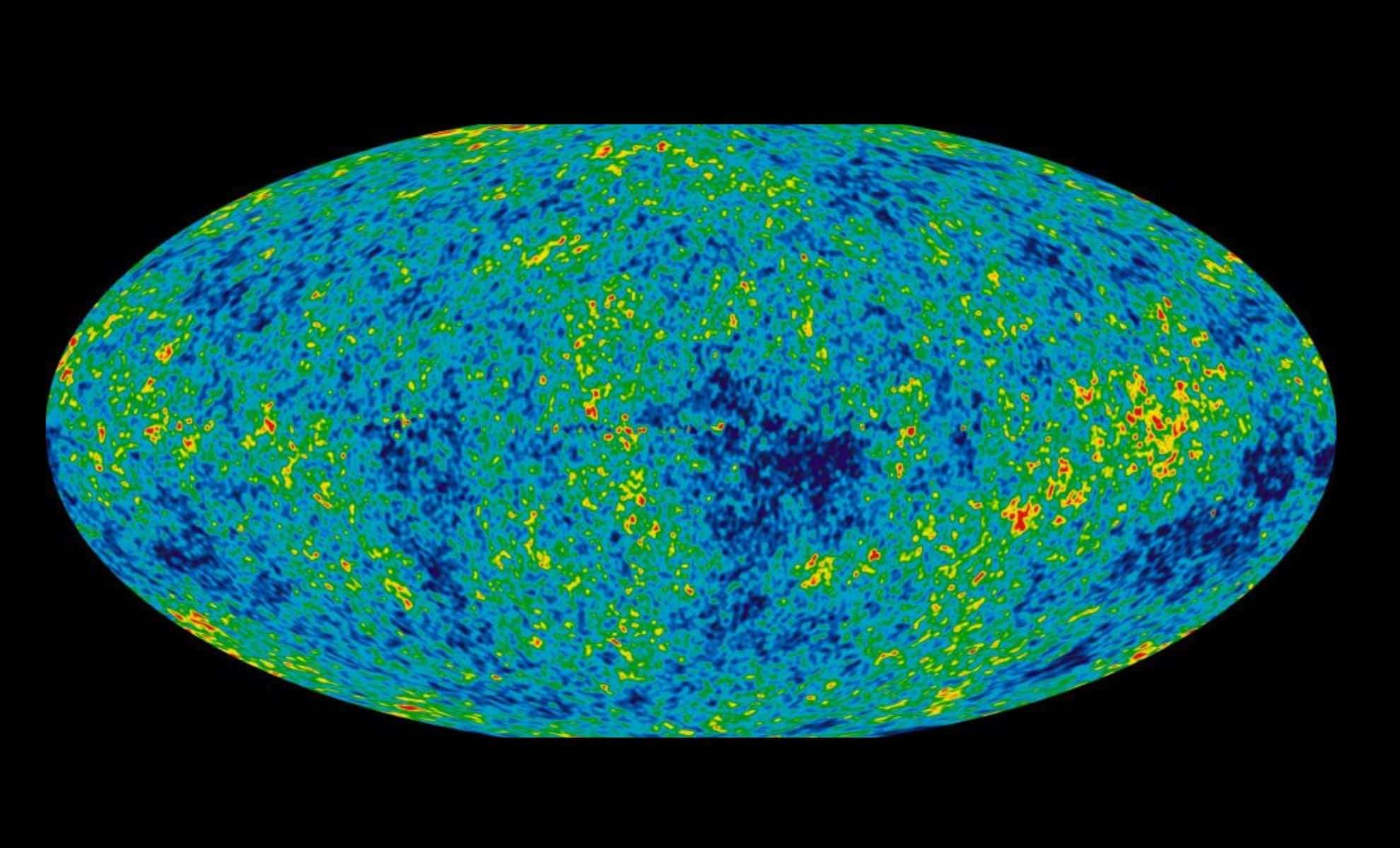
Astronomers have unveiled an immense cosmic giant that surpasses all previously known structures in both size and mass. This entity, called Quipu, extends across a staggering 1.3 billion light-years and encompasses an incredible 200 quadrillion solar masses. Its magnitude challenges existing cosmological frameworks, potentially altering prevailing theories about galaxy development, universe expansion, and the overall cosmic architecture.
Discovered through the collaborative efforts of an international scientific consortium employing the Cosmic Large-Scale Structure in X-rays (CLASSIX) Cluster Survey, this revelation features Quipu along with four other colossal superstructures. Led by Hans Böhringer at the Max Planck Institute, the research awaiting publication in Astronomy and Astrophysics highlights how these immense formations offer essential clues about galaxy evolution, the cosmic microwave background (CMB) distortions, and how large masses influence measurements of the Hubble constant.
Understanding Quipu and Its Significance
Cosmic superstructures are vast assemblies composed of galaxy clusters and superclusters bound by gravity. They contain tremendous quantities of both ordinary and dark matter, fundamentally shaping the universe’s grand design. Quipu stands as the most immense structure of this kind known to date.

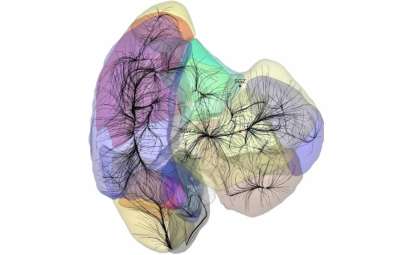
The name Quipu derives from the ancient Incan method of record-keeping using knotted strings, inspired by the superstructure’s web-like, filamentary appearance. The central galaxy strand and its branching filaments bear a striking resemblance to the Incan quipu cords, prompting astronomers to adopt this culturally meaningful designation.
Beyond scale, Quipu’s impact on its cosmic vicinity is profound. It influences the universe’s expansion dynamics, causes distortions in the CMB, and affects measurements of the Hubble constant. Studying Quipu offers a rare vantage point to deepen our grasp of how gravity, dark matter, and cosmic evolution collectively shape the cosmos.
Methodology Behind Quipu’s Discovery
The identification of Quipu was achieved by mapping X-ray emissions emitted by galaxy clusters. Galaxy clusters stand out due to the presence of hot intracluster gas radiating intense X-rays, making them detectable even when their constituent galaxies are faint.
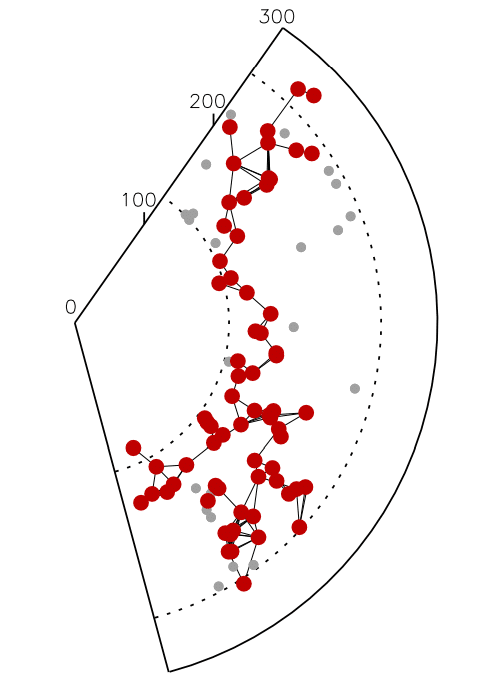
Using data from the CLASSIX Cluster Survey, which targets the universe’s largest and densest galaxy clusters, scientists used X-ray astronomy techniques to isolate the brightest, most tightly bound regions. Through this approach, they uncovered five gigantic superstructures, with Quipu topping the list.
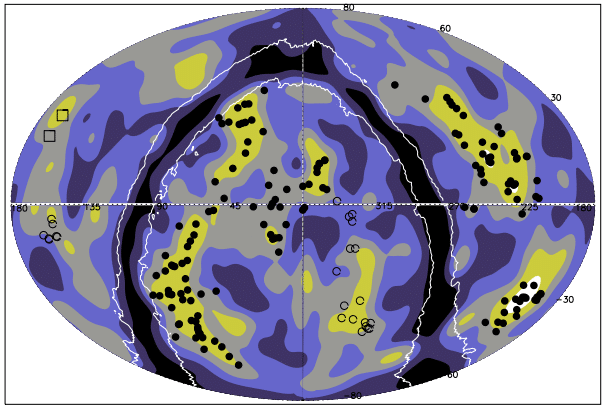
These colossal entities reside between approximately 130 and 250 megaparsecs (Mpc) from Earth. Analysis of galaxy density variations provided strong evidence that they constitute connected superstructures extending over vast distances rather than isolated clusters.
Quipu’s Role in Cosmic Science
The presence of Quipu has significant consequences for multiple core topics in cosmology and astrophysics, such as:
- Altering the Cosmic Microwave Background (CMB):
As relic radiation from the Big Bang, the CMB offers insights into the universe's infancy. However, as CMB photons traverse massive entities like Quipu, gravitational effects induce redshifts and temperature changes (known as the Integrated Sachs-Wolfe effect), complicating our observations of the early cosmos. - Impact on the Hubble Constant:
The Hubble constant quantifies the expansion rate of the universe. Gravitational influences from superstructures like Quipu affect galaxy velocities in complex ways, introducing potential inaccuracies in these crucial cosmological measurements. - Gravitational Lensing and Observational Distortions:
Due to its immense mass, Quipu bends spacetime, deflecting light from remote galaxies. This gravitational lensing can cause errors in assessing galaxy distances, brightness, and positions, influencing astronomical data interpretations.
Hans Böhringer and collaborators stress that acknowledging the influence of such superstructures is vital for cosmological modeling. While contemporary models accommodate sizable formations, Quipu’s discovery hints that the largest cosmic assemblies may exceed prior expectations in size and significance.
Are Even Larger Cosmic Giants Yet Undiscovered?
The uncovering of Quipu opens the question of whether other, even vaster cosmic superstructures exist.
According to simulations based on the Lambda Cold Dark Matter (ΛCDM) framework, such enormous formations are expected to be present. However, detecting them demands highly detailed X-ray observations and sophisticated statistical analysis. Future observatories, including ESA’s Athena X-ray telescope and NASA’s Lynx mission, may offer the capability to reveal these cosmic titans with greater clarity.
The research team remarked, “We find superstructures with similar properties in simulations based on Lambda-CDM cosmology models,” supporting the notion that these extensive structures emerge naturally during large-scale cosmic formation.
The study also suggests that formations like Quipu are transient. Over billions of years, these massive conglomerates may fragment into smaller gravitationally bound galaxy clusters, eventually forming more compact galaxy assemblies. This highlights that the current discovery captures a temporary but pivotal phase in the evolution of cosmic structures.
Future Directions for Investigating Quipu and Beyond
Progress in unraveling Quipu’s mysteries is essential for enhancing our comprehension of the universe. Upcoming investigations aim to delineate its internal composition, quantify its gravitational influences precisely, and clarify its significance in the grand cosmic timeline.
Scientists will also explore how superstructures like Quipu affect the birth and development of galaxies. Their gravitational forces may trigger star formation bursts in some sectors while inhibiting it in others, thereby shaping galactic maturation trajectories.
Anticipated future research includes:
- In-depth spectroscopic analysis to chart Quipu’s detailed mass layout.
- Enhanced gravitational lensing studies to examine the impact on light from distant celestial objects.
- Cosmic evolution simulations to integrate Quipu within broader universal growth models.
The Universe’s Boundless Mysteries
Quipu ranks among the most remarkable astronomical findings of recent times, highlighting the intricate and interconnected nature of the cosmos. Its immense scale and mass reveal that humanity’s understanding of the universe’s largest frameworks is still unfolding.
Armed with emerging telescope technologies and innovative observational methods, astronomers are set to discover even more vast cosmic structures, revising prevailing conceptions about the universe’s deep architecture. One fact remains evident: there is still much to learn, and the universe continues to astonish us.
- Categories:
- Astronomy ,
- News







0 comments
Sign in to Comment