
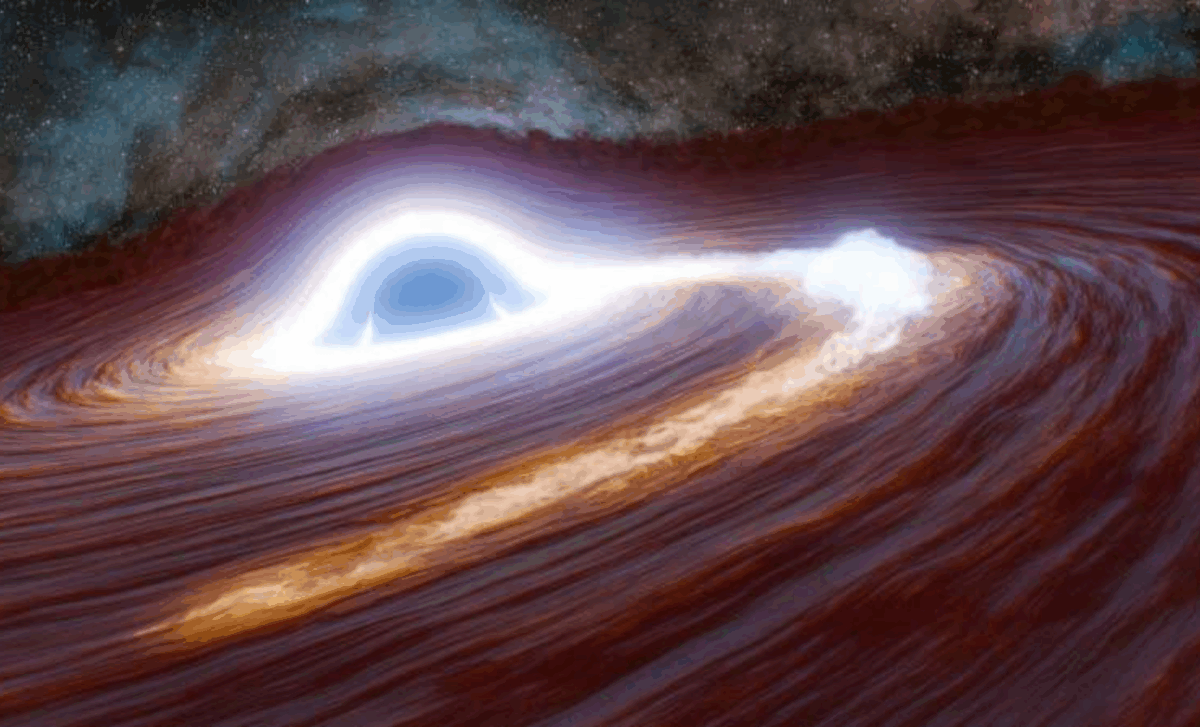
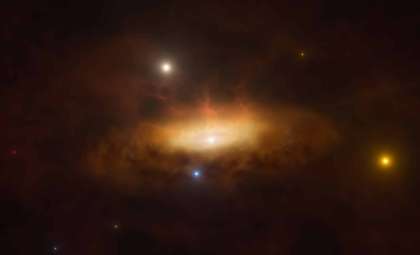
Scientists have detected an extraordinary burst of light from a supermassive black hole far across the cosmos, exhibiting intensity and duration that challenge existing galactic models. Captured from billions of light-years away, this powerful flare has captivated astronomers tracking dynamic cosmic events. The discovery, made through the Zwicky Transient Facility (ZTF), opens a new window into the energetic activity at the center of the early universe. Recent research published in Nature Astronomy sheds light on the origins and nature of this remarkable cosmic signal.
An Enormous Black Hole Ignites the Depths of Space
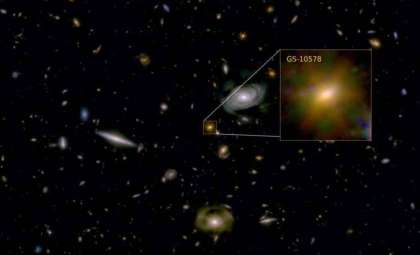
The event, recorded by ZTF and confirmed by additional extensive sky surveys, marks the most luminous and enduring eruption ever documented from a supermassive black hole. In the paper featured in Nature Astronomy, researchers describe an active galactic nucleus (AGN) with properties that push the boundaries of astrophysical theories. “The extreme energy indicates that this object is not only incredibly distant but extraordinarily bright,” remarks lead author Matthew Graham, astronomy research professor at Caltech and ZTF project scientist. “We’ve never encountered an AGN with such characteristics before.”
Initially, the authenticity of the event was carefully scrutinized. “It was crucial to verify that this intense source was genuinely this luminous,” notes co-author K. E. Saavik Ford, professor at the City University of New York (CUNY) Graduate Center and the American Museum of Natural History (AMNH). The results were astounding: “If we were to convert the entire mass of our sun into energy based on Einstein’s famous formula E = mc², it would equal the energy emitted by this flare during our observation period,” Ford explains.

The Stretching of Time Across the Universe
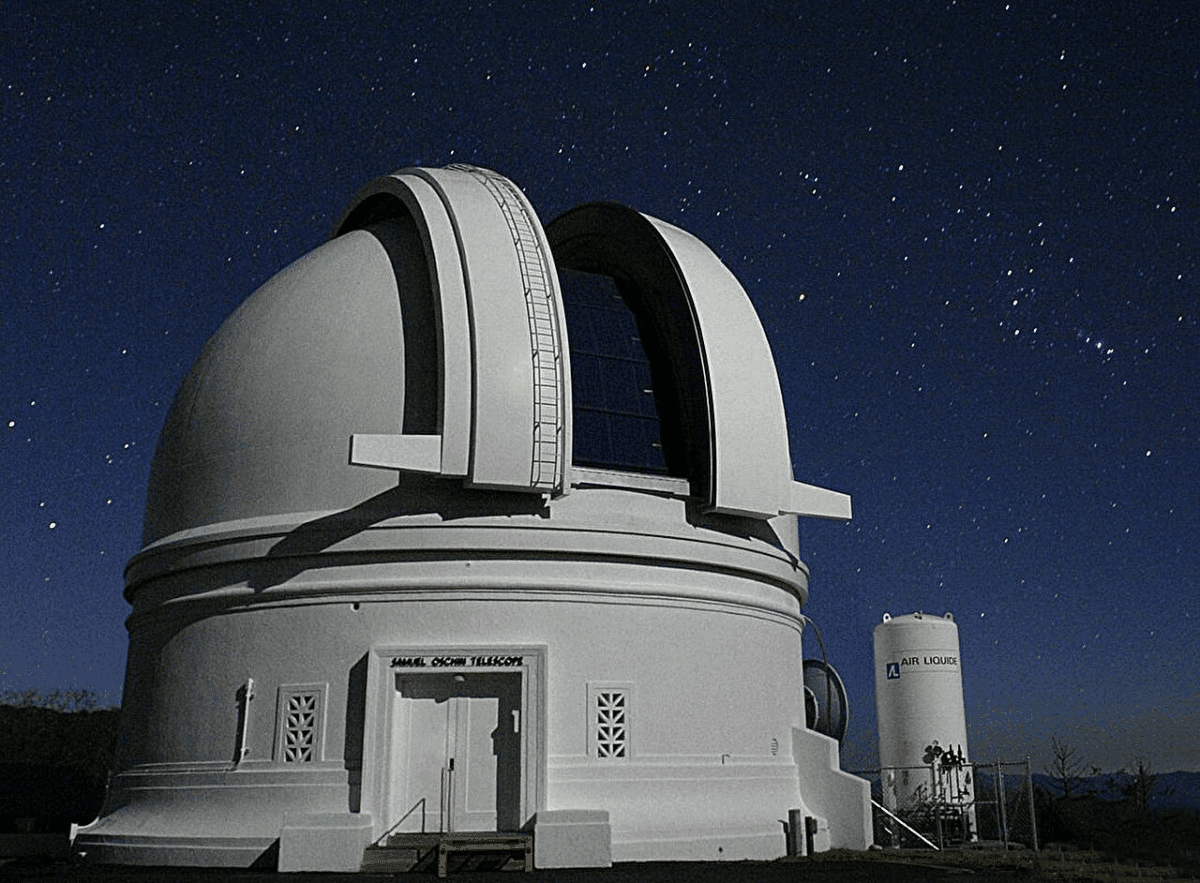
The prolonged duration of the flare has amazed researchers as well. Observations show the event has lasted for seven years from Earth’s perspective, which corresponds to roughly two years in the black hole’s own frame of reference. “This effect arises from cosmological time dilation caused by the expansion of space and time,” explains Graham. “As the light journeys through the expanding universe, both its wavelength and the passage of time lengthen.” This phenomenon allows astronomers to witness a slow-motion unfolding of cosmic activity.
Graham emphasizes that such discoveries rely heavily on extended sky monitoring. “Long-term observations like those by ZTF and Catalina are vital to capturing distant cosmic events fully; in this case, what appears as seven years here equates to only two years there. It’s like viewing a playback at a quarter of normal speed.” These detailed studies enhance understanding of black hole accretion, potentially reshaping prevailing theories on how supermassive black holes develop and consume matter during the universe’s formative stages.
Black Holes Growing Through Stellar Feasts
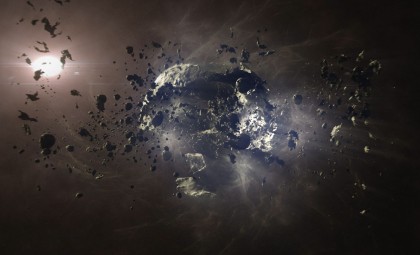
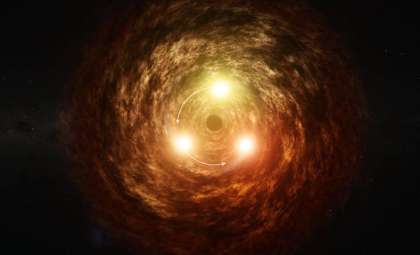
The investigation unveiled fascinating aspects about the black hole’s surrounding region. The intense brightness might be caused by the black hole devouring exceptionally massive stars embedded in its accretion disk. “Such enormous stars are uncommon,” Ford explains, “but within the disk of an AGN, stars can acquire mass more rapidly. Material falling onto these stars causes them to increase in size.”
When these stellar giants are torn apart by the black hole’s gravitational forces, vast amounts of energy are released as their remnants spiral inward. This cyclic process could explain the flare’s exceptional brightness and longevity, indicating a feedback loop wherein the black hole fosters and then destroys stars nearby. Such phenomena may have been widespread in the energetic, crowded centers of the early universe.
Essential Role of Continuous Sky Monitoring
This unique flare would likely have escaped detection without persistent surveillance by observatories like ZTF. “The discovery of this rare occurrence was made possible only because we have monitored the sky with ZTF for seven years,” says Graham. “Continuous observations let us track changes and anticipate future behavior of such events.”
Ongoing observations enable astronomers to create detailed time-domain maps of cosmic activity, revealing how transient phenomena develop over extended timeframes. This breakthrough highlights the indispensable value of long-term sky surveys in both identifying novel cosmic processes and expanding our comprehension of the ever-changing universe.
- Categories:
- Space

0 comments
Sign in to Comment