
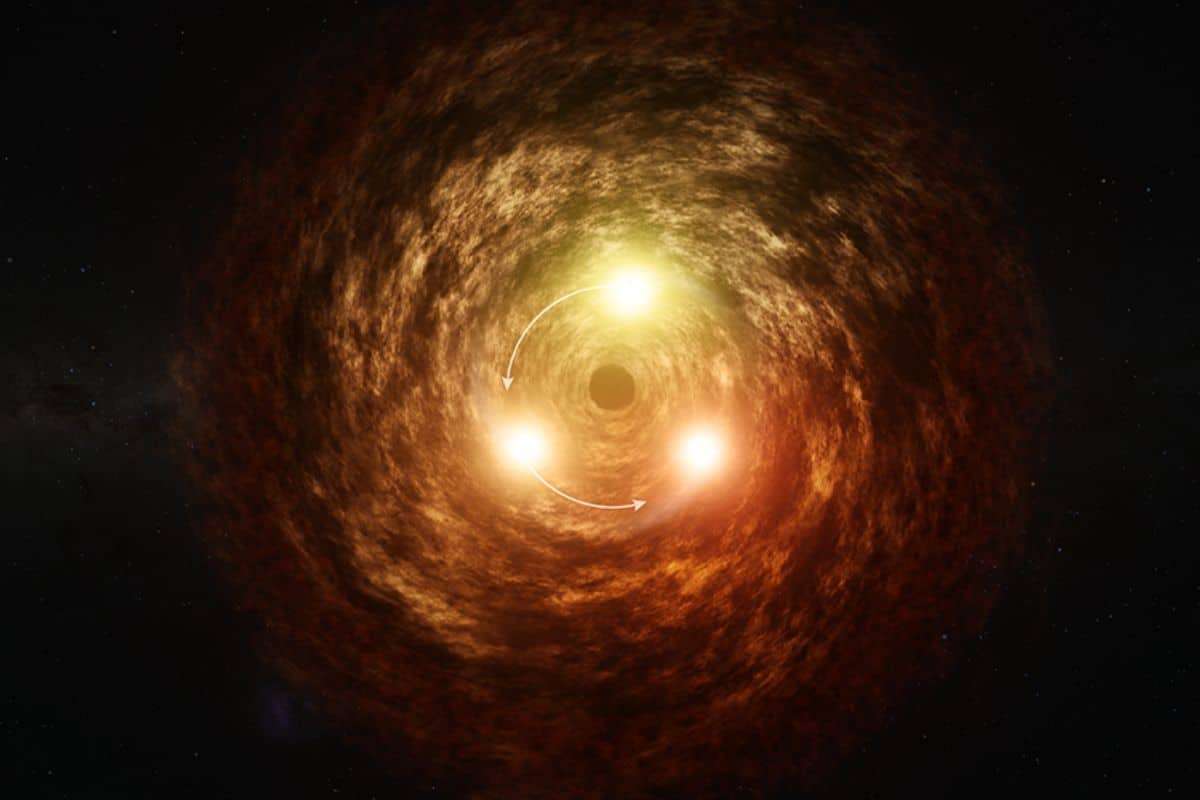
Scientists have made a remarkable observation of Sagittarius A*, the supermassive black hole at the heart of the Milky Way galaxy. Despite its typically subdued activity compared to other black holes, Sagittarius A* continues to reveal unexpected phenomena.
On April 6, 2024, the James Webb Space Telescope (JWST) recorded an extraordinary mid-infrared flare, a first of its kind. This discovery sheds fresh light on black hole dynamics, offering a new window into their energetic processes.
Capturing Activity at Our Galactic Core
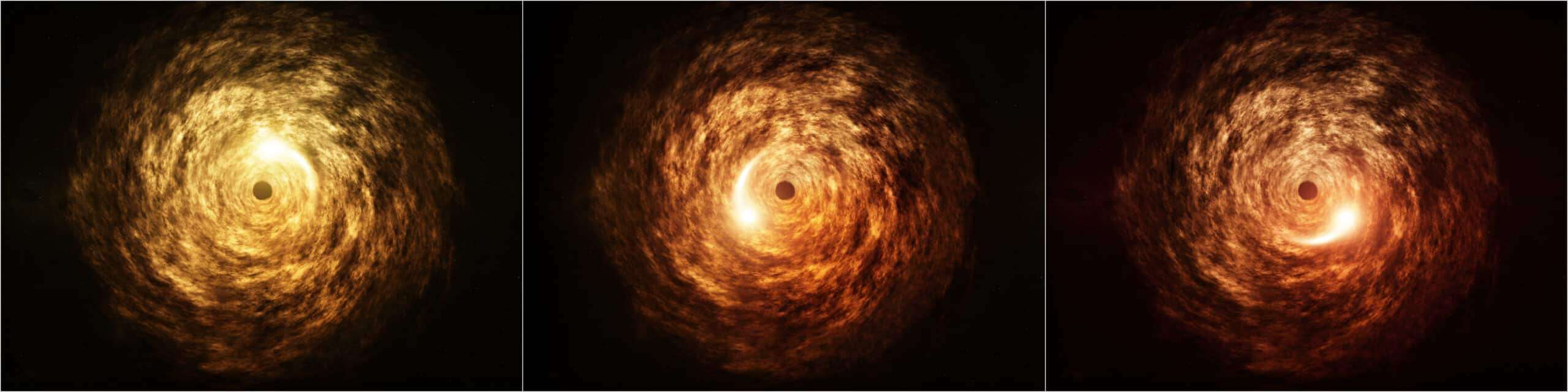
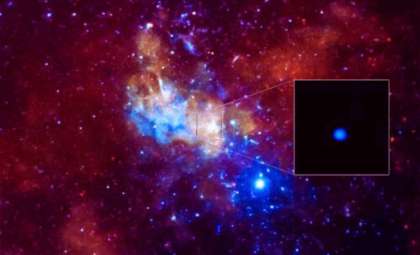
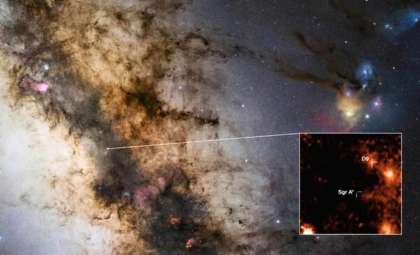
Weighing in at about 4.3 million times the mass of our Sun, Sagittarius A* is the nearest supermassive black hole to our planet. Although usually quiet, it occasionally emits energetic bursts, or “flares.” On this particular day, JWST detected a mid-infrared glow that persisted for nearly 40 minutes.
This marks the inaugural observation of mid-infrared radiation from Sagittarius A*, bridging a critical observational gap. Previous studies relied on radio and near-infrared data, leaving a missing piece in comprehending the full range of black hole emissions.

“Sagittarius A*’s flares transform swiftly within hours, and not every wavelength reveals the complete picture,” remarks Joseph Michail from the Smithsonian Astrophysical Observatory. “For more than two decades, we understood emissions in radio and near-infrared bands, but the link between them was uncertain. These mid-infrared findings clarify that relationship.”
Leveraging Cutting-Edge Tools to Analyze the Flare
The discovery resulted from integrating observations from several advanced platforms. Besides JWST’s mid-infrared instrument (MIRI), the team combined data from the Submillimeter Array, NASA’s Chandra X-ray Observatory, and the Nuclear Spectroscopic Telescope Array aboard the International Space Station.
Curiously, while no X-ray or gamma-ray flares were recorded, the Submillimeter Array detected a radio flare about 10 minutes after the mid-infrared event. This lag aligns well with synchrotron radiation models, where energized electrons spiral along magnetic field lines, releasing energy as they cool.
“Since mid-infrared wavelengths sit between far-infrared and near-infrared bands, they unlock secrets about electron cooling processes that power these flares,” explains Michail.
The evidence points to the flare originating within the accretion disk, a chaotic mix of gas and dust swirling around the black hole.
The Importance of This Breakthrough
Studying supermassive black holes is vital for understanding cosmic evolution, as these giants shape the structure and behavior of galaxies. Observations of Sagittarius A* provide unique insights into how black holes operate, from their calm to more energetic states.
Thanks to its relatively mild outbursts, Sagittarius A* offers a rare opportunity to examine intricate processes that are often masked in more turbulent black holes.
Future Directions in Black Hole Exploration
While this detection addresses significant gaps, many mysteries endure. Astronomers plan ongoing surveillance of Sagittarius A* with sophisticated telescopes like JWST to better understand the roles of magnetic fields, electron acceleration, and radiation mechanisms in black hole flares.
“Our data imply the mid-infrared flare arises from synchrotron emission generated by cooling electrons, but further details about magnetic reconnection and turbulence within the accretion disk remain to be uncovered,” states Sebastiano von Fellenberg of the Max Planck Institute for Radio Astronomy.
Advancing Our Grasp of the Cosmos
Detecting a mid-infrared flare from Sagittarius A* represents a landmark moment in black hole astronomy and exemplifies the capabilities of contemporary instruments like JWST. These findings bring us closer to decoding the extreme environments surrounding black holes.
Sagittarius A* remains a captivating subject, continuously revealing new facets of the forces that mold galaxies and govern the universe.
- Categories:
- Space





0 comments
Sign in to Comment