
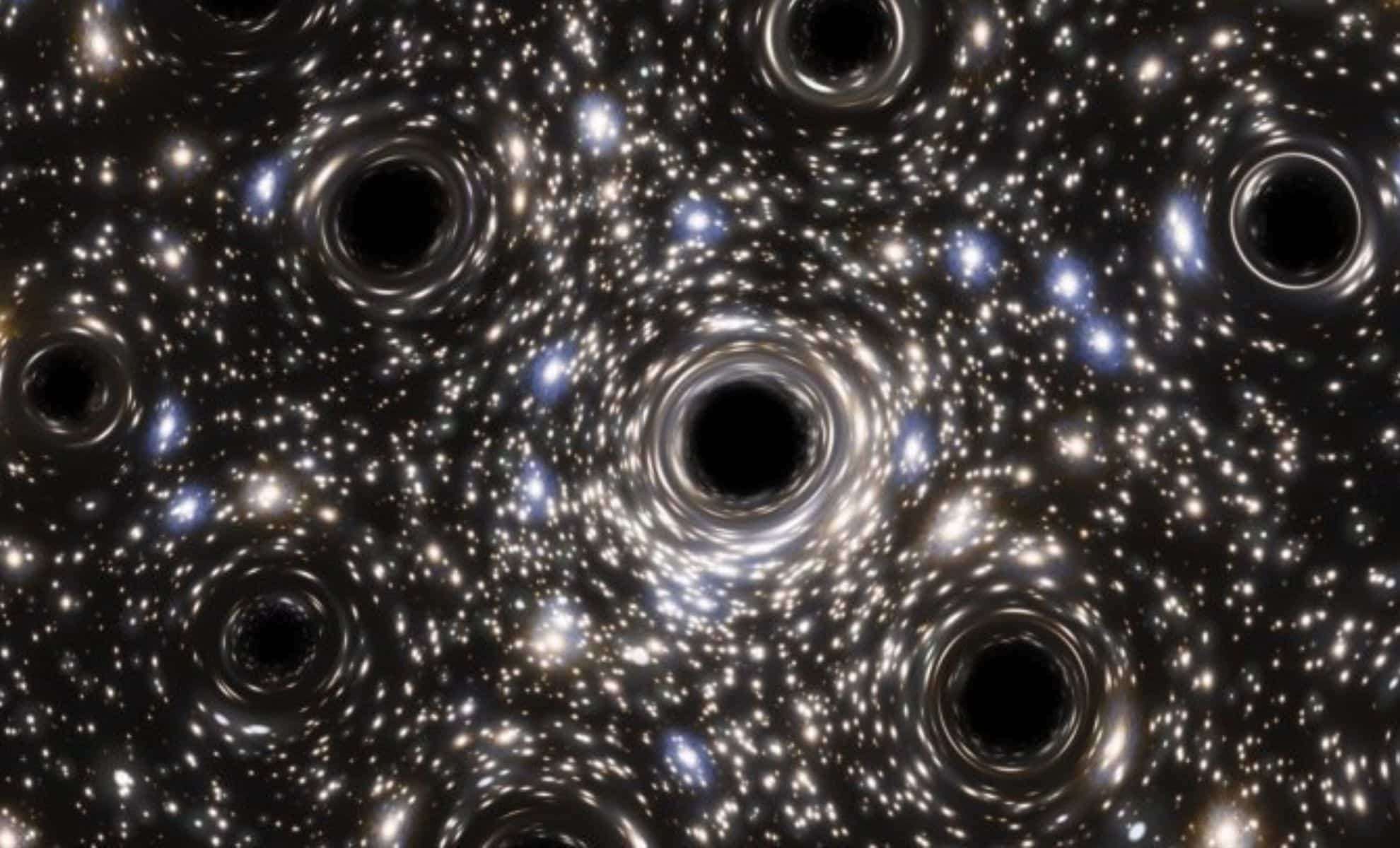
Scientists have uncovered an astonishing congregation of more than 100 stellar black holes roaming within the Milky Way’s Palomar 5 star cluster.
Situated around 80,000 light-years away, this remarkable cluster spans approximately 30,000 light-years and hosts some of the galaxy’s oldest stars. Experts suggest the black holes embedded in Palomar 5 have significantly influenced the cluster’s unique structure, offering fresh perspectives on globular cluster dynamics and black hole formation processes.
Palomar 5: A Portal to the Universe’s Formative Years
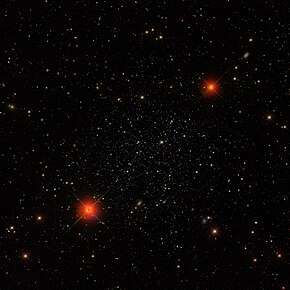
Palomar 5 represents a globular cluster—a dense, spherical grouping of stars bound by gravity. These clusters are often likened to cosmic relics because their ancient stars originated from primordial gas clouds billions of years ago. Palomar 5 stands out due to its dispersed star arrangement and a vast tidal stream that extends over 30,000 light-years from its core.

What intrigues astronomers is Palomar 5’s comparatively low star density relative to typical globular clusters. Most such clusters are compact with tightly packed stars, but Palomar 5’s sparse composition implied that some mechanism had gradually stripped away many stars. This observation prompted researchers to explore whether black holes might be the driving force behind star loss and the creation of the tidal streams.
University of Barcelona astrophysicist Mark Gieles underscored the cluster’s importance for understanding tidal stream origins. “Palomar 5 uniquely displays both a globular cluster and its associated tidal stream, making it an essential key to decoding stream formation,” he explained, emphasizing its role in revealing these cosmic phenomena.
A Rich Trove of Black Holes Uncovered
The team employed high-precision N-body simulations to recreate the motions and life cycles of stars within Palomar 5, aiming to reveal how the cluster evolved to its present form. Their models incorporated black holes, as evidence points to concentrations of these objects lurking in globular cluster cores. With their strong gravity, black holes can disrupt stellar orbits, occasionally ejecting stars into the surrounding tidal stream.
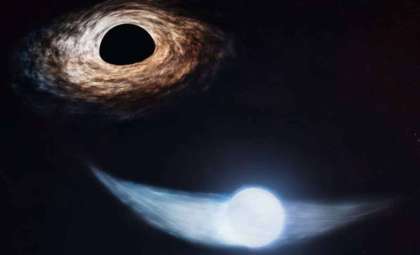
The results were surprising: Palomar 5 is home to a black hole population much larger than previously anticipated. “The quantity of black holes exceeds expectations by about threefold relative to the star count, composing over 20 percent of the cluster’s total mass,” Gieles stated. These black holes are roughly estimated at 20 solar masses each, formed through ancient supernova collapses of massive progenitor stars.
Simulations reveal that gravitational encounters between black holes and stars have progressively flung stars out, feeding the tidal stream and shifting the cluster’s mass balance. As star loss intensifies more than that of black holes, the cluster’s composition has skewed towards a black hole-dominated system, explaining its distinctive shape.
The Destiny of Palomar 5: A Black Hole Remnant
The analysis suggests Palomar 5 is gradually disintegrating. Over the next billion years, it will continue losing stars until it finally dissolves. “In roughly a billion years, the cluster will vanish completely,” Gieles noted. “Just before then, what remains will be a grouping of black holes orbiting the center of our galaxy.”
This dissolution process is likely common among Milky Way globular clusters, which may steadily shed stars and become black hole-rich. As clusters break apart, they leave behind black holes that contribute to the growing population of stellar-mass black holes within the galactic halo.
Such a vast black hole census in Palomar 5 also informs studies of binary black hole mergers. Astrophysicist Fabio Antonini from Cardiff University remarked, “Many binary black hole mergers form in star clusters.” These mergers generate detectable gravitational waves, and clusters like Palomar 5 may be efficient sites for their occurrence. “A major challenge is determining black hole numbers inside clusters since they can’t be observed directly,” Antonini said. Investigations of clusters ejecting stars might provide indirect measurements of black hole populations.
Expanding Our Understanding of Black Hole Environments
Finding this extensive black hole population in Palomar 5 strengthens the idea that globular clusters are prolific black hole nurseries. Black holes within these dense systems may form binaries that eventually collide, generating powerful gravitational wave bursts detectable by observatories like LIGO and Virgo.
Additionally, the findings shed light on a less understood category of intermediate-mass black holes — those with masses between stellar black holes and the supermassive black holes at galaxy centers. Globular clusters like Palomar 5 provide promising environments to study these elusive objects.
In conclusion, uncovering a vast black hole swarm in Palomar 5 offers new insights into globular cluster dynamics and black hole roles in their lifecycles. Continued study of this cluster promises to enhance our knowledge of star-black hole interactions and the evolutionary destinies of ancient stellar assemblies.
- Categories:
- Astronomy ,
- News ,
- Space




0 comments
Sign in to Comment