
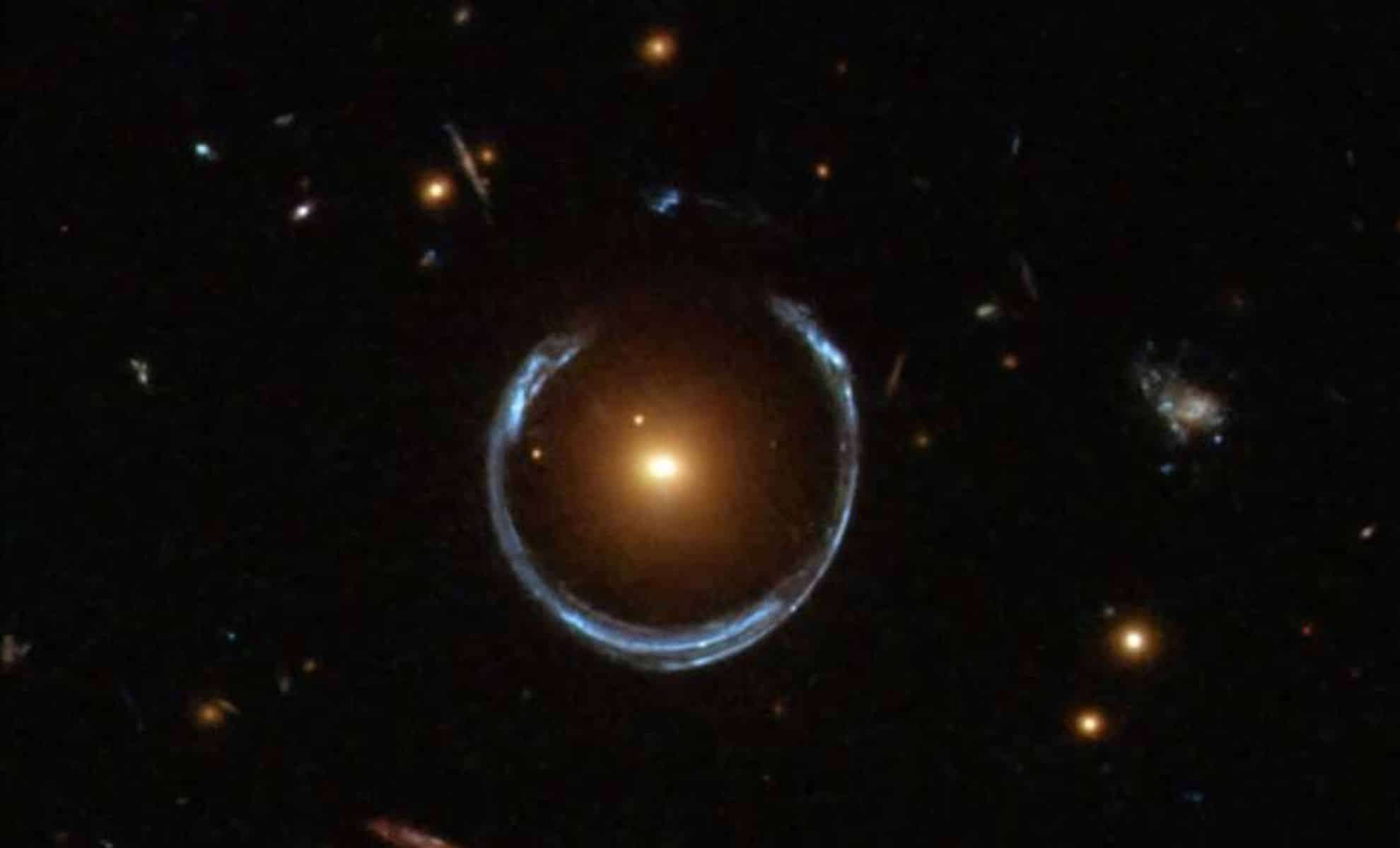
Published recently in the Monthly Notices of the Royal Astronomical Society, researchers have revealed a colossal black hole residing within the Cosmic Horseshoe galaxy, reshaping conventional ideas about black hole sizes across the cosmos. Located nearly 5 billion light-years from Earth, this massive entity weighs around 36 billion times the mass of our Sun, potentially ranking as the biggest black hole ever observed. This report examines why this discovery is pivotal, the advanced techniques employed to find it, and what it might teach us about black holes and galaxy formation.
Finding such an ultramassive black hole challenges prior beliefs about the connection between galaxies and their central black holes. Scientists have generally considered that more massive galaxies host bigger black holes, but the extraordinary scale of this one—far exceeding those found in galaxies including the Milky Way—raises new questions on the upper limits of black hole growth. Beyond its sheer size, the novel approach used to measure its mass promises to transform how dormant black holes scattered throughout the universe can be studied.
Cosmic Horseshoe’s Colossal Core: A New Black Hole Benchmark
For some time, the Cosmic Horseshoe galaxy has intrigued astronomers due to its massive gravity and resulting distortions in spacetime. This gravitational lensing bends light from a more remote galaxy into the characteristic horseshoe arc that gives the galaxy its name. The galaxy’s central black hole, however, is now taking the spotlight, with recent data suggesting it might be among the largest yet recorded. As Professor Thomas Collett of the University of Portsmouth notes, “This black hole ranks within the top 10 most massive ever discovered, and could very well be the largest.”

The measurement technique behind this detection stands out. Conventional black hole mass estimates tend to be indirect and approximate. In contrast, combining gravitational lensing effects with the study of stellar motion has enabled much higher accuracy. "Many black hole mass measurements rely on indirect methods with substantial uncertainty, so it's difficult to determine which is truly the largest. Thanks to our new methodology, we have much greater confidence in this black hole’s mass," Collett explains. This advance could mark a turning point in how astronomers examine black holes much farther away.
Cutting-Edge Detection: Harnessing Lens and Stellar Motion
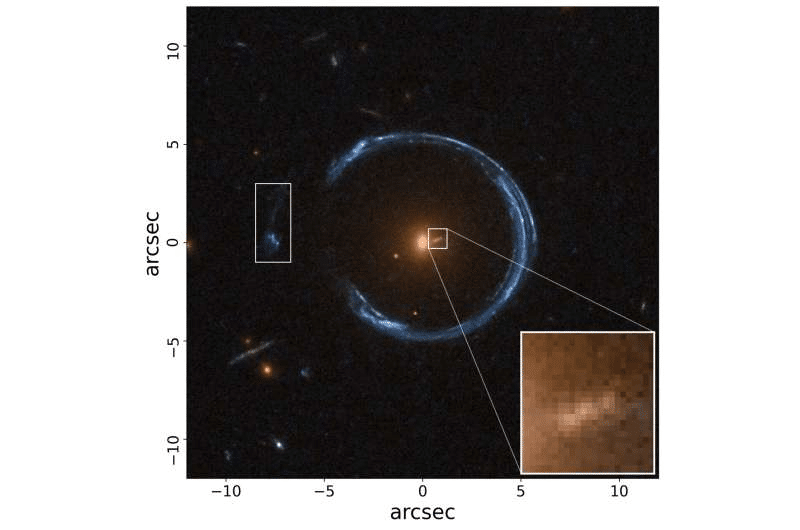
A remarkable feature of this finding is the dual-method strategy applied to pinpoint the black hole. Researchers exploited both gravitational lensing—where the black hole’s powerful gravity bends light from objects behind it into a ring visible from Earth—and stellar kinematics, analyzing how stars orbiting close to the galactic center move under the black hole's immense pull. Observations indicated the stars travel at velocities approaching 400 kilometers per second.
Carlos Melo, leading the study from Brazil's Universidade Federal do Rio Grande do Sul (UFRGS), stresses, “We observed the black hole’s influence two ways—it warps the light traveling past it, and it sets the inner stars moving at extraordinarily high speeds. Combining these data provides strong proof of the black hole’s existence.” Melo emphasizes the robustness of their confirmation by integrating both techniques.
Dormant Giants: The Universe’s Hidden Black Holes
Even more fascinating is that this gargantuan black hole is dormant—it is not actively feeding on nearby matter. While many known gigantic black holes are detected by the radiation they emit while consuming material, this one was discovered purely through its gravitational impact. Melo comments, “We detected this ‘silent’ black hole not by its radiance, but by observing the gravitational effects it imposes on its surroundings.” Detecting such quiet black holes opens new avenues to studying these enormous yet inconspicuous objects spread across space.
This approach could redefine black hole research moving forward. Typically, black hole mass estimation depends on signs from their energetic accretion processes, which can introduce uncertainties. The novel methodology, pairing strong gravitational lensing with insights into stellar dynamics, yields more straightforward, dependable measurements—even for distant and inactive black holes. Melo adds, “Mass estimates for remote black holes usually require them to be active, but those are often uncertain. Our combined lensing and stellar motion analysis presents a direct, reliable alternative applicable even to dormant black holes.”
- Categories:
- News

0 comments
Sign in to Comment