
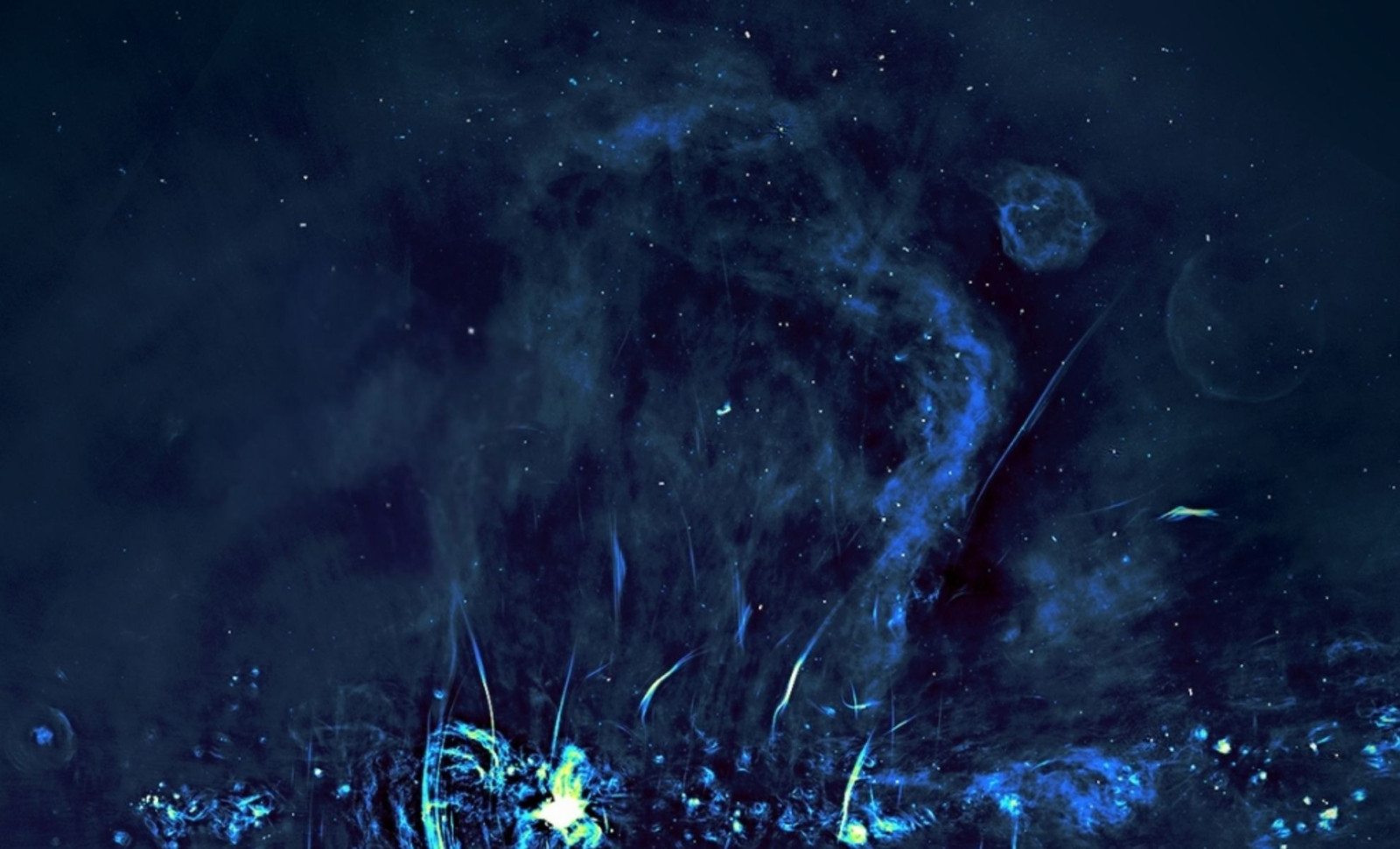
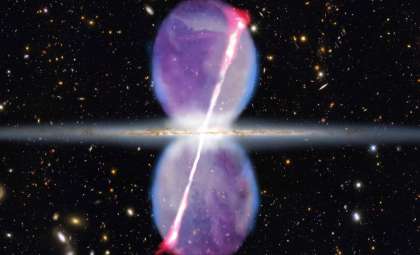
Astronomers have finally resolved a decades-old enigma involving a colossal formation previously thought to emerge from the Milky Way’s core. Published in Astronomy & Astrophysics, the study reveals this feature is actually a nearby glowing gas bubble shaped by stellar forces, not a gigantic eruption from the galaxy’s center.
An Astronomical Mirage That Confounded Researchers for Years
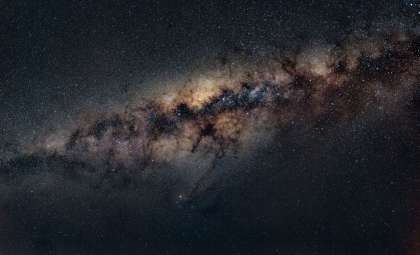
The Galactic center lobe gained attention due to its appearance in images of the Milky Way. Amid the dense galactic center region, it seemed like a towering extension stretching thousands of light-years above the galaxy’s heart.
Various theories emerged to explain its origins. Some hypothesized it resulted from supernova blasts, while others linked it to energetic phenomena around the supermassive black hole Sagittarius A* at the Milky Way’s core, as discussed here.

So much uncertainty surrounded the object that scientists referred to it as a sort of “Rorschach test” for galactic astrophysics, reflecting the wide range of interpretations based on the evidence at hand.
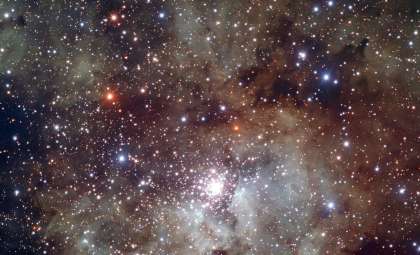
Studying the galactic center proved notoriously challenging due to the dense dust, stars, gas clouds, and overlapping structures that blend distant objects, making them appear connected when they are not.
The lower segment of the structure was particularly elusive. Its merger with the bright galactic plane background caused earlier radio data to give the false impression of an open feature extending from the Milky Way’s core.
New Data Pinpoints the Structure’s True Position
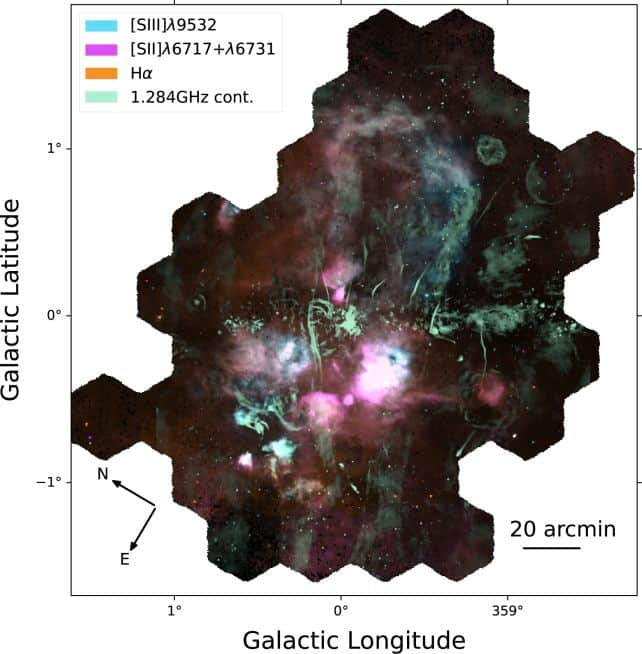
The breakthrough came through analysis of observations from the SDSS-V Local Volume Mapper survey, which produces detailed maps of glowing gas within the Milky Way.
Rather than solely relying on radio waves, the team used emissions from various gases, including ionized sulfur, which can penetrate dusty areas more effectively than shorter wavelengths.
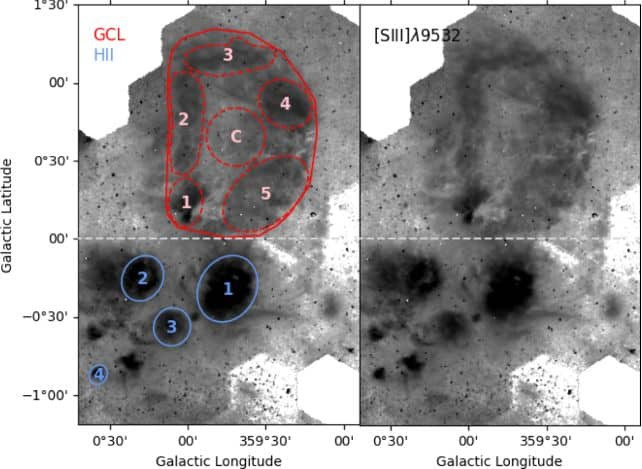
These findings revealed that the lower part of the structure was present but hidden by the galactic environment’s complexity.
By matching gas emission data with three-dimensional dust distribution maps of the Milky Way, researchers determined the bubble lies approximately 6,520 light-years from Earth.
This distance contrasts sharply with the roughly 26,000 light-years separating Earth from the galactic center, indicating the structure is much smaller and unrelated to the galaxy’s core eruption.
The study published in Astronomy & Astrophysics highlights how advanced observation methods can revolutionize our knowledge of familiar Milky Way features.
A Stellar-Origin Bubble Illuminated by Radiation
The newly discovered object is an enormous cloud of hydrogen gas glowing from intense ultraviolet light. Rather than originating from the Milky Way’s center, this bubble likely formed due to the influence of massive stars from an earlier star formation cycle.
Scientists propose that energetic stars carved out a cavity in the surrounding material through their powerful winds during their brief lives. When these stars exploded as supernovae, shock waves rippled through nearby gas.
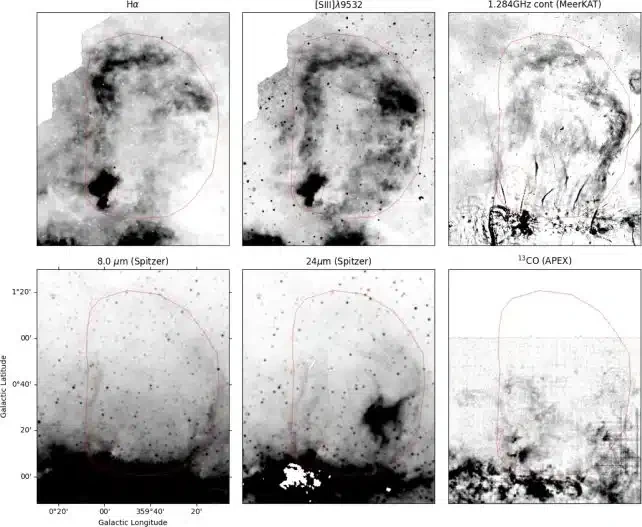
This mechanism creates expanding bubbles in space, with their edges becoming brighter due to radiation emitted by newborn or surviving massive stars that energize the gas.
Viewed from Earth, only the glowing periphery is clearly visible, producing a loop-like shape instead of a fully visible spherical shell.
With a diameter near 115 light-years, this bubble is comparable in scale to well-known stellar formations like Barnard’s Loop, an iconic glowing gas arc near the Orion constellation.
- Categories:
- News






0 comments
Sign in to Comment