
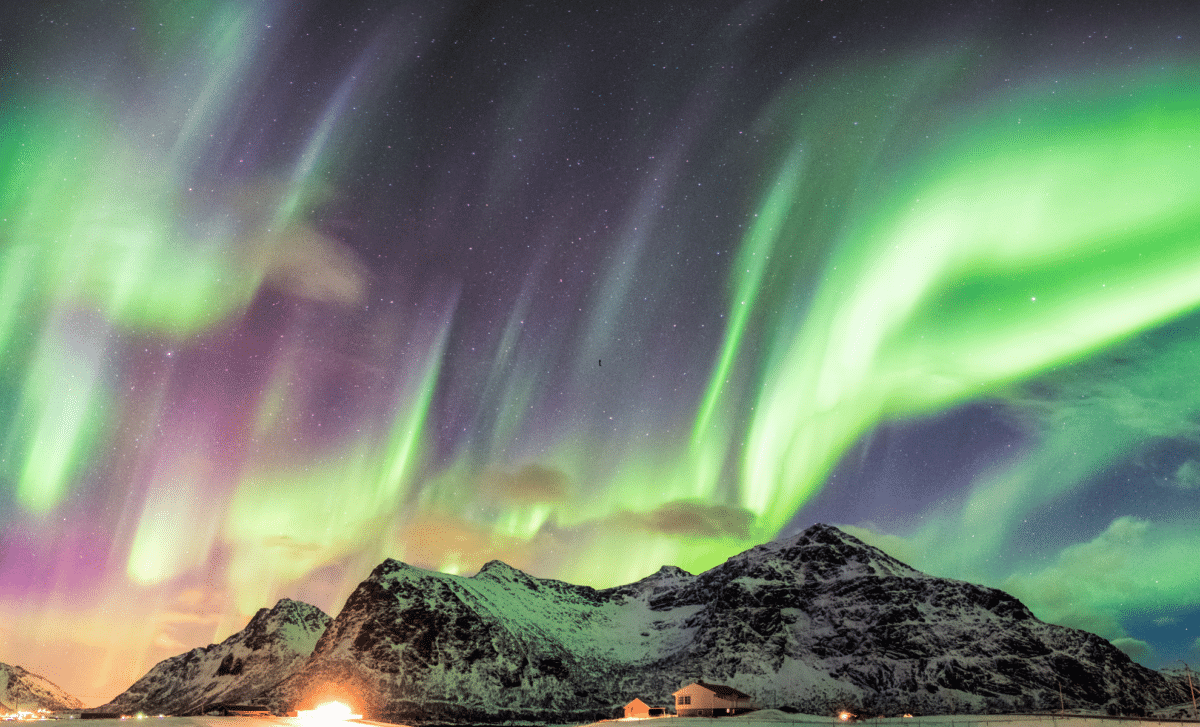
A spectacular aurora show is predicted to light up the night skies across 15 states in the U.S. on December 3-4, 2025, as revealed by NOAA research. This rare natural display results from a high-velocity solar wind combined with an approaching coronal mass ejection (CME). As these solar emissions interact with Earth's magnetic shield, dazzling northern lights could be visible from Alaska right through to New York.
Understanding Aurora Phenomena: Solar Winds Meet Earth’s Magnetic Field
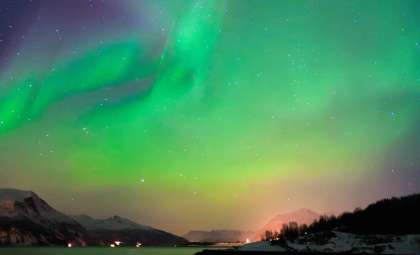
Often referred to as auroras, the northern lights form when charged solar particles slam into Earth’s magnetic environment, producing vivid, shifting light patterns in the sky. Such displays are uncommon and demand certain space weather conditions. On the nights of December 3-4, 2025, enthusiasts across the U.S. have a unique chance to witness this celestial event. NOAA has indicated that the combination of a rapid solar wind stream and an imminent CME will spark geomagnetic disturbances strong enough to make auroras visible throughout much of the northern U.S.
Solar wind consists of streams of energized particles ejected by the Sun, while a CME releases massive bursts of plasma and magnetic fields. When these hit Earth’s magnetosphere, they trigger geomagnetic storms that can paint the night with radiant colors. Those positioned favorably during this event are in for an unforgettable light show.

Why Is This Aurora Event Especially Noteworthy?
This forecasted aurora is driven by two major solar events: a swift solar wind stream and an inbound CME. NOAA’s Space Weather Prediction Center anticipates that these combined factors will create moderate geomagnetic storm conditions (G2), with some chances for stronger disturbances (G3). The degree of storm intensity depends on the arrival time and makeup of these solar emissions, but the simultaneous occurrence raises the odds for widespread aurora visibility.
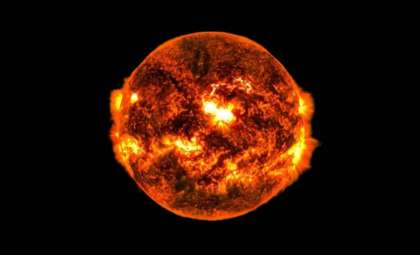
Preceding this event, a powerful X-class solar flare—a top-tier eruption—occurred, adding extra energy that is expected to boost geomagnetic activity and enhance aurora brightness. Importantly, aurora watchers aren’t restricted to northern regions; states as far south as New York may enjoy a rare glimpse, contingent on the solar storm’s strength.
States Most Likely to Witness the Northern Lights
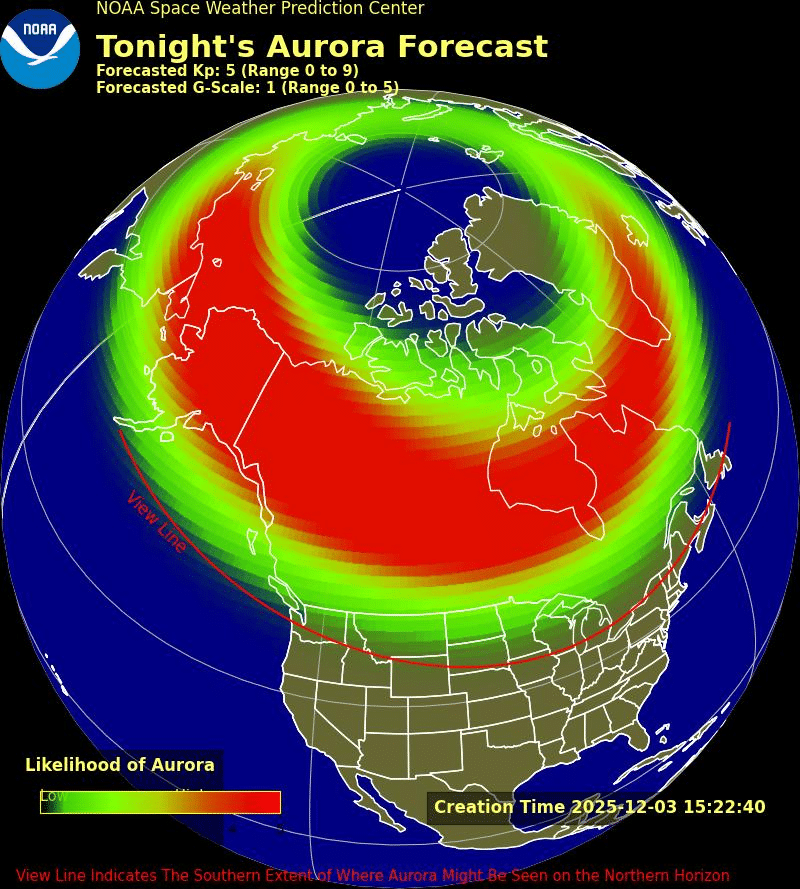
NOAA’s forecast places the following states within the likely aurora viewing corridor for December 3-4, 2025: Alaska, North Dakota, Minnesota, Montana, Wisconsin, Michigan, South Dakota, Idaho, Maine, Vermont, New Hampshire, Washington, Wyoming, Iowa, and New York.
Though the aurora traditionally graces areas near the Arctic Circle, this event could bring visible displays to more southerly locations. Still, aurora predictions can be uncertain; atmospheric conditions and cloud cover will influence visibility, so some regions may only see faint lights or none at all. The interplay of solar wind dynamics and local weather will dictate the aurora’s reach.
Optimal Viewing Hours for the Northern Lights
Timing plays a key role in spotting the northern lights. NOAA’s three-day aurora forecast indicates peak geomagnetic activity occurring between 4 p.m. and 7 p.m. EST on December 3, 2025, when a moderate G2 storm is predicted. Nonetheless, favorable conditions extend throughout the night and into the early hours of December 4, lasting until about 1 a.m. EST.
For viewers in southern states like New York or Iowa, the best opportunity is after local midnight when the sky is darkest. Since auroras can appear suddenly, it’s wise to monitor the night sky continuously, especially if you reside in one of the states expected to have prime visibility during this rare event.
- Categories:
- News



0 comments
Sign in to Comment