

An uncommon and powerful geomagnetic event is predicted for September 16, with northern lights possibly visible as far south as California, Missouri, and various parts of Europe.
Generated by a significant solar flare and an ensuing coronal mass ejection (CME), this storm might grant those in mid-latitude locations an extraordinary chance to witness the aurora borealis, typically restricted to polar regions. The National Oceanic and Atmospheric Administration (NOAA) has issued a G3 geomagnetic storm warning, suggesting that auroras tonight could reach much farther than usual.
Origins of This Geomagnetic Disturbance
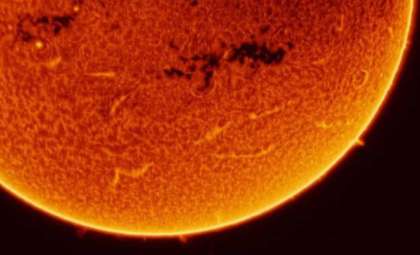
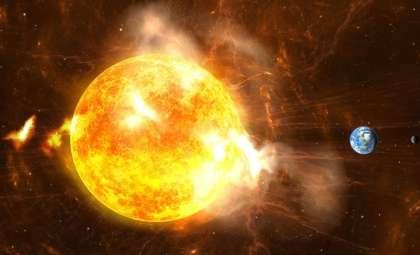
This space weather event has two main drivers stemming from recent solar activity. The foremost cause is a massive coronal mass ejection (CME), launched from the Sun during a potent X-class solar flare recorded on September 14, 2024. This X4.5-class flare, one of the most intense of the current solar cycle, propelled the CME rapidly toward Earth. When these energized particles interact with Earth’s magnetosphere, disruptions occur that can produce impressive auroral displays.

Additionally, a coronal hole—an area where the Sun’s magnetic field is open—has allowed accelerated solar wind streams to escape. The combination of this high-speed solar wind and the CME’s arrival has set the stage for a substantial geomagnetic event. This interaction prompted the NOAA Space Weather Prediction Center to declare a G3 storm watch, signaling that auroras might be visible significantly farther south than usual.

What Skywatchers Can Anticipate
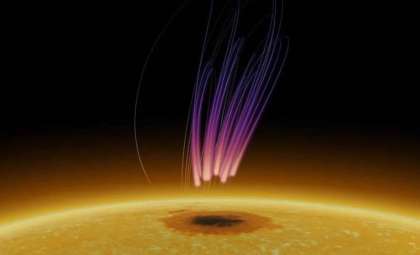
Should forecasts prove accurate, many observers in mid-latitude areas could witness an awe-inspiring auroral light show. While the northern lights generally appear close to the Arctic Circle—in places like Alaska, Canada, and Scandinavia—this event might extend sightings to lower latitudes. People located in states such as Oregon, Missouri, and California could catch glimpses of the aurora’s vivid greens, pinks, and purples.
In Europe, the aurora might even be observable as far south as Germany and Poland. Previous geomagnetic storms of comparable power have generated remarkable auroral displays, even if less intense storms occasionally reach these latitudes. Given the strength of this disturbance, NOAA anticipates broad visibility of the northern lights if the sky conditions cooperate.
Timing and the Challenges of Predicting Space Weather
Despite the high anticipation, space weather remains complicated to predict with precision. The CME’s arrival is projected between 0600 UTC and 1800 UTC on September 16, but delays or changes caused by fast-moving solar wind streams may alter the timing and brightness of the auroras. Space weather expert Tamitha Skov warned that the CME could arrive later than expected or miss Earth entirely due to such factors. “The big solar storm launched during the X4.5 flare is on its way to Earth. NOAA and NASA predictions indicate arrival anytime from 0600 UTC to 1800 UTC, likely on the late side,” Skov shared on X (formerly Twitter).
Similarly, forecaster Sara Housseal recommended vigilantly monitoring updates. “We’ve reached the point where we could expect the CME to arrive at any time based on model outputs, but there is still no sign that an arrival is imminent,” she indicated. For aurora viewers, the uncertainty adds excitement, as the event could either exceed or fall short of predictions.
Tips for Catching the Best Views of the Aurora
Maximize your chances of seeing the northern lights by choosing locations with dark, clear skies that are free from urban light pollution. Remote areas and parks away from city glow will offer the clearest views. Monitoring live space weather platforms and mobile apps, such as “My Aurora Forecast & Alerts” and “Space Weather Live,” can provide timely predictions tailored to your location.
As night falls, stay alert to updates from NOAA and other space weather authorities. This powerful geomagnetic storm could produce a rare and breathtaking aurora spectacle for those prepared to observe it.
- Categories:
- News








0 comments
Sign in to Comment