
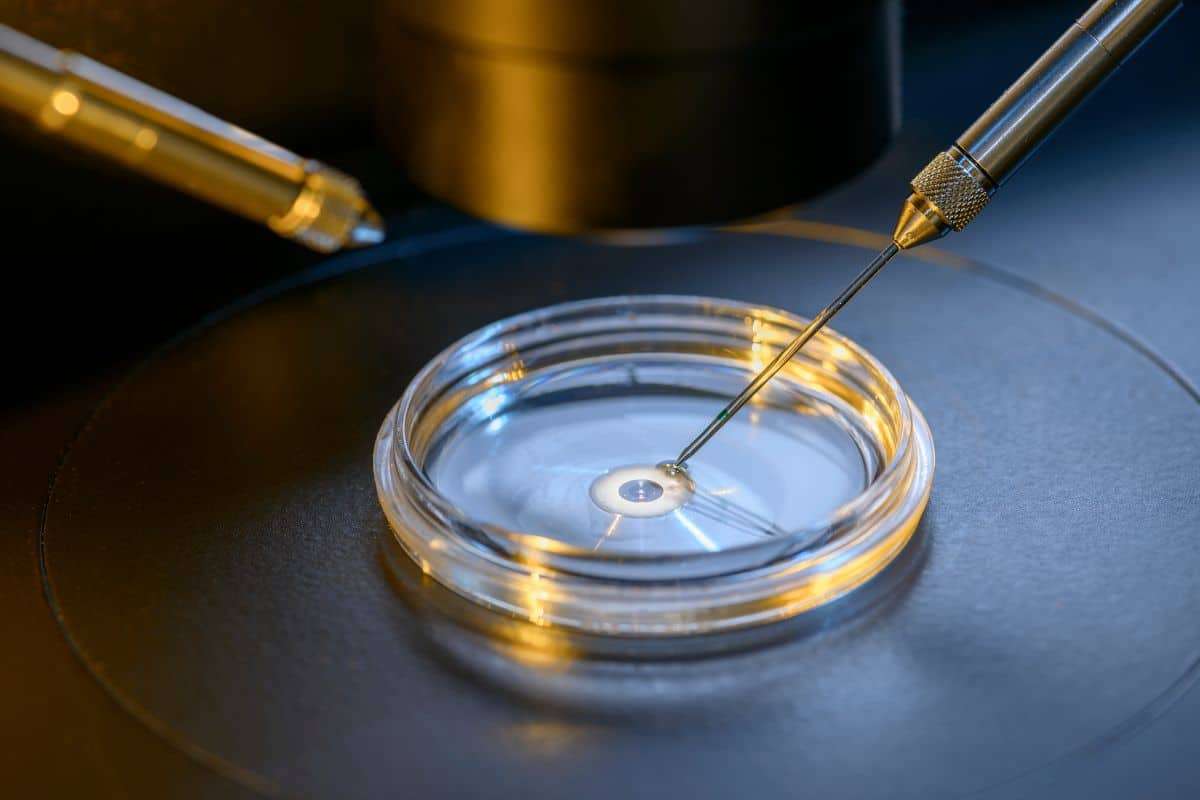
An infant has arrived through a revolutionary approach where nearly the entire in vitro fertilization (IVF) process was conducted by an automated system, with oversight from a healthcare specialist monitoring remotely.
Enhanced Accuracy in a Delicate Procedure
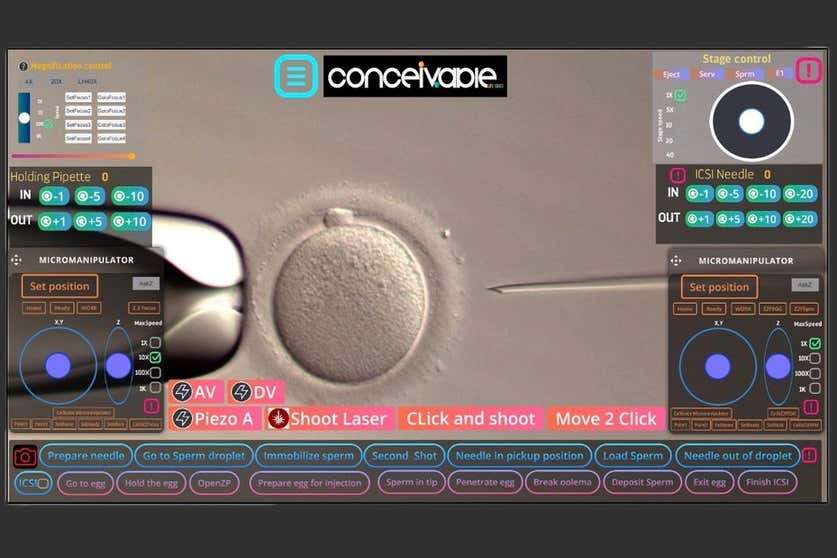
Developed by Jacques Cohen and his team at the New York-based biotech firm Conceivable Life Sciences, this system automates 23 essential stages of the IVF cycle, focusing on intracytoplasmic sperm injection (ICSI).
This technique, commonly employed to address male fertility challenges, involves injecting a single sperm into an egg. Traditionally, it requires delicate manual skill and expert judgment, making it susceptible to human fatigue and lapses in concentration.

“They become tired and distracted sometimes, just like everybody else in most professions, so errors happen that can reduce [the] odds of fertilisation and births,” Cohen explained.
To reduce these risks, the automated platform enables an operator to trigger each stage with a button press while observing the process via a live video stream.
AI Enhances Sperm and Embryo Selection
The system uniquely incorporates artificial intelligence to identify and select the best sperm and embryos. Initially, it picks the most viable sperm by analyzing their physical characteristics.
Next, it immobilizes these sperm by applying laser pulses to their tails, facilitating easier manipulation. Fertilization proceeds using the machine-assisted sperm injection into donated eggs.
An AI-based evaluation then assesses embryo quality by examining chromosome features. In the study, five out of eight donor eggs underwent the automated process, producing four embryos.
The other three eggs were fertilized conventionally, all developing into embryos. AI subsequently selected the top two embryos—both from the robotic system—to be considered for implantation.
Trial Success with First Birth
The couple participating faced fertility difficulties: the male had reduced sperm motility, and the female required donor eggs due to absence of viable ones.
The initial embryo transfer did not result in pregnancy. However, the subsequent transfer using an embryo from the automated method resulted in a viable birth. Cohen expressed hopeful caution, noting it’s premature to generalize the findings.
Will Automation Transform Fertility Treatments?
Joyce Harper from University College London praised the breakthrough as a promising demonstration, while emphasizing the need for extensive studies. She remarked that randomized clinical trials comparing manual and robotic ICSI techniques are crucial to evaluate the technology’s true merit.
Automated IVF also faces cost barriers. According to Harper, high expenses could limit early availability. However, Cohen remains optimistic about future cost reductions:
“As we optimise, standardise and refine the system, we expect the cost to the patient and clinic to decline.”
While complete automation is unlikely to replace expert clinicians, its ability to reduce errors and promote consistency might make it a vital part of IVF’s future.
- Categories:
- Science











0 comments
Sign in to Comment