
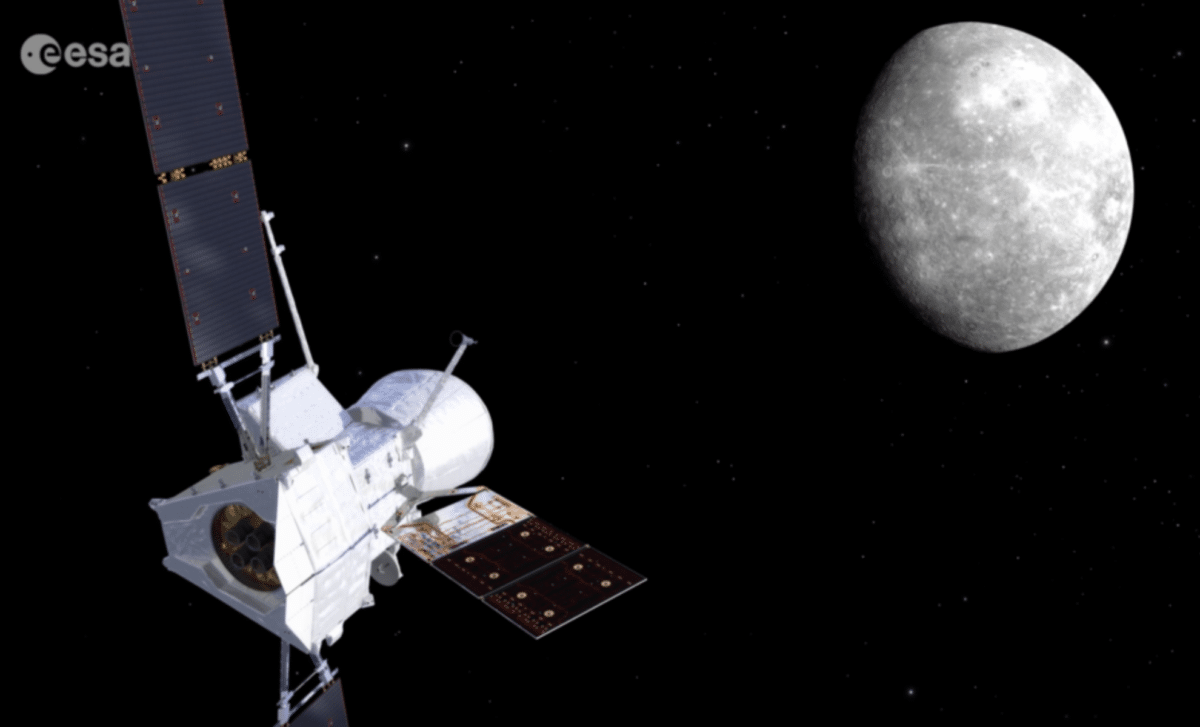
Following an extensive journey across the inner Solar System lasting nearly eight years, the ESA and JAXA collaborative spacecraft, BepiColombo, has achieved a pivotal milestone. On June 15, its solar electric propulsion system was permanently deactivated, signaling the close of an extraordinary interplanetary cruise and the commencement of a complex series of operations designed to insert the probe into orbit around Mercury. This event signifies a shift from long-duration transit to one of the most technically challenging planetary arrivals ever pursued, as noted by ESA.
Blue Glow Extinguishes, Ushering in a New Mission Era
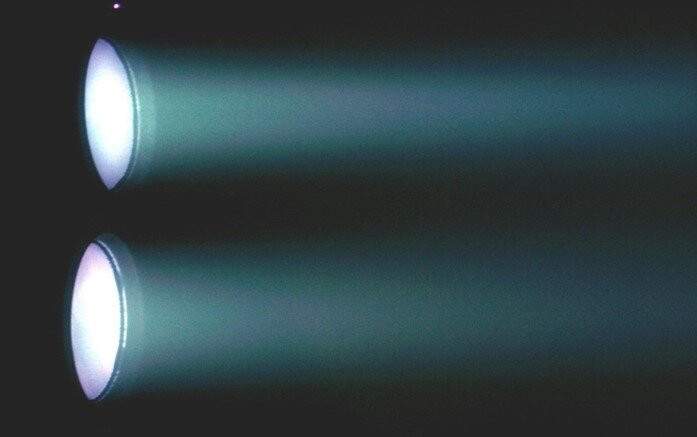
For close to eight years, a subtle emission of ionized xenon gas propelled BepiColombo along one of the most intricate trajectories ever planned for space exploration. Unlike conventional rockets that generate brief but powerful thrusts, this spacecraft utilized a gentle yet extraordinarily efficient ion drive, producing a distinct blue luminescence characteristic of its voyage. At exactly 15:24 CEST on June 15, mission teams commanded the propulsion to cease operations permanently, closing the chapter of a system that made the spacecraft’s trajectory adjustments possible from its launch in October 2018 through its final Mercury approach.
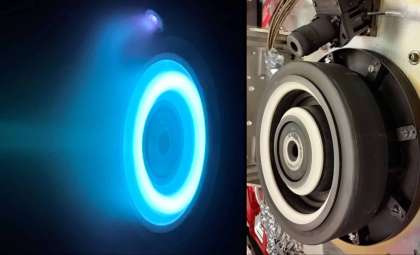
The spacecraft's Mercury Transfer Module (MTM) is equipped with four QinetiQ T6 ion thrusters, which convert solar energy captured by extensive solar arrays into ionized xenon plasma. This plasma is expelled at high speeds to provide continuous thrust, using significantly less propellant than traditional chemical rockets. This remarkable efficiency allowed mission engineers to methodically refine the spacecraft’s orbit across millions of kilometers, executing a sophisticated series of planetary flybys. Instead of combating the Sun's gravity through sheer force, BepiColombo used precision, patience, and advanced engineering to delicately adjust its course.

Completing the final thrust phase confirms that the spacecraft has achieved the precisely calculated path envisioned by its design team. With no further need for active propulsion, it is now cruising on a trajectory that will naturally guide it to Mercury ahead of upcoming mission-critical operations.
The Challenge of Mercury: A Daunting Target in Planetary Exploration
Despite its apparent proximity to Earth, traveling to Mercury presents far greater difficulties than journeys to the outer Solar System. Spacecraft departing Earth inherit the planet’s high orbital velocity around the Sun. To enter an orbit around Mercury, this speed must be drastically reduced while descending deeper into the Sun’s gravity well, a feat requiring immense energy that cannot be achieved by simply directing a rocket toward Mercury.
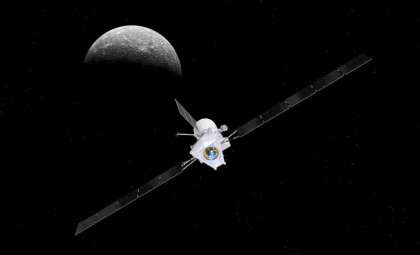
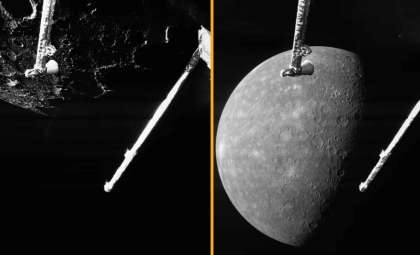
To address this, BepiColombo undertook a sophisticated use of gravitational assists, performing nine planetary flybys throughout its cruise phase. It began with a single pass by Earth, followed by two flybys of Venus, and six encounters with Mercury itself. Each pass subtly altered the spacecraft’s speed and orbital path, allowing it to gradually match Mercury’s orbit without expending impractical amounts of propellant.
The solar electric propulsion system worked alongside these gravity assists, continuously fine-tuning the spacecraft’s trajectory between encounters. This combination forged one of the most complex navigation campaigns undertaken in interplanetary travel, setting precedents that will inform future missions venturing deep into the Solar System.
Blue thrusters off – cruise phase ending. 🛰️💙📴@esa & @JAXA_en 's #BepiColombo has switched off its solar electric propulsion.
What’s next? 👀
The start of #Mercury arrival in September!
Read more here 👉 https://t.co/Ob0WLJXHbJ@esascience pic.twitter.com/z7AxGJBCDO— ESA Operations (@esaoperations) June 24, 2026
Next Critical Steps as ESA Prepares for Mercury Arrival
As detailed by ESA, the shutdown of the solar electric thrusters marks the start of the mission's most demanding phase, rather than its conclusion. Now relying solely on gravitational forces, the spacecraft is coasting ballistically until the next key event.
On September 3, 2026, the Mercury Transfer Module is scheduled to detach from the rest of the spacecraft. Following separation, the remaining vehicle will utilize chemical propulsion systems aboard the Mercury Planetary Orbiter (MPO) for precise trajectory maneuvers needed before orbit insertion.
The mission’s most delicate operation is anticipated on November 21, 2026, when a precision engine burn will capture the spacecraft in Mercury’s gravity well permanently. Subsequently, ground teams will deploy Mio, the Japanese magnetospheric orbiter, while adjusting the European orbiter into its scientific orbit by March 2027. Achieving this demands exceptional navigational precision, with no allowance for errors after the spacecraft's extensive interplanetary voyage.
A Technological Triumph Impacting Future Deep Space Exploration
Completing the solar electric propulsion phase offers invaluable experience applicable beyond this single mission. The system displayed consistent reliability during an eight-year cruise through the harsh conditions of deep space and intense solar environments near Mercury.
Before deactivation, experts and industry collaborators convened at ESA’s European Space Operations Centre (ESOC) in Darmstadt, Germany, to evaluate the thrusters' performance. Among them was lead solar electric propulsion expert Neil Wallace, who assessed the data as part of ongoing efforts to enhance spacecraft designs leveraging similar technologies.
The success of these ion engines underscores the increasing significance of electric propulsion in planetary missions. Upcoming explorations targeting asteroids, distant planets, and other demanding locations may depend heavily on the qualities of efficiency, endurance, and precision exemplified by BepiColombo, a milestone in long-term, intricate interplanetary travel.
Final Descent Toward Mercury Underway
After nearly a decade of meticulous planning, countless orbital refinements, and billions of kilometers traversed within the inner Solar System, BepiColombo is poised to accomplish its primary goal. The cessation of its ion thrusters' steady blue luminescence marks that every prior adjustment has set the spacecraft on the exact trajectory necessary for its concluding approach.
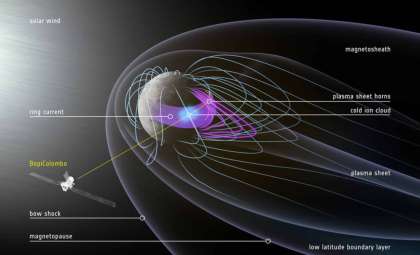
The coming months will be decisive in determining the success of one of Europe's most ambitious planetary efforts. Provided subsequent maneuvers unfold as intended, scientists will gain unprecedented access to data about Mercury's internal structure, magnetic field, surface characteristics, and solar wind interactions. Thus, the quiet switch-off of the spacecraft’s engines signifies not an end, but the beginning of a new and historic chapter in planetary science.
- Categories:
- Space



0 comments
Sign in to Comment