
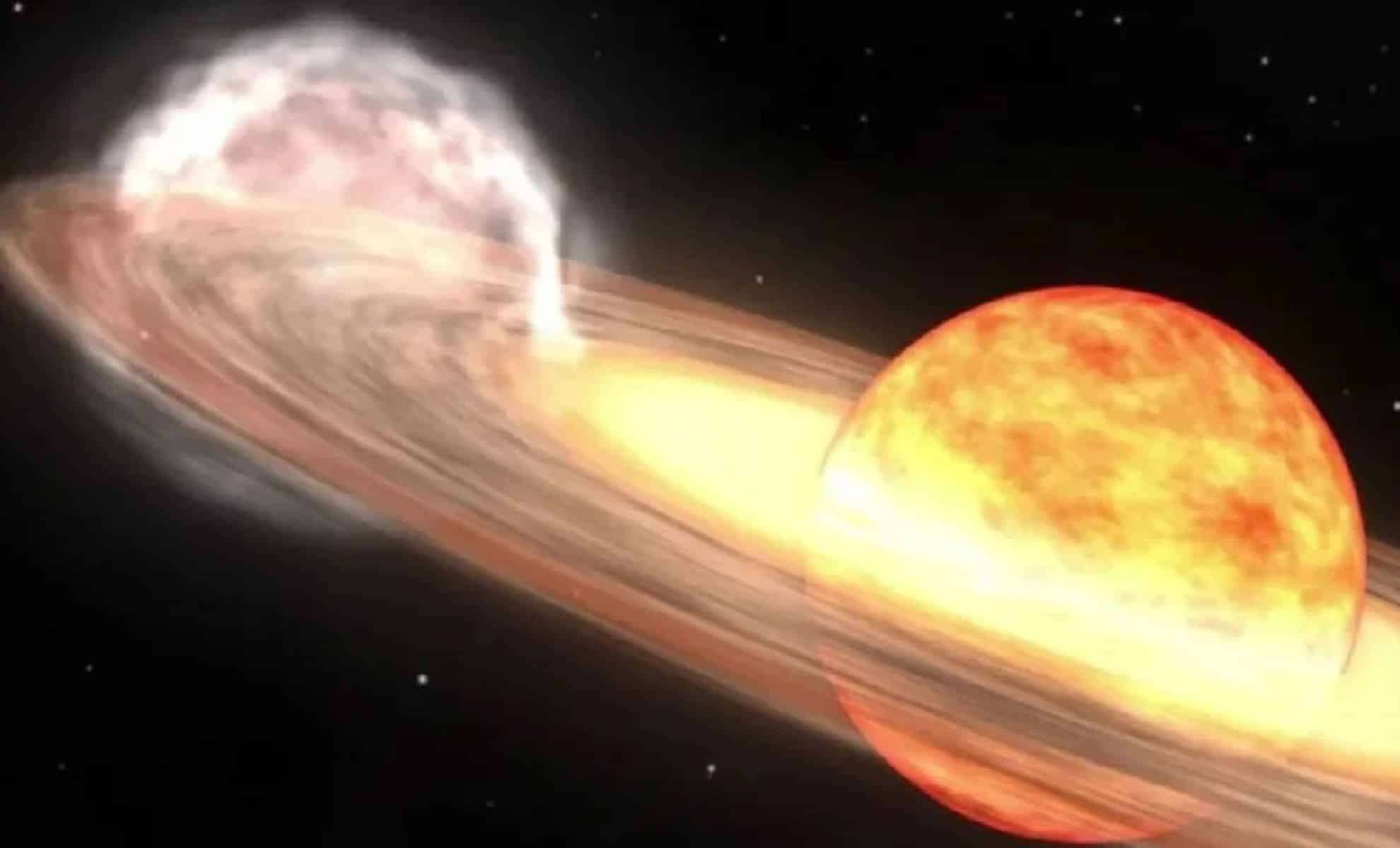
For the first time in nearly a hundred years, a spectacular astronomical event may soon brighten the night sky: a nova visible without any optical aid. Central to this cosmic drama is the Blaze Star, also known as T Coronae Borealis, a binary star system situated within the graceful curve of the Northern Crown constellation. After many quiet decades, scientists anticipate it could erupt at any moment.
Should this eruption occur, skywatchers globally might see a "new star" suddenly shine where only darkness stood before. While the exact timing remains uncertain, research by astrophysicist Jean Schneider of the Paris Observatory points to a probable eruption around March 27, 2025, although it could happen later this year.
The Return of a Rare Astronomical Explosion
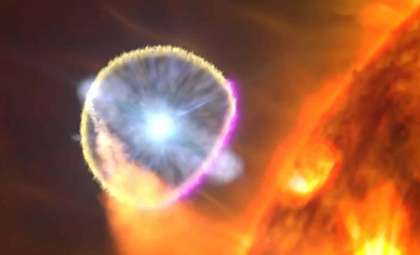
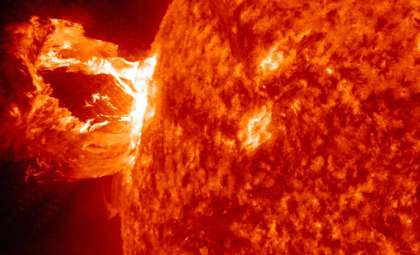
The Blaze Star is not a single star but a binary pair: a dense white dwarf locked in orbit with an expanding red giant. As the red giant sheds material, the white dwarf captures this mass. When enough material accumulates, a runaway thermonuclear reaction ignites on the white dwarf’s surface—a nova event.

Unlike destructive supernovae, novae repeat over time. The Blaze Star is among the few recurrent novae recorded in our galaxy. Its previous explosions were documented in 1866 and 1946, exactly 80 years apart. Now, nearly 78 years since its last flash, astronomers are watching closely.
Challenges in Forecasting the Outburst
Although the 80-year cycle suggests an eruption in 2026, predicting the timing is complicated. Before the 1946 event, astronomers noticed distinct fluctuations in brightness—a visual precursor signaling the impending nova. Similar changes today have led astrophysicists to believe the explosion might come sooner.
Jean Schneider’s 2024 study, published in Research Notes of the American Astronomical Society, suggests a possible eruption window in spring or autumn of 2025. However, nova timing remains notoriously uncertain. It’s only a matter of when, not if, and the best approach is to observe the skies regularly.
Locating the Blaze Star After Dark
The Blaze Star resides within Corona Borealis, the Northern Crown—a small, distinctive constellation shaped like a backward "C" located between the luminous stars Arcturus and Vega. Its brightest star, Alphecca, serves as a landmark. When the nova ignites, the Blaze Star could rival Alphecca’s brightness, turning the Crown into a dazzling celestial diadem.
Under normal conditions, T Coronae Borealis is invisible to the naked eye, with a magnitude around 10. During the nova, its brightness could surge to magnitude 2, making it one of the most luminous features in that region of the sky.
To spot it:
- Look toward the eastern horizon before dawn during late spring
- Find Arcturus, then glance slightly down and to the left for a small backward “C” pattern
- Once the nova occurs, this "C" will appear to shine with an additional bright star
An Explosion from a Time Long Past
It’s astonishing to realize this stellar explosion actually occurred around 3,000 light-years away — meaning the light we will soon see began its journey around 1,000 BCE, amid the height of the Bronze Age on Earth.
When this burst reaches us, it will appear to brighten rapidly over several hours and then gradually fade across days. For a short span, this otherwise ordinary star system will become one of the night sky’s most brilliant objects.
An Unforgettable Celestial Display Awaits
This might be a once-in-a-lifetime event to witness a nova so clearly. Astronomers caution the visible phase will last only a few days, so timing, location, and weather conditions will be critical.
Binoculars can improve the experience but are not essential. Anyone in the Northern Hemisphere with clear skies can catch the spectacle.
Sky enthusiasts should take some time now to learn the layout of Corona Borealis, track any brightness changes, and stay updated via astronomical networks and observatory announcements.
When the nova finally flares, the quiet arc of the Northern Crown will glow with a brilliant, temporary star—a striking reminder that even in the vast stillness of space, the cosmos can still surprise us.
- Categories:
- News








0 comments
Sign in to Comment