
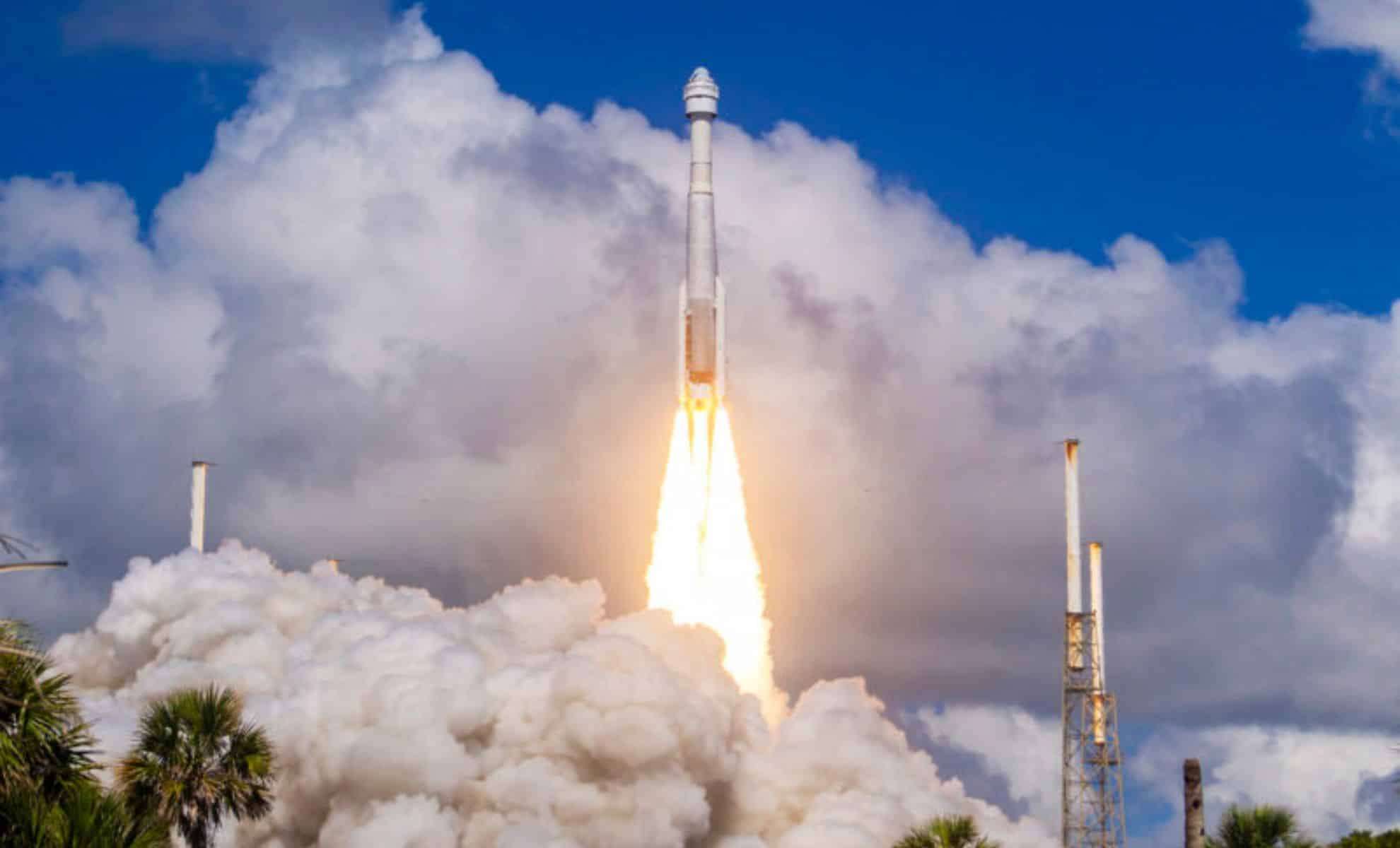
Boeing's Starliner spacecraft launched successfully on Wednesday but has since revealed new helium leaks while journeying toward the International Space Station (ISS).
Onboard NASA astronauts Butch Wilmore and Suni Williams, the Starliner detected two additional helium leaks beyond the one previously known prior to liftoff.
These new leaks were located in the spacecraft’s service module, prompting the team to close two helium valves to preserve system stability.

Despite these complications, both NASA and Boeing affirm that the spacecraft remains secure, and the mission to rendezvous and dock with the ISS continues as planned. The Starliner is slated to arrive at the ISS on Thursday, where the astronauts will carry out various system checks to confirm the spacecraft's readiness for future missions.
Successful Starliner Launch Overcomes Unexpected Challenges
After more than ten years of development, Boeing’s Starliner mission launched from Cape Canaveral atop an Atlas V rocket, marking a vital achievement for NASA’s Commercial Crew Program. This initiative aims to diversify the spacecraft fleet capable of transporting astronauts to the ISS.
The Crew Flight Test mission represents the first time the Starliner has carried astronauts, a key milestone toward certification for routine crewed flights. This milestone comes after a series of delays and technical hurdles, underscoring the persistent efforts of the teams involved.
Launching at 10:52 a.m. ET, the Starliner capsule began its nearly 26-hour flight toward the ISS. The astronauts onboard will validate the spacecraft’s systems throughout the mission to confirm all is functioning for regular operation.
Handling Helium Leak Issues
Before launch, a minor helium leak had already been detected and was deemed within acceptable limits. However, once in orbit, two more helium leaks emerged.
These leaks appeared in the service module, which contains the primary propulsion elements of the Starliner, including 20 substantial orbital maneuvering engines and 28 smaller thrusters used for attitude control.

To ensure safety, NASA and Boeing promptly closed off the affected helium valves, maintaining stable spacecraft conditions. Boeing engineer Brandon Burroughs noted the team anticipated such scenarios and designed the spacecraft to tolerate up to four more helium leaks if needed.
Overcoming a History of Delays
Years of challenges preceded this triumph. Originally planned to carry astronauts in 2017, the Starliner program faced setbacks like a major fuel leak during ground tests and a failed unpiloted test flight to the ISS in 2019.
Additional issues arose over time, including valve corrosion and parachute system redesign requirements. In 2022, the discovery of flammable tape near wiring bundles prompted further postponements.
These setbacks have cost Boeing nearly $1.5 billion, a burden the company shouldered under its fixed-price NASA contract. The recent launch reflects a significant accomplishment amid these difficulties.
Broadening U.S. Space Transportation Options with Starliner
The Starliner mission symbolizes a critical boost in NASA’s partnership with private companies to enhance America’s capabilities in spaceflight.
This flight is just the sixth time in U.S. history that a new crewed spacecraft has embarked on its maiden voyage, joining the ranks of Mercury, Gemini, Apollo, Space Shuttle, and SpaceX’s Crew Dragon programs. Successfully completing this mission will enable regular crew transport aboard the Starliner, supporting NASA’s continued human presence on the ISS.
NASA Administrator Bill Nelson emphasized the mission's historic significance, underscoring its role in advancing the legacy of American crewed space exploration and NASA’s commitment to pushing the boundaries of human spaceflight.
- Categories:
- Astronomy ,
- News ,
- Space ,
- Nasa ,
- Aircraft






0 comments
Sign in to Comment