
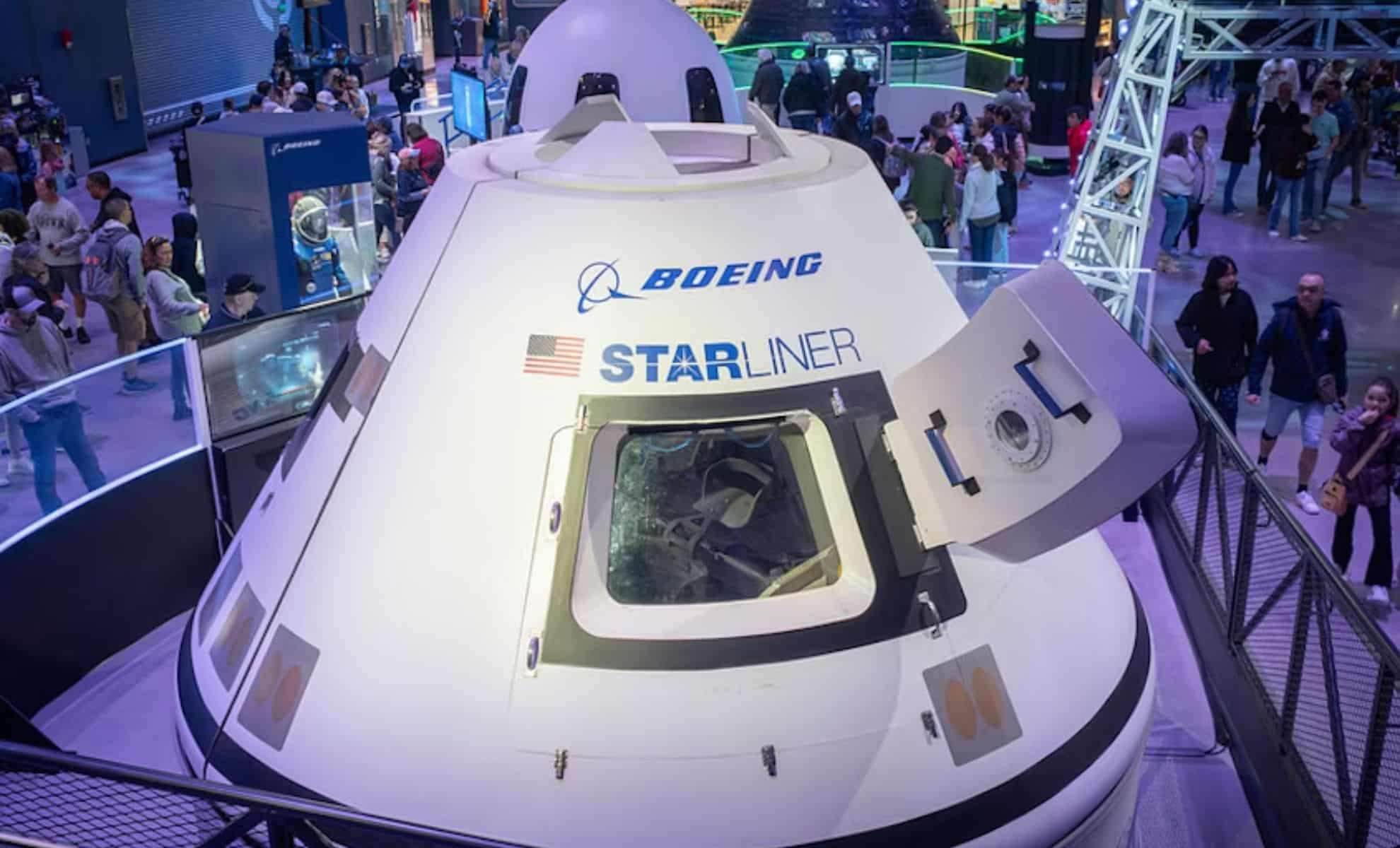
The launch of Boeing’s Starliner spacecraft has been postponed once more to allow for comprehensive verification of repairs addressing a helium leak affecting its propulsion system.
This additional delay underscores the intricate challenges involved in advancing the Starliner as a regular crew transport vehicle for missions to the International Space Station (ISS).
Addressing Technical Difficulties and Ensuring Safety for Starliner
Pre-launch inspections revealed a helium leak at a reaction control system thruster flange, a vital component since helium pressurization is necessary for thruster operation to maneuver the spacecraft in orbit.

Although the helium leak was relatively minor, it posed potential risks, mandating careful corrective action to guarantee mission safety and optimal spacecraft performance.
In addition to this helium issue, the Starliner program and United Launch Alliance (ULA) are concurrently resolving a prior problem related to an oxygen pressure relief valve in the Centaur upper stage of the Atlas V rocket.
Such technical hurdles highlight the stringent safety measures aerospace engineers implement, reflecting the critical importance of reliability in human spaceflight. The Atlas V was returned from the launch pad to the Vertical Integration Facility to facilitate these important repairs, showcasing careful adherence to mission safety protocols.
Consequences of the Launch Postponement
The delay extends beyond a mere schedule shift, impacting Boeing and NASA’s Commercial Crew Program’s timeline and objectives.
As one of NASA’s primary commercial partners alongside SpaceX, Boeing is tasked with ferrying astronauts to the ISS, with SpaceX having already completed multiple crewed missions using its Crew Dragon vehicle. This puts added emphasis on Boeing to validate the Starliner’s reliability and safety.
Demonstrating Starliner’s capabilities is critical for Boeing to maintain its position within NASA’s commercial crew program. Persisting delays and technical difficulties risk tarnishing Boeing’s reputation and could affect future contracts. They also have potential ripple effects on ISS crew rotation and related mission planning.
Next Steps for the Starliner Mission
The new tentative launch date has been set for May 21, with mission teams dedicated to completing the verification process of the helium leak fix.
“The teams now are targeting a launch date of no earlier than 4:43 p.m. EDT on Tuesday, May 21, to complete additional testing,” included a release from Boeing.
Confirming the spacecraft’s readiness is a pivotal step toward a safe crew-carrying flight to the ISS. Success will mark a significant achievement for Boeing, validating the Starliner’s role in crewed space missions.
Astronauts Suni Williams and Butch Wilmore, both seasoned spacefarers intimately involved in mission preparations, are set to pilot this landmark flight. Their journey will not only test the spacecraft’s real-world capabilities but also contribute valuable performance insights during its operation in space. This mission represents a notable milestone for their careers and for spaceflight history.
A Crucial Test for Boeing’s Starliner Program
The upcoming Starliner launch represents a critical juncture for Boeing as it strives to secure a lasting role in both American and international space endeavors. Achieving mission success will demonstrate Boeing’s ability to satisfy NASA’s stringent safety and operational criteria.
It offers Boeing an opportunity to rebound from earlier setbacks, including significant software glitches during its maiden uncrewed test flight and propulsion valve complications that have delayed prior milestones.
As Boeing advances toward the new launch window, the aerospace community worldwide, along with commercial and governmental stakeholders, will be keenly observing the outcome. A successful mission could restore confidence in Boeing’s engineering capabilities and reinforce its contributions to the future of human space exploration—a field that continues to captivate and inspire globally.
- Categories:
- Astronomy ,
- Space ,
- Nasa ,
- Aircraft






0 comments
Sign in to Comment