
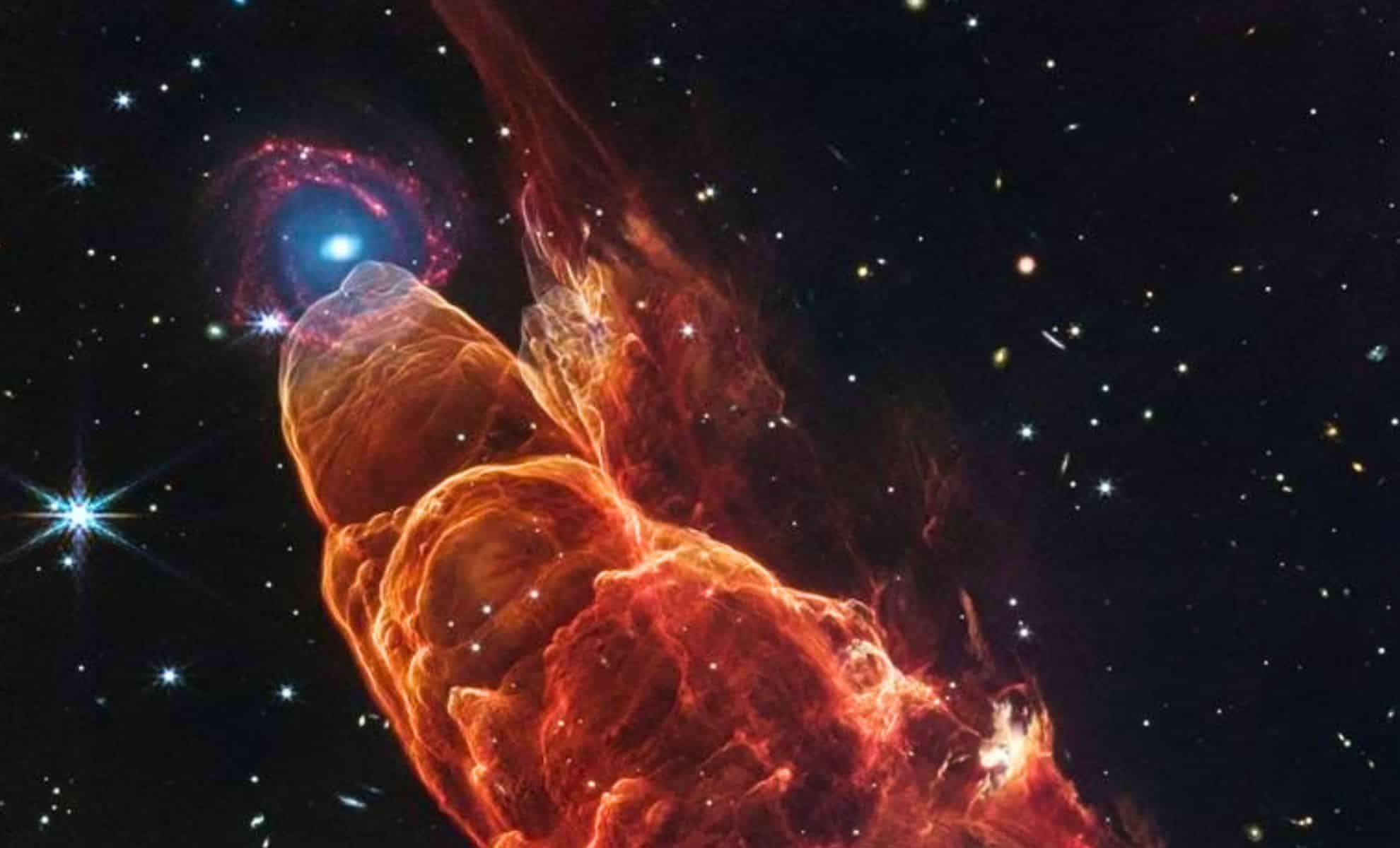
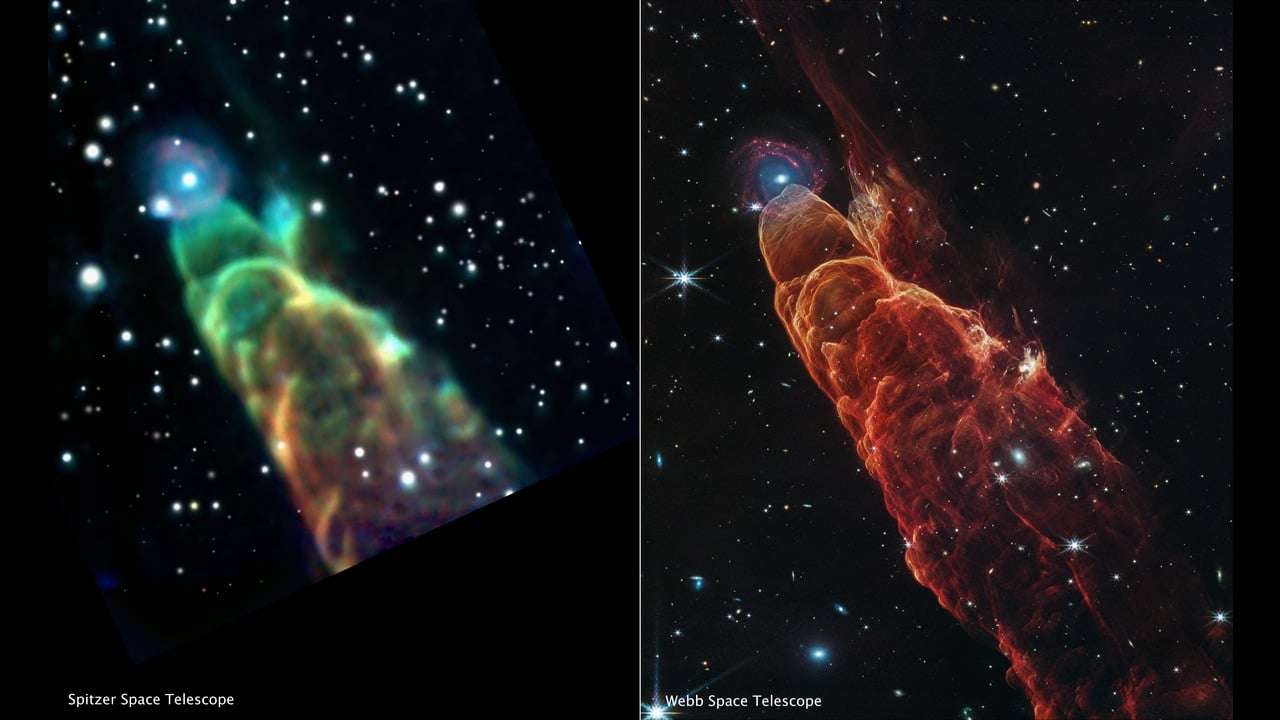
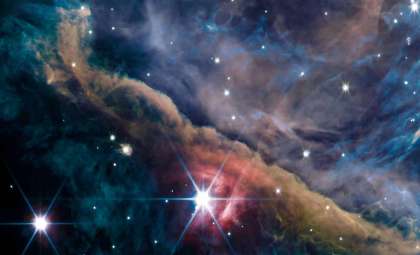
On March 24, 2025, NASA’s James Webb Space Telescope revealed a breathtaking image from the distant cosmos. This remarkable view features Herbig-Haro 49/50, a stream of gas and dust ejected by a star in the early phases of its formation. This discovery offers new perspectives on the processes involved in star birth, similar to how our Sun emerged billions of years ago.
The Intricate Dance of Stellar Birth
The recent imagery from the James Webb Space Telescope unveils a vivid portrayal of a Herbig-Haro object, specifically Herbig-Haro 49/50. Located within a star-forming nebula, this object provides a unique window into stellar genesis.
Glowing in shades of red and orange, the structures highlight shock waves produced when energetic jets from the infant star collide with surrounding clouds of gas and dust. These curved shock fronts grant astronomers invaluable insights into the interaction between rapidly moving stellar jets and their environment.

Herbig-Haro 49/50 grants a rare opportunity to observe the details of star formation stages, enhancing scientists’ comprehension of how stars evolve from their initial birth.
Herbig-Haro 49/50: Insights into Our Cosmic Beginnings
Herbig-Haro objects like Herbig-Haro 49/50 are crucial for understanding star formation. In particular, this object highlights the development of low-mass stars, analogous to the early Sun.
Jets emitted by young stars are essential for studying their interaction with the surrounding matter during their formative years. The James Webb Space Telescope’s capability to capture this stage marks a significant advancement for researchers exploring stellar and galactic formation.
The interplay between these jets and the ambient medium plays a vital role in shaping the conditions that foster star creation. By analyzing Herbig-Haro 49/50, astronomers refine their understanding of the physical forces influencing stellar growth over time.
Advancing the Frontier of Cosmic Exploration
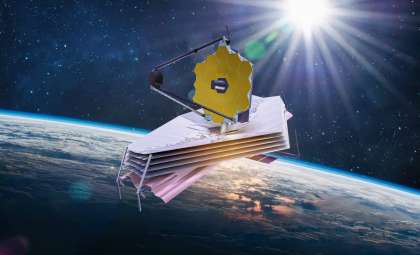
Since its deployment in 2021, the James Webb Space Telescope has become a hallmark of cutting-edge astronomical research. Developed through a collaboration between NASA, the European Space Agency (ESA), and the Canadian Space Agency (CSA), Webb is reshaping our capacity to investigate the universe.
It has already delivered awe-inspiring images, with Herbig-Haro 49/50 serving as the latest example of its extraordinary imaging power.
Following the legacy of the Hubble Space Telescope, Webb’s infrared instruments can penetrate deeper into space, revealing hidden details of distant galaxies, stars, and other universal phenomena previously inaccessible.
Revealing More Secrets of the Universe
The James Webb Space Telescope’s mission has only just begun. As it continues exploring the cosmos, scientists anticipate further monumental discoveries ahead.
Every observation enriches Webb’s impact on modern astronomy, solidifying its role as an essential tool for understanding the universe.
With its capacity to observe newborn stars, ancient galaxies, and myriad cosmic wonders, Webb stands ready to unlock countless other mysteries. The exploration of star formation is merely the starting point, with many thrilling breakthroughs yet to come.
- Categories:
- Space




0 comments
Sign in to Comment