
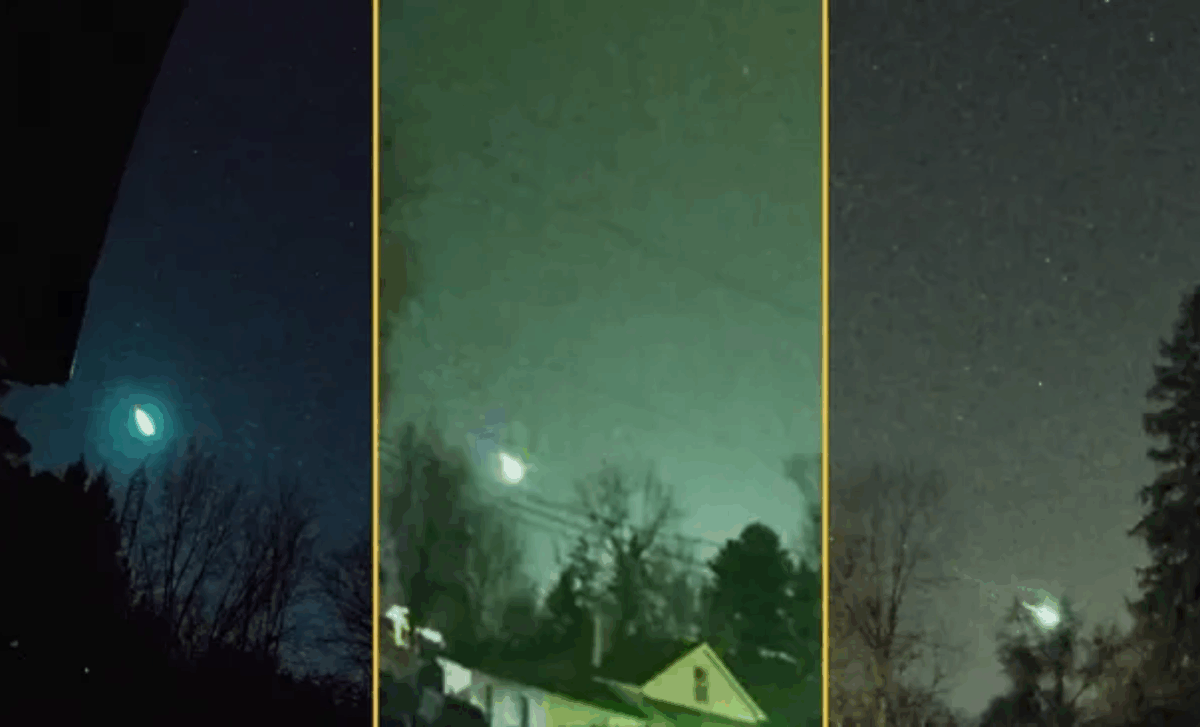
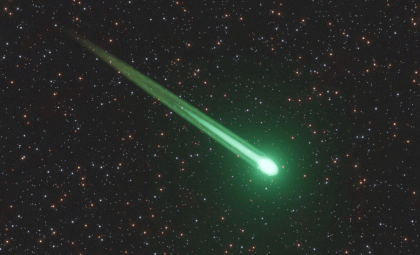
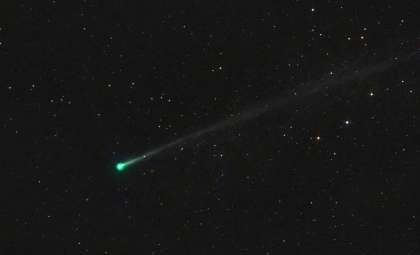
Early Sunday morning skies above the Great Lakes region were suddenly illuminated by a striking green meteor, captivating observers across Michigan. This dazzling light show was caused by a comet fragment hurtling through Earth's atmosphere at close to 100,000 miles per hour, culminating in a brilliant explosion over Lake Huron. Multiple videos shared from nearby towns revealed a glowing trail streaking across the sky, with the American Meteorological Society (AMS) promptly confirming the event.
An Unexpected Fireball Tears Through Earth’s Atmosphere
At 5:29 a.m. ET on November 23, residents spanning Coldwater to Tecumseh witnessed a fiery green flash darting across the skyline, followed by a vivid burst of light. Footage captured by Michigan Storm Chasers recorded the fireball, while NASA and the AMS began examining the data soon after.
The meteoroid first appeared roughly 62 miles above Hubbard Lake, traveling an additional 82 miles before breaking apart 46 miles over Lake Huron. Its speed was estimated at an astonishing 98,500 mph. Interestingly, this fireball did not align with any recognized meteor shower schedules.

“This event appears to have been caused by a small comet fragment and was not part of any currently active meteor shower,” NASA representatives wrote.
This occurrence falls outside the timing of the Leonid meteor shower, which peaks each November and is known for producing swift, vibrant meteors. According to NASA analyses, the fireball was a spontaneous event—likely a stray comet piece intersecting Earth's orbit unpredictably.
The American Meteorological Society (AMS) has officially cataloged this incident as #9010-2025, noting extensive interest from the public and the influx of eyewitness recordings. These visual accounts were instrumental in confirming the meteor's path and verifying the force of its spectacular breakup over Lake Huron.
The Origin of the Vibrant Green Glow
The brilliant green color displayed across the Midwest is primarily explained by the meteor's chemical composition. Experts at the AMS attribute this hue to a high presence of nickel, which emits green light when vaporized due to atmospheric friction, especially at extremely high speeds like this nearly 100,000 mph event.
Different elements emit distinct colors during meteoric entries: sodium produces bright yellows, magnesium generates blue-white glows, and calcium results in violet shades. The mesmerizing colors seen depend on the mix of elements, velocity, and temperature during atmospheric entry.
Such green fireballs are rare but not unprecedented. In July 2022, a similar event lit up New Zealand skies, and later that November, another green meteor streaked over Lake Ontario. That latter meteor was noteworthy as the smallest asteroid ever tracked ahead of impact, measuring merely 16 to 24 inches in diameter.
The Importance of Studying These Unpredictable Events
While meteor showers like the Leonids can be forecasted reliably, sudden fireballs like this remain largely unpredictable. Most of these fragments go unnoticed until they burn out high in the atmosphere or create a striking visual and auditory display. Their randomness offers invaluable data for scientists researching space debris, comet fragments, and potential risks to Earth.
Though this Michigan fireball was harmless to the surface, the immense speed and explosive end serve as a vivid reminder of how unpredictable and energetic near-Earth space can be. Growing networks for public reporting, such as those managed by the AMS, are enhancing scientists’ ability to detect, study, and document these fleeting cosmic events.
For now, this brilliant green visitor from the depths of the solar system leaves us wondering: how many more such fragments silently orbit our planet, waiting to blaze across our skies?
- Categories:
- News







0 comments
Sign in to Comment