
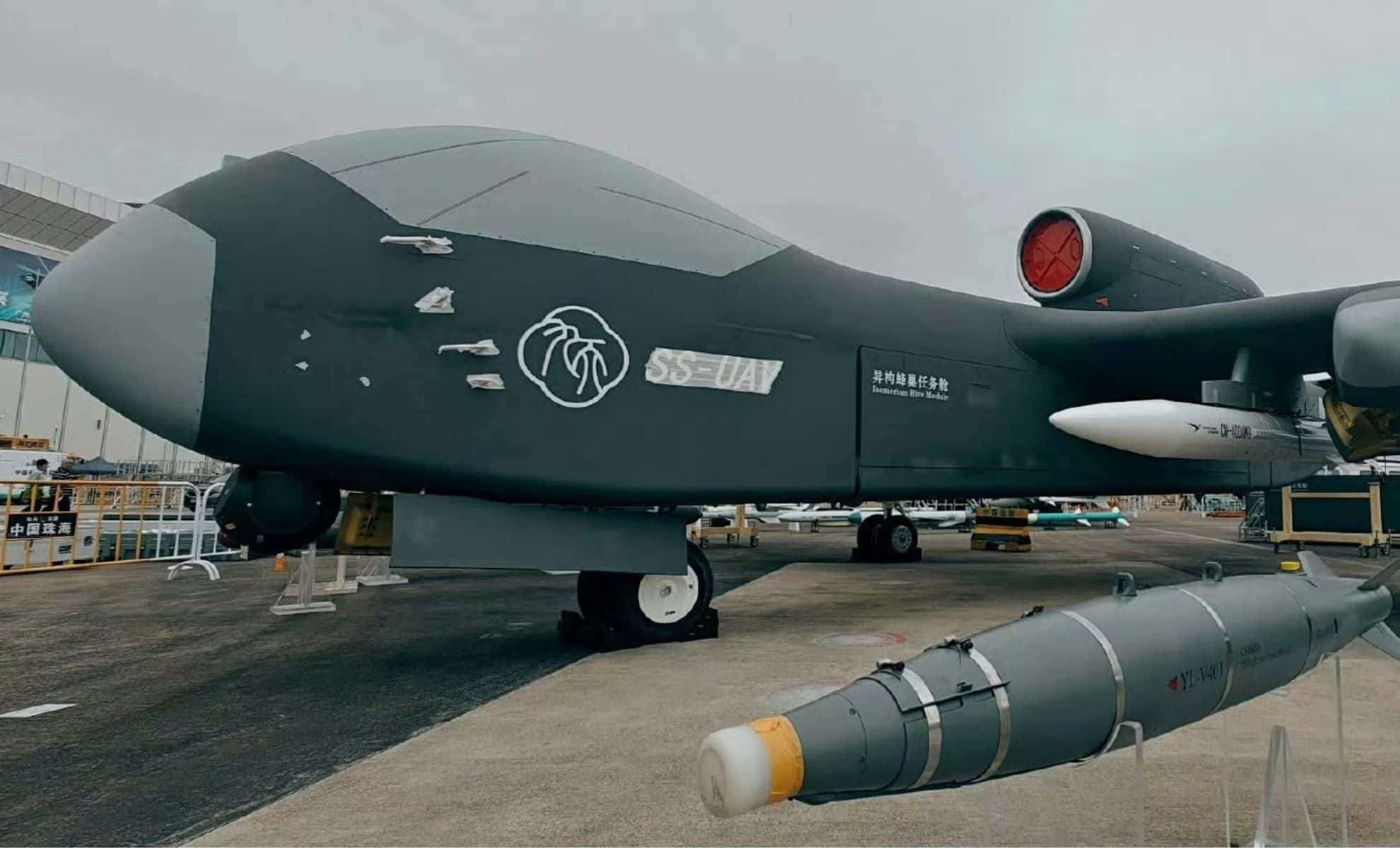
China is on the verge of debuting a groundbreaking unmanned aviation asset. Known as the Jiu Tian drone carrier mothership, this aircraft is anticipated to be the largest drone carrier worldwide and is expected to undergo its initial test flights by the close of June. Engineered to support a wide range of military and civilian applications, the Jiu Tian marks a significant advancement in China's expanding drone technology capabilities and could transform contemporary aerial strategies.
A Massive Carrier for Coordinated Drone Fleets
With a weight of 11 tons, the Jiu Tian has the capability to hold up to 100 smaller UAVs, carrying an additional 6.6 tons of drone payload. Its impressive operational range of 4,350 miles (7,000 kilometers) allows for extensive strategic deployment. According to the South China Morning Post, which first broke the story, the Jiu Tian made its introduction to the public at China’s premier aerospace exhibition, the Zhuhai Air Show, last November.
What distinguishes this drone carrier is its capacity to unleash synchronized swarms of drones. These UAVs utilize artificial intelligence and machine learning to intelligently coordinate, detect threats, navigate obstacles, and sustain mission objectives even in hostile environments. This swarm capability represents a major tactical innovation aimed at saturating opposing air defense through distributed swarm intelligence.

Implications for Future Military Strategy
Unlike traditional UAVs or the so-called kamikaze drones (or loitering munitions), which have been highlighted in conflicts like the Ukraine war, the Jiu Tian’s drone swarms are designed to operate as a cohesive unit. Rather than simply searching and striking, these UAVs communicate and adapt collaboratively in real time, countering defenses and optimizing mission effectiveness.
Colonel Andrew Konicki from the U.S. Marine Corps Systems Command emphasized at a recent expo that the growing threat of drone swarms is a major concern. He explained that the relatively low cost to produce and maintain such fleets poses a significant challenge compared to the expensive and complex technology required to counter them, especially when deployed en masse.
Versatile Applications Beyond the Battlefield
In addition to military roles, the Jiu Tian offers versatility due to its modular design, enabling uses in environmental monitoring, natural disaster management, and emergency services. After catastrophic events, the drone swarms could be utilized to assess damage, find survivors, and assist rescue personnel operating in dangerous settings. Employing autonomous aerial systems in these scenarios reduces risks to human teams and accelerates recovery efforts.
China’s defense tech industry, recognized as a top global supplier of unmanned technologies, highlights this multi-role capability of the Jiu Tian. By advancing such innovations, the nation enhances its military prowess while also boosting its competitive position in the worldwide drone marketplace.
Evaluating the Significance of This Innovation
While the impressive features of the Jiu Tian have been widely publicized, experts advise a measured perspective on its operational capabilities. Elsa Kania, serving as an adjunct senior fellow at the Center for a New American Security, shared with Live Science that some of the hype may aim to fulfill “deterrence and propaganda objectives” instead of reflecting proven battlefield utility. She stressed concerns about the aircraft’s vulnerability in highly contested zones despite featuring electronic warfare capabilities.
Nonetheless, the Jiu Tian project aligns with China’s growing strategy to merge cutting-edge technology into adaptable platforms for both combat scenarios and humanitarian missions. Whether it ultimately demonstrates effectiveness in warfare or disaster response, the global defense community will be closely monitoring its development.
- Categories:
- News






0 comments
Sign in to Comment