
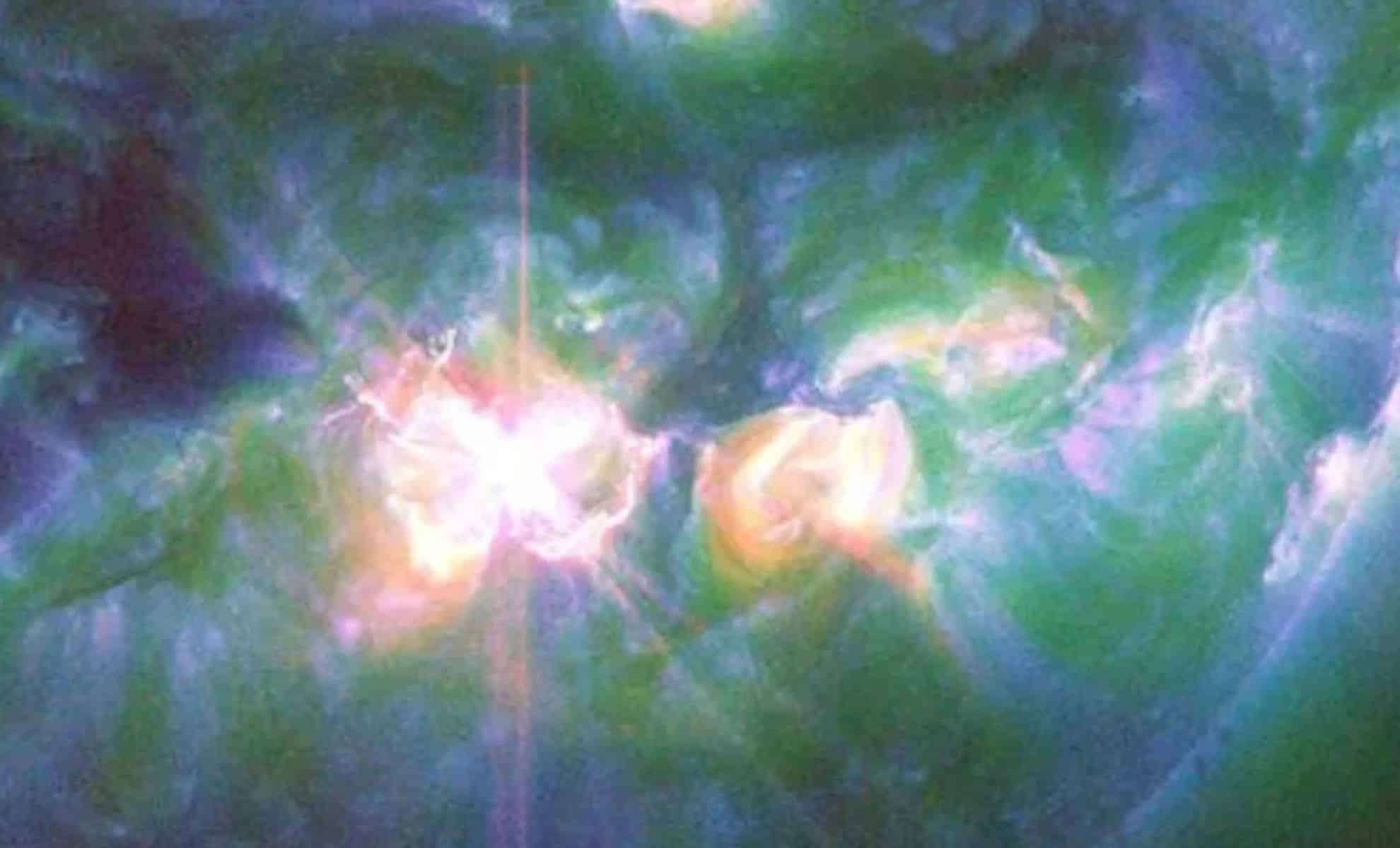
Researchers tracking long-term solar behaviors believe that the Centennial Gleissberg Cycle (CGC), a rare, extended solar pattern, may have just restarted. This shift could usher in several decades of heightened solar activity, raising concerns about the safety of satellites, astronauts, and space infrastructure.
New findings stem from a recent analysis of proton flux data collected by NOAA satellites, revealing signs that the sun is moving into a more active phase. Detailed in a study published in Space Weather by the American Geophysical Union, and covered by Live Science, these measurements suggest Earth has passed a CGC minimum, potentially leading to stronger, prolonged space weather disturbances ahead.
Decoding the Centennial Gleissberg Cycle
Distinct from the well-known 11-year sunspot cycle, the CGC spans roughly 80 to 100 years and is thought to dictate more extensive changes in solar magnetism. This broader modulation affects solar flares, coronal mass ejections (CMEs), and geomagnetic storms, which can interfere with communications, power networks, and satellite functions.

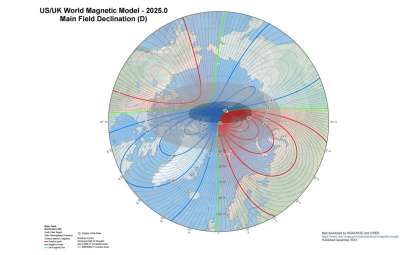
Principal investigator Kalvyn Adams highlighted the South Atlantic Anomaly (SAA) as essential in detecting this solar transition. “The SAA is a region where the Earth’s magnetic field is weak and allows trapped protons to reach lower altitudes,” Adams explained. This phenomenon enables NOAA satellites to monitor the inner radiation belt indirectly, avoiding risky direct exposure. “Which would be extremely tricky,” he added.
Through extensive examination of proton flux readings—a proxy for solar energetic particles—the team observed a recent decline indicative of the CGC minimum’s conclusion. “We just passed the CGC minimum, and it will be another 40 to 50 years before the CGC maximum,” Adams told Live Science. This projection suggests the peak will arrive during Solar Cycle 28.
Implications of the Upcoming Solar Phase
Should the CGC enter a more active phase, its effects could last for decades. Increased solar activity might enhance atmospheric drag on satellites, disrupt GPS signals, trigger radio blackouts, and threaten terrestrial power grids. These hazards are particularly relevant as private companies launch vast satellite megaconstellations, many not engineered with extended solar variability in mind.
“Most [private] satellites usually take into account a model of the space climate when they are being made,” Adams said, but he stressed, “they are not considering the long-term variations that we are seeing.” With Solar Cycle 25 already exhibiting heightened activity, advancing predictive models for space weather is more critical than ever.
Scientific Debate Around the Findings
Despite promising indications, the research has provoked differing opinions within the space weather community. Some experts caution that the Centennial Gleissberg Cycle is still not fully understood, and its exact role in solar behavior requires further study.
Solar physicist Scott McIntosh of Lynker Space, known for accurately forecasting Solar Cycle 25, urged a conservative approach. He suggested that the drop in proton flux might represent a brief fluctuation rather than a clear CGC phase change. “One year of data doesn’t make a trend,” he remarked, highlighting the need for multi-year monitoring to confirm if the CGC is genuinely transitioning.
A significant obstacle remains the scarcity of historical data. Accurate proton flux tracking via satellites extends back only 30 to 40 years, limiting the ability to establish detailed comparisons across different CGC cycles. This hinders understanding of the CGC’s relationship with other solar variations like the 11-year sunspot cycle and the Hale magnetic cycle.
- Categories:
- News




0 comments
Sign in to Comment