
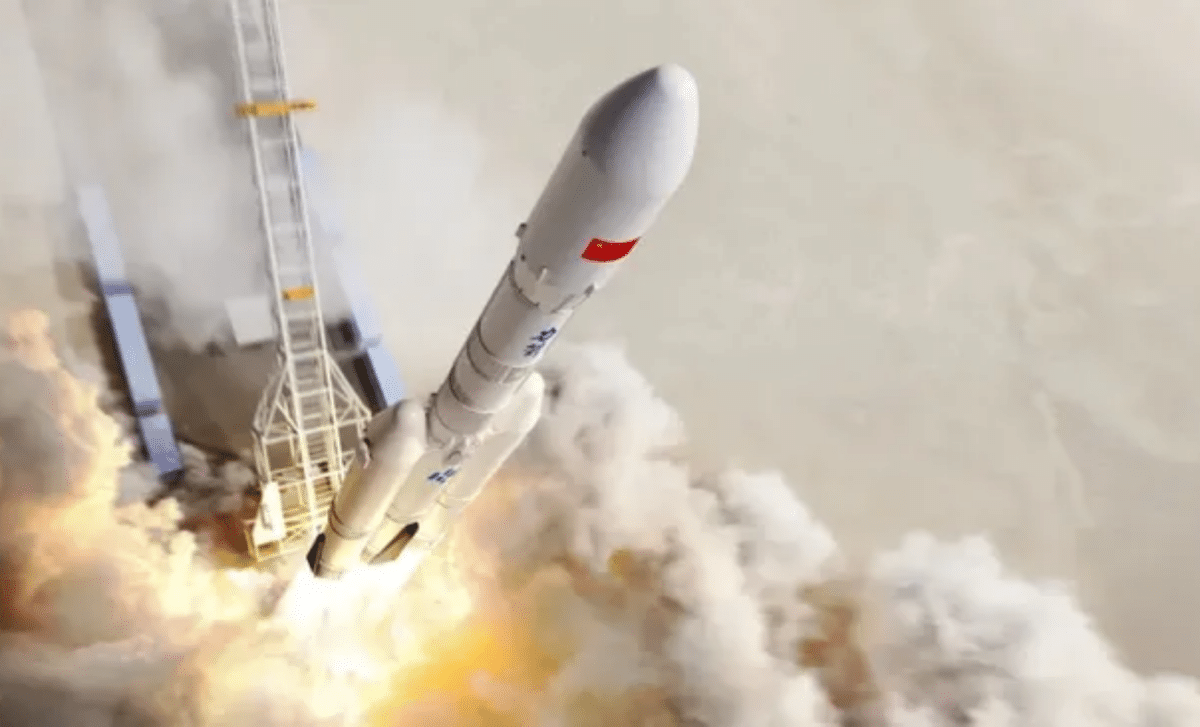
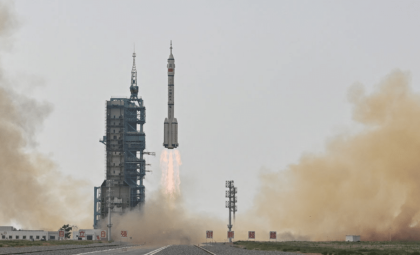
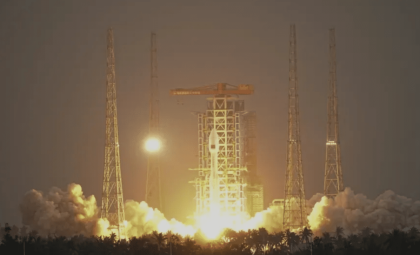
Set for liftoff in late March 2026, CAS Space, a commercial entity spun off from the Chinese Academy of Sciences, will debut its innovative Kinetica-2 rocket. Launching from the Jiuquan Satellite Launch Center nestled in China's Gobi Desert, this upcoming flight marks a key advancement for CAS Space as well as the entire Chinese aerospace sector. As detailed by Space News, this first mission will deploy a prototype of the Qingzhou-1 cargo spacecraft, which is intended to supply China's Tiangong space station. This piece delves into the importance of the Kinetica-2 rocket's creation, its prospects, and China's expanding role in space exploration.
CAS Space Emerges with the Kinetica-2 Reusable Rocket
Emerging from the Chinese Academy of Sciences, CAS Space is rapidly gaining recognition in the commercial spaceflight industry. The company aims to drive down costs and boost launch frequencies, securing a pivotal role in China's ambitious space plans.
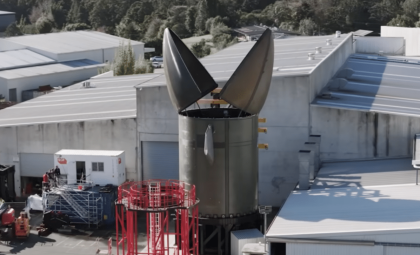
Reported by Space News, the Kinetica-2 measures 53 meters in height and features a reusable design to minimize expenses for upcoming missions. Fueled by three YF-102 engines utilizing kerosene and liquid oxygen, this vehicle can transport up to 12,000 kilograms into low Earth orbit. It also has the capacity to deliver 7,800 kilograms to a 500-kilometer sun-synchronous orbit, placing it in league with other heavy-lift rockets worldwide.

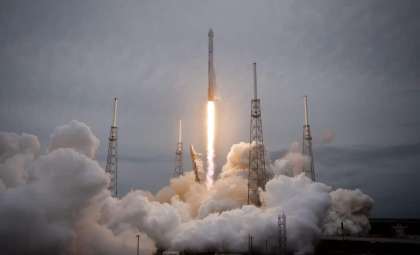
This rocket is part of China's broader pursuit of reusable launch systems. The Kinetica-2's refurbishment capability allows multiple flights, reducing the need for manufacturing new vehicles and cutting launch expenses. Such design strategies align with industry trends, echoing innovations by firms like SpaceX that utilize reusability to lower mission costs.
Qingzhou-1: Affordable Resupply for Tiangong Space Station
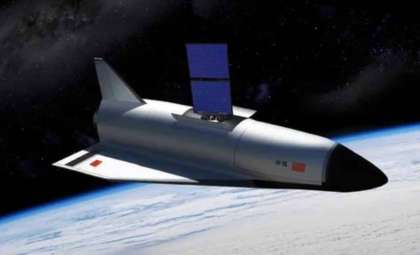
Accompanying the Kinetica-2's maiden voyage is the Qingzhou-1, a prototype cargo craft developed by the Innovation Academy for Microsatellites under the Chinese Academy of Sciences (IAMCAS). This spacecraft is integral to efforts that aim to establish low-cost, reusable cargo solutions for the Tiangong space station. The initiative is overseen by the China Manned Space Engineering Office (CMSEO), China's human spaceflight authority.
Designed specifically for resupplying Tiangong, the Qingzhou-1 will deliver crucial items like food, water, and equipment necessary for astronauts aboard the station. Eventually, full-scale versions of this cargo vehicle will facilitate more frequent missions, supporting extended human presence in orbit.
As China seeks to become a leading force in space exploration, developing cost-effective cargo spacecraft is vital for sustained orbital operations. The Qingzhou-1 and its successors play a key role in maintaining the Tiangong station’s functionality, underpinning ongoing scientific research and international collaboration.
Expanding Horizons: Satellite Megaconstellations and Kinetica-2's Role
The Kinetica-2 launch extends beyond a technological feat for CAS Space, symbolizing China's ambitions to dominate the global satellite market with escalating investments in satellite megaconstellations. These vast satellite networks aim to deliver worldwide broadband connectivity, focusing on underserved communities, and represent a growing sector for CAS Space.
CAS Space intends to conduct no fewer than four Kinetica-2 launches during 2026, supporting missions that include deploying large satellite constellations. These efforts aim to rival competitors, notably SpaceX and its Starlink program, which has already placed thousands of satellites in orbit.
By elevating launch frequency and capacity, CAS Space is positioning itself as a reliable provider for both commercial and governmental clients. The reusable Kinetica-2 will be crucial in China's strategy to accelerate satellite deployment and expand global connectivity networks.
Building on Success: Kinetica-1's Achievements and the Future
Kinetica-2's introduction follows the proven success of CAS Space’s smaller Kinetica-1 solid-fuel rocket, which has completed 11 consecutive missions and has eight more scheduled for 2026. The Kinetica-1 has demonstrated dependable performance for smaller payloads and serves as groundwork for the company's broader objectives.
Among its missions, the Kinetica-1 has supported suborbital capsule landing experiments aimed at advancing space tourism, marking a crucial phase toward making commercial spaceflight accessible. Although less powerful than Kinetica-2, the Kinetica-1's accomplishments have paved the way for innovations in reusable rocket technology and propelled CAS Space's commercial ambitions forward.
- Categories:
- Space

0 comments
Sign in to Comment