

China is intensifying its commitment to safeguarding our planet from asteroid hazards. As highlighted in a report from Interesting Engineering, the nation is on course to dispatch a spacecraft designed to test the possibility of changing the path of a near-Earth asteroid. Termed the “kinetic impact demonstration mission,” this endeavor could establish China as only the second country, after the U.S., to perform such a space maneuver. Scheduled for launch later this year, the mission promises to be a milestone in global efforts for asteroid threat mitigation.
China’s Mission Targets Asteroid Orbit Adjustment to Avoid Potential Disasters
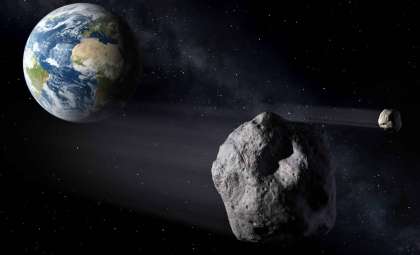
The core objective is straightforward: send a probe to collide with a distant asteroid, aiming to create a subtle shift in its course. Although the adjustment will be tiny—around 3 to 5 centimeters (1.2 to 2 inches)—this slight orbital change is crucial in demonstrating techniques for planetary protection. The project goes beyond moving a space rock; it tests technologies essential for future defense against more hazardous celestial objects.
During the third Deep Space Exploration (Tiandu) International Conference held in Hefei, Wu Weiren, chief architect of China's lunar exploration initiatives, revealed details about the mission. Wu highlighted that the test would prove the effectiveness of a “kinetic impact” — using a spacecraft’s collision to alter an asteroid’s trajectory, potentially averting a collision with Earth.

Details of China’s Asteroid Impact Mission
This mission will involve two spacecraft: one dedicated to monitoring the asteroid closely, while the second acts as the impactor striking it at high speed. The dual-spacecraft setup is intended to not only execute the impact but also to analyze how the asteroid responds and how its orbit is altered.
Wu explained that the observer craft will approach the asteroid first, collecting detailed measurements of its structure. Equipped with sophisticated imaging instruments, it will track the asteroid's motion right before impact. Both the spacecraft and Earth-based observatories will then monitor the collision, ensuring a rich dataset is gathered.
An Expanding Commitment to Planetary Defense
China has stepped up its planetary defense activities in recent years, complementing its expanding asteroid study initiatives. The launch of the Tianwen-2 probe earlier this year was one component of a larger plan to analyze asteroids and even retrieve samples. This mission follows NASA’s pioneering 2022 DART (Double Asteroid Redirection Test) mission, which successfully demonstrated asteroid orbit alteration for the first time.
Wu also outlined China's future goals, which include establishing a robust planetary protection infrastructure. This vision incorporates early detection systems, in-space defensive actions, and other advanced technologies to counter asteroid threats. He also hinted at potential international cooperation, with China willing to share data and foster a collective global effort against asteroid dangers.
Amid increasing focus on the dangers from near-Earth asteroids, this demonstration flight could be a key advancement in worldwide space defense. China's prominent role highlights the seriousness with which countries are addressing asteroid risks — whether for their resource potential or their potential destructive impact.
- Categories:
- News






0 comments
Sign in to Comment