
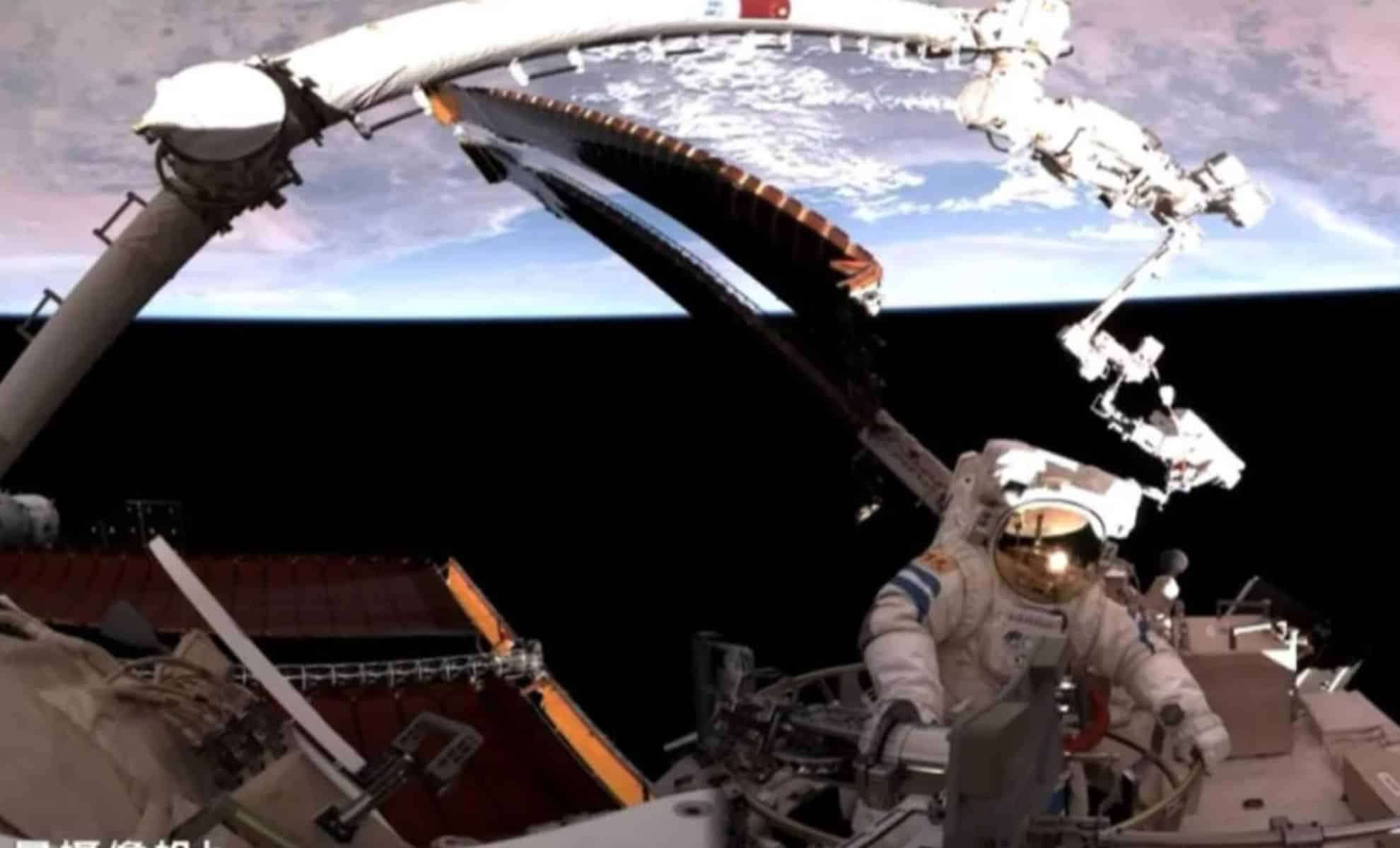
Chinese astronauts Ye Guangfu and Li Guangsu recently set a new record with the longest spacewalk conducted from the Tiangong space station.
The extravehicular operation lasted an impressive 8.5 hours on May 28, 2024, as part of the Shenzhou 18 mission, highlighting China’s growing expertise and ambitions in space exploration.
Key Highlights of the Extravehicular Activity
During the spacewalk, Ye Guangfu and Li Guangsu focused on fitting a shielding device against space debris and performing detailed checks on the extravehicular equipment and station components.

These critical maintenance activities help ensure the safety and continued function of Tiangong, especially after a recent collision with orbital debris caused a partial power outage on the station’s solar panels. The event underscores the importance of protective upgrades.
For Li Guangsu, this was his inaugural spacewalk, while Ye Guangfu was performing his second, after participating in the Shenzhou 13 mission’s spacewalk in December 2021. Meanwhile, Shenzhou 18 crew member Li Cong managed support operations from inside the station, ensuring a safe and efficient EVA. This flawless execution reflects the astronauts’ thorough preparation and the strength of China’s manned space program.
Overview of the Shenzhou 18 Mission
Launched in late April 2024, the Shenzhou 18 mission is scheduled to last six months during which the crew will conduct various scientific investigations, technology demonstrations, and more spacewalks. Preceded by Shenzhou 17’s two EVAs and Shenzhou 15’s record-setting four, this mission aims to advance China’s long-term space habitation and extravehicular operation capabilities.
Since its first EVA in 2008 by astronaut Zhai Zhigang, Chinese crews have completed 16 spacewalks vital for assembling and maintaining Tiangong, including installing scientific instruments and station hardware.
Combating Space Debris and Expanding Capabilities
The newly installed debris protection system during this record-breaking EVA addresses the increasing hazard of space junk. As Tiangong grows and hosts more missions, safeguarding its structure becomes critical. Space debris threatens both the station’s equipment and the crew’s safety. The Shenzhou 18 team’s installation efforts represent a proactive measure to reduce these dangers.
Officials from the China Manned Space Agency (CMSA) have outlined that numerous scientific tests and multiple extravehicular activities are planned throughout this mission.
These operations are pivotal to pushing China’s exploration goals and maintaining Tiangong’s readiness. The mission outcomes will play a key role in refining technologies and procedures for future flights.
With ongoing progress and successful sorties, China is establishing itself as a prominent player in human spaceflight. The accomplishments of the Shenzhou 18 astronauts showcase the nation’s rising spaceflight proficiency and commitment to advancing human presence in orbit.
Efforts to protect the station from orbital debris are a clear example of the foresight involved in sustaining Tiangong’s long-term mission. Lessons learned during Shenzhou 18 will be essential to enhancing the success of upcoming space endeavors.
- Categories:
- Astronomy ,
- News ,
- Space





0 comments
Sign in to Comment