
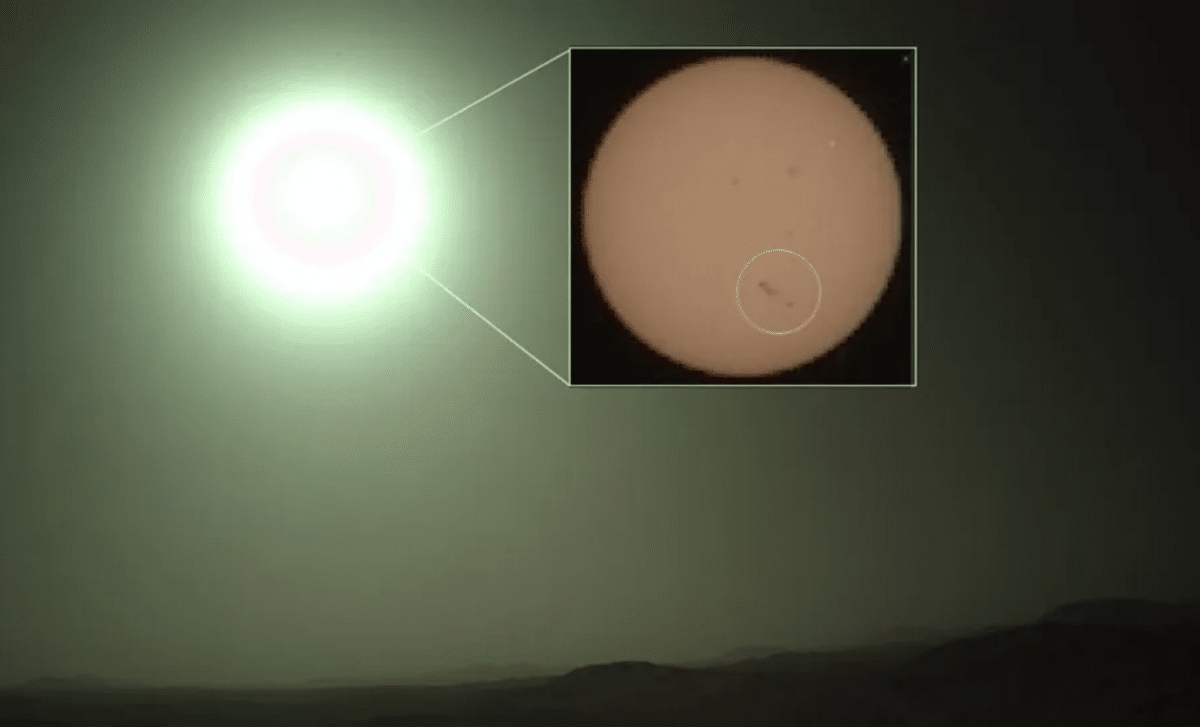
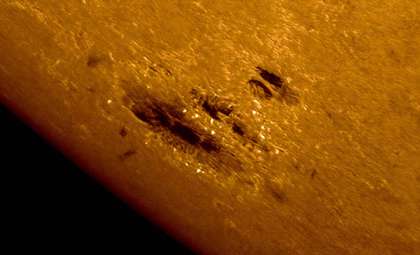
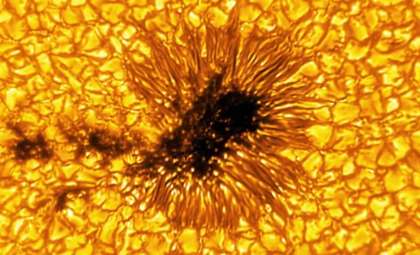
A recently observed sunspot cluster, designated AR 4294-4296, has sparked interest due to its substantial size and potential for generating intense solar flares. As reported by Spaceweather.com, this sunspot rivals the dimensions of the one responsible for the historic Carrington Event of 1859, the most powerful solar storm ever documented. Scientists are vigilantly monitoring its activity, given its capability to influence Earth in the near future.
Enormous Sunspot Group May Pose Solar Risks
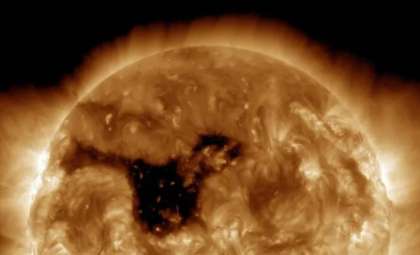
On November 28, 2025, the impressive sunspot complex AR 4294-4296 became visible as it faced Earth directly. Comparable in scale to the sunspot behind the legendary Carrington Event, this formation consists of two magnetically linked sunspot clusters. Initially connected to NASA’s Perseverance Mars rover, these dark sun patches are positioned to potentially unleash energetic solar flares and coronal mass ejections (CMEs) capable of disturbing Earth's environment.
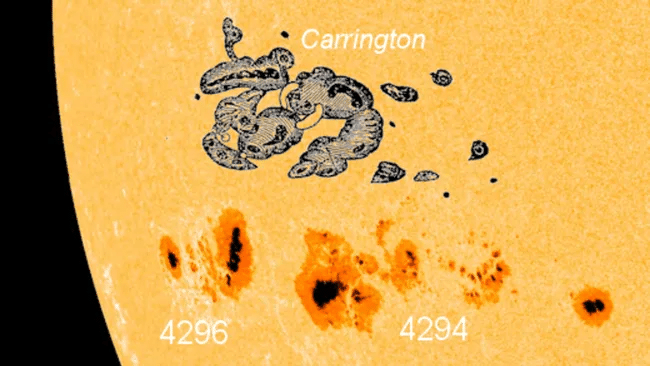
The total area of these sunspots approaches 90% of that recorded during the Carrington Event, making them among the largest sunspot groups seen over the past decade, as noted by Spaceweather.com. The possibility remains that they could trigger exceptionally strong solar storms.

Historical Context: The Carrington Event
The 1859 Carrington Event stands as the most intense solar storm in recorded history, initiated by a solar flare with an estimated magnitude of X45, far exceeding modern flare sizes. A similar disturbance today could cause significant damage, including satellite failures, widespread power outages, and disruption of communications infrastructure. While AR 4294-4296 invites comparisons due to its size, specialists emphasize that such an extreme event may not necessarily recur.
At present, AR 4294-4296 is primarily a subject for observation rather than alarm. Active solar flares are expected, but the intensity reaching Carrington levels is uncertain. Scientists remain alert for indicators of CMEs or sudden flare increases.
Understanding Solar Flares and CMEs
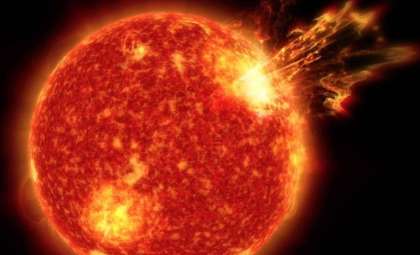
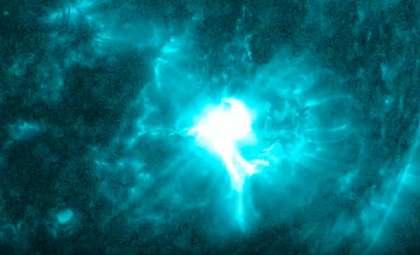
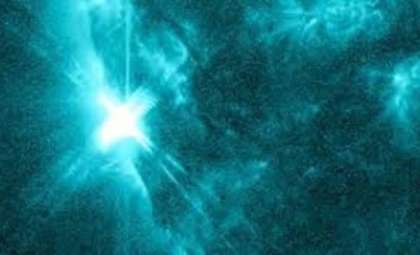
Solar flares represent powerful bursts of energy emanating from the Sun’s surface, sending radiation into space that can temporarily disrupt terrestrial radio communications. Yet, coronal mass ejections (CMEs) pose the greater threat, as these large expulsions of solar plasma can travel at tremendous speeds and disturb Earth's magnetic field, causing geomagnetic storms.
Spaceweather.com highlights that AR 4294-4296 could produce X-class flares—the most intense in the NOAA flare classification—capable of severely impacting Earth’s technological systems. Should this sunspot group release a CME, it might have a “geoeffective” influence, meaning it would directly affect Earth's magnetosphere and related infrastructure.
Is AR 4294-4296 Destined to Mirror the Carrington Event?
Though the size of a sunspot contributes to its flare potential, it doesn’t ensure a damaging storm. The sunspot’s magnetic field arrangement plays a crucial role in flare generation. Some large sunspots remain quiet, while others can produce unexpected eruptions.
Despite AR 4294-4296’s capacity for solar activity, current assessments do not predict a repeat of the Carrington Event. Its complex magnetic structure raises the odds for powerful flares, but no definitive evidence points to an impending superstorm. Continuous monitoring is underway to detect any significant changes.
Solar Cycle Influence and Earth's Magnetosphere
The Sun follows an approximately 11-year cycle characterized by fluctuating sunspot numbers, peaking during solar maximum phases with heightened activity. Presently, the Sun is amidst such a maximum, which likely explains the emergence of AR 4294-4296.
During these peaks, Earth faces a greater chance of solar flares and geomagnetic disturbances, although these often remain within manageable limits. Recent flare events in 2024, linked to geomagnetic storms, underscore the Sun’s amplified activity, but these pale relative to a potential Carrington-level event.
Potential Consequences for Modern Technology
Severe solar storms pose significant risks to contemporary technology, particularly satellites and navigation systems. Even modest geomagnetic storms can induce radio signal blackouts, GPS inaccuracies, and power grid disturbances. A storm on the magnitude of the Carrington Event could produce extensive, destructive repercussions worldwide.
If AR 4294-4296 were to trigger a solar flare and CME matching Carrington’s scale, the impact on Earth's infrastructure could be devastating. Satellites could suffer radiation damage or failure, and terrestrial power networks might endure widespread blackouts, potentially resulting in economic damages exceeding $1 trillion.
- Categories:
- News



0 comments
Sign in to Comment