
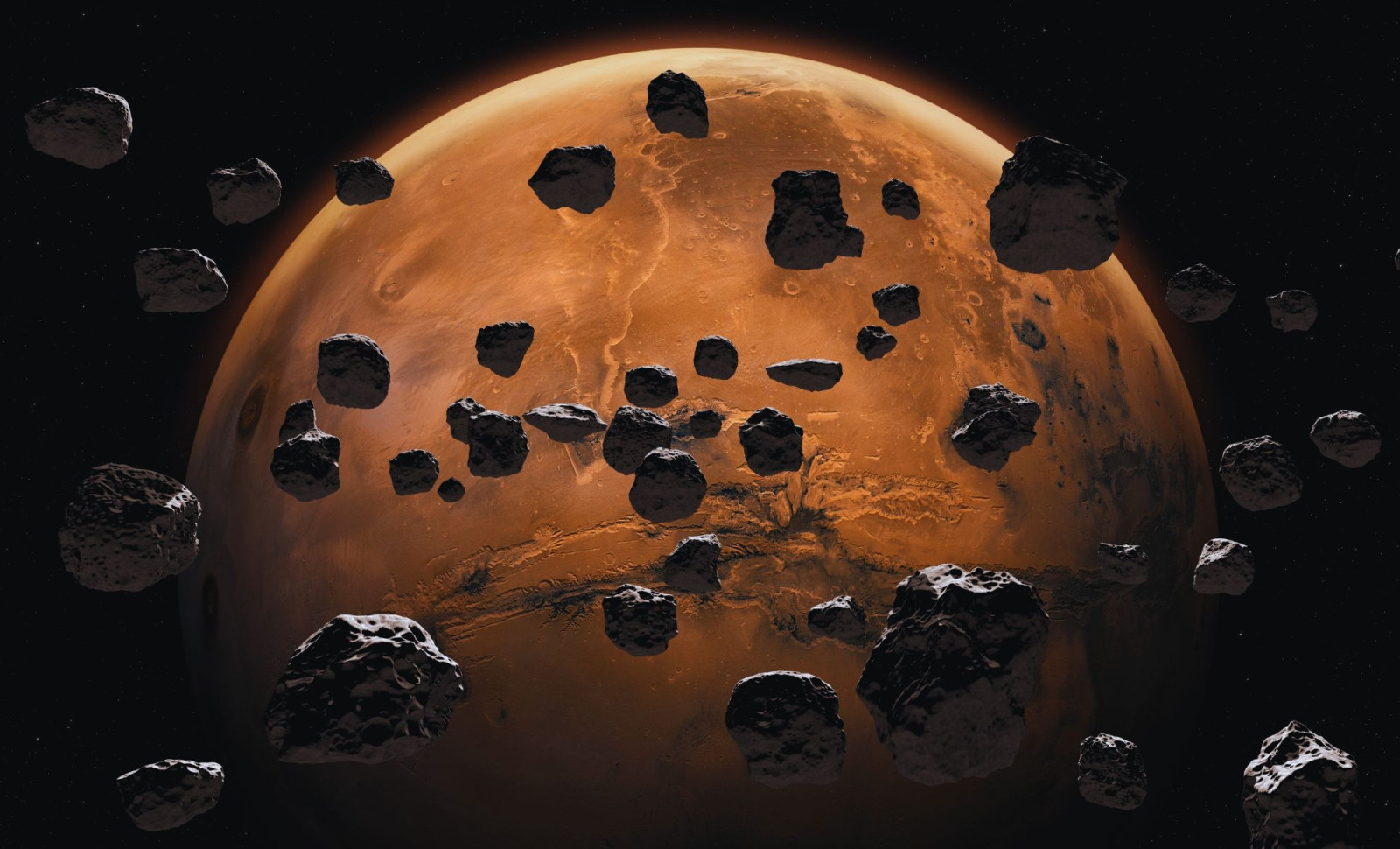
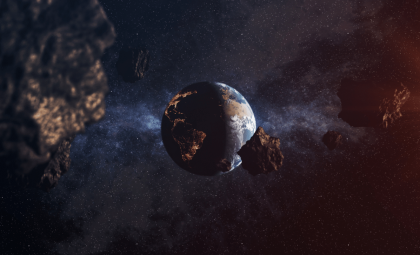
Recent research unveils strong indications that life forms from Mars might have traveled to Earth by adhering to fragments blasted into space during asteroid collisions. Scientists from Johns Hopkins University focused on Deinococcus radiodurans, a microbe famous for its extraordinary tolerance to extreme environments, revealing its capacity to endure the intense forces generated by asteroid impacts.
Featured in PNAS NEXUS, the publication highlights how this discovery bolsters the possibility that life could be transferred across planets through cosmic debris. The survival of D. radiodurans amid such extreme conditions hints that microbes might have journeyed between Mars and Earth, or even beyond.
A Microorganism Engineered for Survival
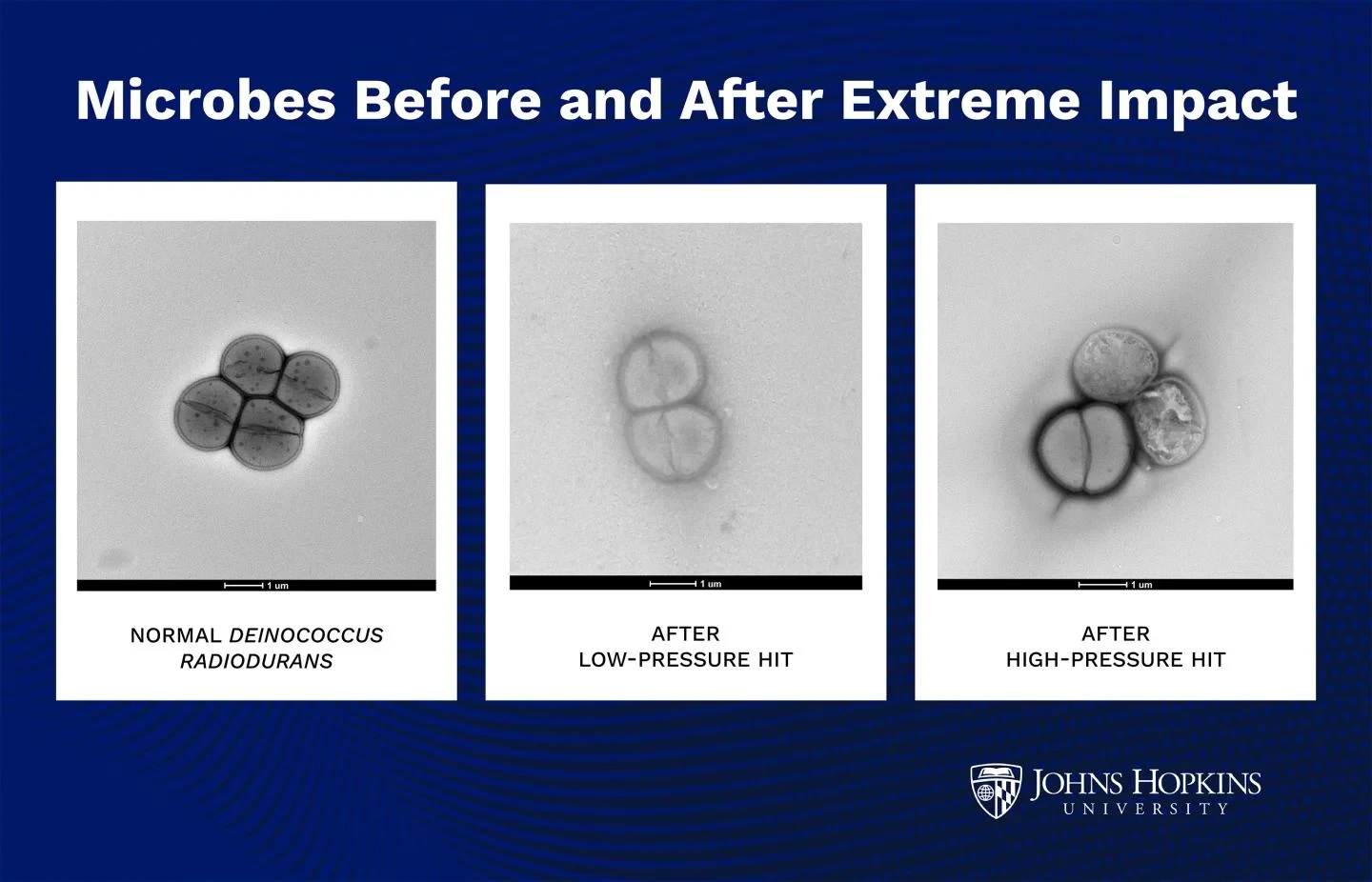
Known as “Conan the Bacterium,” Deinococcus radiodurans withstands radiation, desiccation, and temperature extremes unlike most organisms. Frequently utilized in research on life's endurance in hostile settings, this resilient microbe was put to the test under simulated asteroid impact conditions in a recent study.

At Johns Hopkins University, impact simulations subjected D. radiodurans to forces replicating asteroid collisions. According to lead researcher Lily Zhao, nearly all bacteria withstood pressures reaching 1 gigapascal (GPa)—equivalent to 30 times the pressure at the ocean’s deepest point. Even at 3 GPa, over half the population survived, exhibiting DNA repair and reproduction capabilities post-impact.
This study suggests that microorganisms with such remarkable durability might endure asteroid collisions and traverse space securely on meteorite fragments.
Lithopanspermia: A Strengthening Hypothesis
The notion that life can disperse through the solar system via rock fragments—lithopanspermia—has fascinated researchers for more than 100 years.
Once viewed as speculative, the theory gained credibility as extremophiles like D. radiodurans showed survival in harsh environments, supporting the idea that life could be exchanged between planets through asteroid or meteorite impacts. Johns Hopkins impact specialist K.T. Ramesh elaborated:
“If you can get one life-form, an extremophile, to survive these kinds of conditions, that shows there’s a ‘seed’ for biology to build on,” he said. “You’ve got the DNA; you’ve got the cellular structures. And from there, biology can move—it doesn’t start in one place and just stay there.”
Should evidence confirm life ever thrived on Mars, asteroid impacts might have propelled its microbes to Earth, where they could have endured and even influenced the development of life.
Unforeseen Challenges for Space Exploration
The revelation that hardy microbes like D. radiodurans can survive extreme impact stress carries important consequences for planetary protection—the protocols aimed at preventing cross-contamination between Earth and other celestial bodies. Such precautions are vital for agencies including NASA.
Moogega Cooper, a planetary protection engineer at NASA’s Jet Propulsion Laboratory, emphasized that these findings may require revisiting current protection strategies, especially for sample-return missions. For instance, Japan’s Martian Moons Exploration (MMX) mission, designed to retrieve rock samples from Mars’s moon Phobos, could inadvertently bring back Martian microorganisms or remnants.
“Indeed, the remarkable ability [of D. radiodurans] to potentially survive both the immense pressures of meteorite impact and eons of deep-space radiation suggests that the MMX Phobos moon samples returned to Earth may require a higher level of planetary protection,” explained Michael Daly, particularly known for his research on the resilience of microorganisms in extreme conditions.
The possibility that microbes can endure impact events and survive space transit introduces new concerns for safeguarding Earth’s biosphere and extraterrestrial environments.
- Categories:
- News

0 comments
Sign in to Comment