
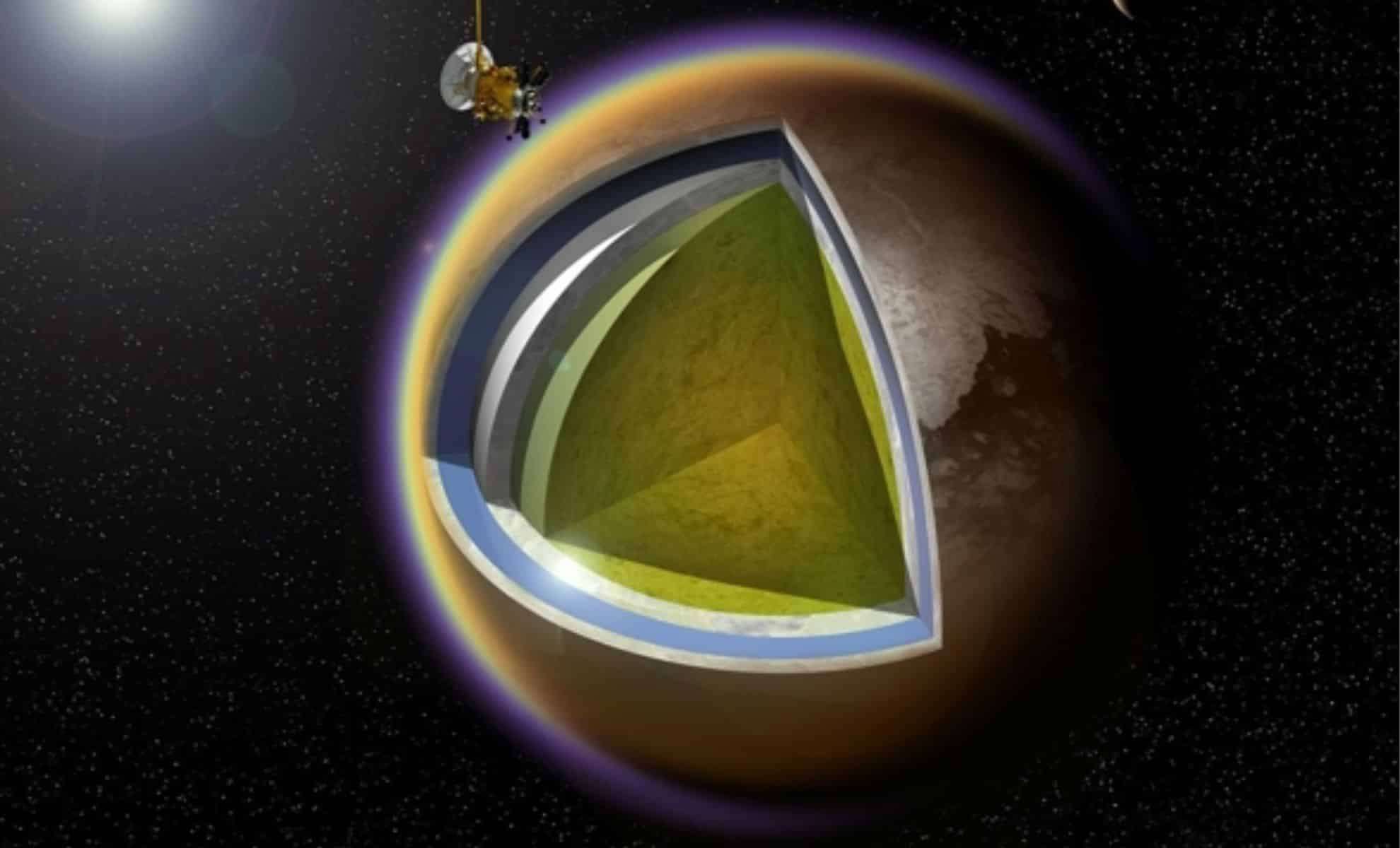
Evolutionary biologist Antonin Affholder from the University of Arizona has proposed a fascinating hypothesis regarding Saturn's moon Titan. His research suggests that beneath Titan’s icy crust lies a subsurface ocean that might support life, though the total biomass may be comparable in size to a small dog. This conclusion stems from detailed bioenergetic modeling of the moon’s potential microbial ecosystems, offering a more conservative perspective compared to earlier hopes of abundant extraterrestrial life on Titan.
Titan stands out in our Solar System due to its dense atmosphere filled with complex organic compounds, surface lakes of methane, and a hidden ocean beneath its frozen exterior. Yet, the energy available in these environments is extremely limited, implying that any living organisms there would be sparse and surviving with minimal resources in a cold, challenging habitat.
Unique Chemistry Beneath Titan’s Surface
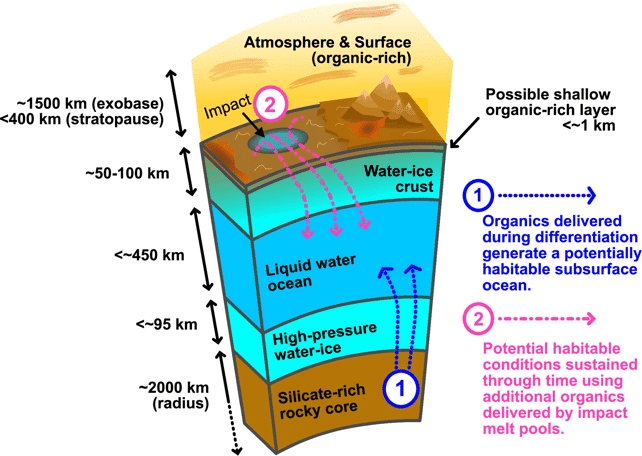
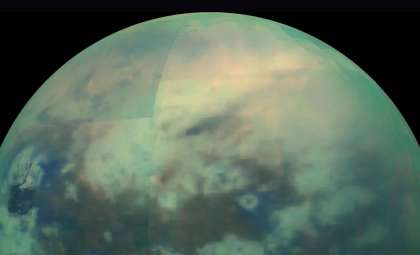
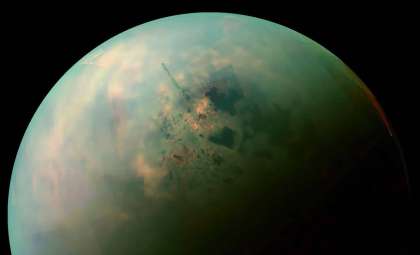
This enigmatic moon features a thick, opaque atmosphere with an intriguing mix of organic chemicals. Titan's surface is marked by extensive methane lakes and river systems, all overlaying a large subsurface ocean of liquid water concealed beneath an icy crust. This ocean is a focal point for scientists investigating the possibility of life in alien environments radically different from Earth's.

On Titan, the interaction of methane and nitrogen gases in its atmosphere, energized by solar ultraviolet radiation, generates complex organic molecules. These molecules accumulate on the surface as hydrocarbons, potentially forming basic life-building blocks. This process makes Titan a compelling object in the search for extraterrestrial biosignatures.
The research team applied bioenergetic principles to evaluate how this unique chemistry could support microbial life in an oxygen-free, frigid ocean beneath Titan’s crust. Their findings indicate that the energy available is likely too scarce to sustain large or complex life, though simple, fermenting microorganisms might still persist.
Fermentation: A Possible Survival Strategy for Titan’s Microbes
Fermentation, one of the simplest energy-producing processes used by microbes on Earth, may offer a viable means for life on Titan to survive. Scientists suggest that Titan’s hypothetical organisms might utilize fermentation to metabolize organic molecules like glycine, commonly found throughout the cosmos. This anaerobic process requires no oxygen and could provide the minimal energy necessary for life in the moon’s extreme environment.
Given Titan’s minimal energy availability and lack of oxygen, fermentation could be a key metabolic pathway for any resident microbes. Discovering life reliant on fermentation outside Earth would greatly enhance our understanding of how organisms can endure in some of the most extreme conditions within our Solar System.
Despite this potential, the study estimates that the total bio-mass within Titan's ocean is only a few kilograms in weight, roughly equal to that of a medium-sized dog. This implies that any life on Titan would be rare and widely dispersed, with significantly fewer cells per unit volume of water than seen in Earth’s oceans. These findings highlight the substantial difficulty in detecting such elusive life forms.
Detecting Life on Titan: A Daunting Task Ahead
With microbial life estimated at less than one cell per kilogram of ocean water, locating evidence of life on Titan presents an enormous challenge, akin to searching for a needle in a vast cosmic haystack located hundreds of millions of miles away.
Nonetheless, this study paves new pathways for exploring Titan’s potential as a habitat. Upcoming missions, including NASA’s innovative Dragonfly drone planned for the 2030s, will explore Titan’s surface and atmosphere to seek signs of organic activity and microbial life. Such endeavors may deepen our understanding of whether life can emerge and persist under these harsh, alien conditions.
- Categories:
- News








0 comments
Sign in to Comment