
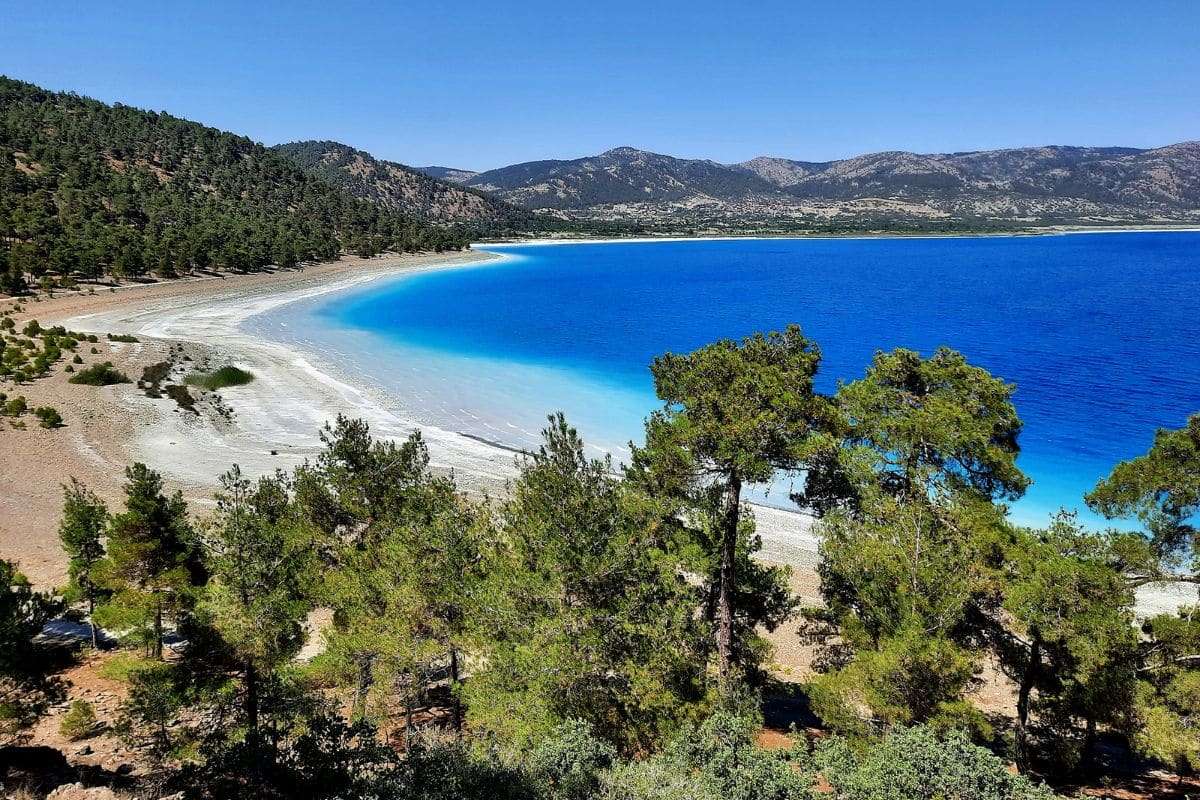
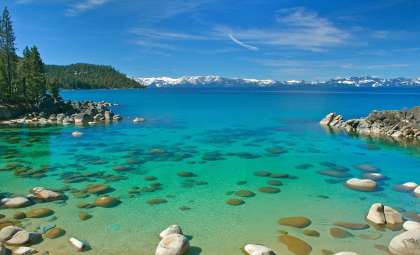
In southwestern Turkey lies an extraordinary lake that has captured the interest of scientists studying Mars’ ancient environment.
Lake Salda stands out as the sole terrestrial site whose geological and mineral composition closely resemble those of Jezero Crater—an old Martian lakebed now under scrutiny by NASA’s Perseverance rover.
A Geological Parallel to a Martian Landmark
Nestled in Turkey’s Burdur province, Lake Salda plunges to depths of 643 feet (196 meters), ranking among the deepest lakes in the region. Its scientific significance stems from abundant hydromagnesite, a magnesium-based carbonate mineral forming its shores.
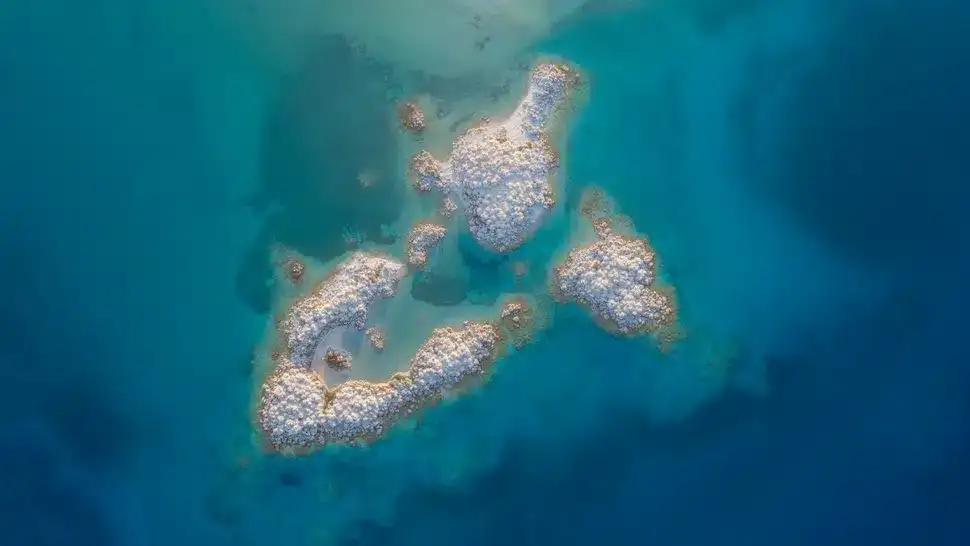
This mineral forms through the erosion of microbialites, rounded structures produced by colonies of microbes. These formations are vital to understanding early microbial ecosystems and serve as terrestrial analogs for similar structures believed to have existed billions of years ago in Jezero Crater.
Live Science reports that this "stunning lake is the only spot on Earth matching the geology and mineralogy of the Red Planet’s ancient impact basin." This remarkable similarity attracted scientific interest well before Perseverance landed on Mars.

Carbonate Minerals and Tracing Signs of Early Life
Scientists are particularly intrigued by the lake’s carbonate minerals, known for their exceptional ability to capture and preserve traces of microbial activity, organic compounds, and surface features indicative of biosignatures.
Brad Garczynski, a geologist focused on planetary science, told NASA’s Earth Observatory, “Carbonates play an essential role because they can effectively trap microbes, organics, or surface textures that suggest previous microbial life.”
Lake Salda thus serves as a natural laboratory for astrobiology, offering insights into Mars’ distant past when water and life-supporting conditions may have prevailed. This connection was further strengthened in 2019 when NASA’s Mars Reconnaissance Orbiter detected similar minerals along the edges of Jezero Crater, signifying the presence of a long-gone lake—a discovery later validated by Perseverance’s ground measurements.
Field Studies on Earth Informing Mars Missions
Interest in Lake Salda has surged, with researchers conducting extensive fieldwork aimed at supporting the Mars mission by understanding how microbial communities imprint themselves in carbonate-rich terrains. Analyzing the lake’s microbialites and sediments provides a comparative framework for interpreting Martian data.
NASA highlights that the hydromagnesite deposits “likely originate from microbialites, rock-like bodies resembling coral reefs but formed by microbes.”
Significance of Deltas in Decoding Water Histories
A key link between Lake Salda and Jezero Crater is their deltas—sedimentary structures created as rivers deposit sediments into calm waters. These deltas carry layered records of past hydrological processes.
Investigations of Turkey’s deltas have shaped strategies to study similar features on Mars. Planetary scientist Briony Horgan reflected, “Visiting Lake Salda offers a powerful perspective on what standing by ancient Lake Jezero might have felt like.” This tangible connection fuels ongoing collaboration between Earth-based geological fieldwork and planetary exploration.
- Categories:
- News






0 comments
Sign in to Comment