
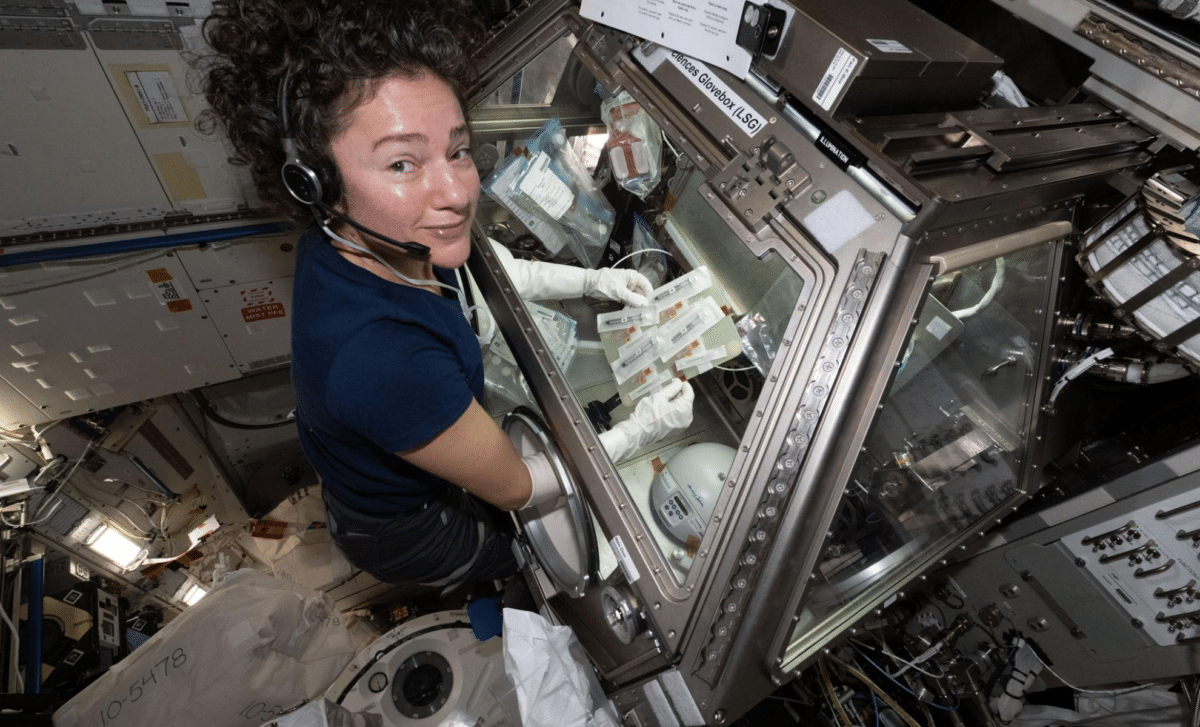
Onboard the International Space Station (ISS), astronauts are investigating a critical health issue for upcoming space endeavors: how microgravity influences the body’s blood clotting and immune defenses. NASA reports that Expedition 74 crew members recently conducted in-depth studies examining platelets and immune system responses, research essential for ensuring astronaut safety on missions to the Moon, Mars, and beyond.
Investigating Blood Clotting Alterations in Microgravity
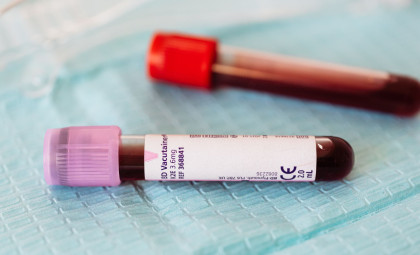
This new series of tests focused on blood platelets, which play a vital role in halting bleeding and maintaining clot formation. Although these functions normally perform reliably on Earth, extended exposure to microgravity could disrupt biological mechanisms, raising the prospect of dangerous clotting episodes during prolonged spaceflights.
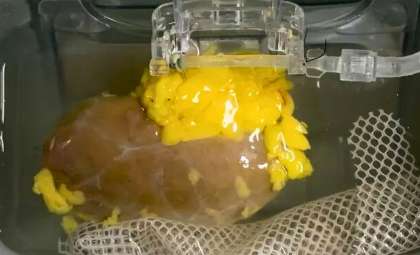
NASA astronauts Chris Williams and Jessica Meir teamed up with Sophie Adenot from the European Space Agency (ESA) to analyze blood platelet samples inside the Life Science Glovebox in the Japanese Kibo module aboard the station. Operating in orbit offers an exclusive perspective to observe how cells behave in ways that cannot be fully duplicated in Earth-based labs.

The goal is to clarify the influence of zero gravity on platelet activity, inflammation, and immunity. Understanding such physiological changes is crucial as space agencies worldwide gear up for extended missions far from Earth, where medical emergencies involving clots could pose significant risks.
Scientists anticipate that insights obtained here will reveal specific biological pathways sensitive to microgravity and ultimately guide the creation of protective treatments for astronauts, with potential applications for patients on Earth as well.
Expedition 74 explored how microgravity alters blood platelets to protect astronaut health and cleaned spacesuits at the end of the week. More… https://t.co/OJgMqqLufl pic.twitter.com/TuKshehy6L
— International Space Station (@Space_Station) May 29, 2026
High-Resolution Microscopy Sheds Light on Cellular Behavior in Space
The investigation involved teamwork among crew members, with NASA flight engineer Jack Hathaway handling sample collection and preparation for microscopic examination. The samples were studied using the KERMIT fluorescent microscope, a tool designed to detect subtle shifts in cellular processes during spaceflight.
Through detailed imaging, researchers can track how microgravity influences platelet activity, shedding light on clot formation, cell signaling, and immune modulation in a novel environment.
This work adds to mounting evidence that space travel affects almost every physiological function, from bone weakening and muscle loss to eyesight changes and immune system shifts. Gaining a deeper understanding is vital for planning sustained lunar stays and eventual Mars missions.
Results from these studies could shape future medical protocols, astronaut health training, and both space-based and terrestrial biomedical research initiatives.
Diverse Research Continues Alongside Blood Studies
The ISS science agenda spans beyond clotting research, including numerous other projects aimed at enhancing life support and human performance during spaceflight.
Earlier, Jessica Meir documented the growth of microgreens and alfalfa plants as part of agricultural experiments focused on how crops develop without gravity—a key factor for producing fresh food on distant missions.
Chris Williams assisted with transferring water across American and Russian systems before joining Meir to conduct detailed vision assessments, including peripheral tests. Such monitoring is critical since prolonged spaceflight can affect astronauts’ eyesight.
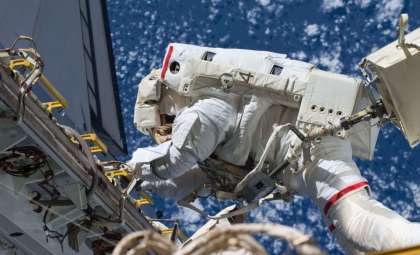
Meanwhile, Sophie Adenot tested a prototype of an internal spacesuit designed by ESA engineers. This new suit aims to enhance comfort and ease of use inside spacecraft, improvements that could be vital for efficiency on future exploratory voyages.
Jack Hathaway also contributed by working with samples in the Advanced Space Experiment Sample Processor-4, investigating how space conditions impact drug crystallization. This research may open avenues for novel pharmaceutical advancements and better medications.
NASA Emphasizes the ISS’s Role in Ensuring Astronaut Health
As stated by NASA, the numerous investigations aboard the station highlight its critical function as a testbed for human exploration beyond Earth. This unique environment enables the study of biological, technological, and environmental factors in ways unattainable on the ground.
Among these, medical research remains top priority, given that astronaut wellness is pivotal for the success of missions venturing beyond Earth orbit. Studies on clotting, immune systems, vision, nutrition, and drug development collectively work toward safer long-term space travel.
The station’s microgravity setting provides an unparalleled opportunity to observe human physiological adjustments when gravity is nearly absent. Each experiment contributes crucial knowledge for maintaining crew health on missions that could last months or even years.
- Categories:
- Science




0 comments
Sign in to Comment