
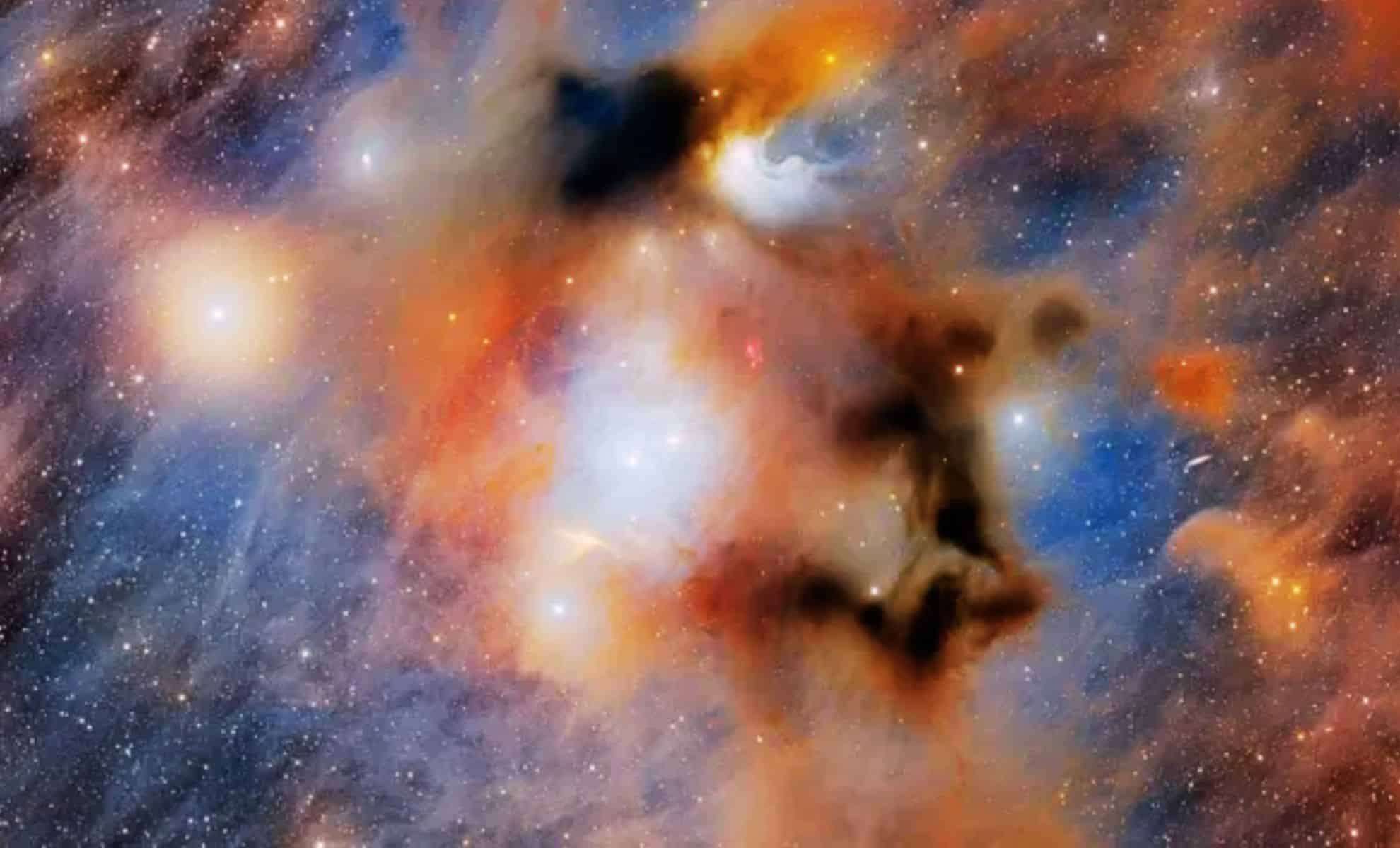
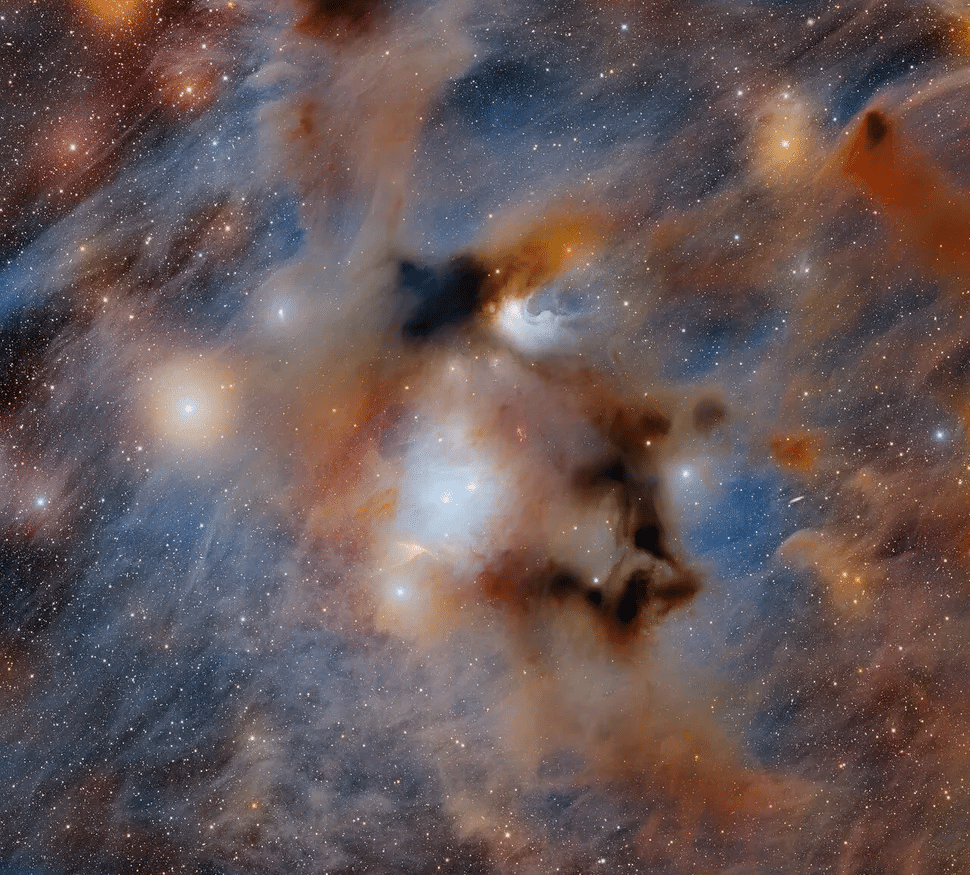
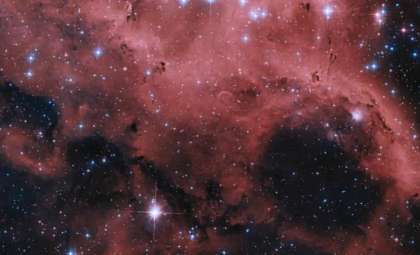
An extraordinary new image taken by the Dark Energy Camera (DECam) showcases the vibrant star-forming landscape of Chamaeleon I, one of the most active and striking stellar nurseries in the cosmos. Captured using the DECam on the Víctor M. Blanco 4-meter Telescope at Cerro Tololo Inter-American Observatory in Chile, this detailed image highlights the intricate structures of Chamaeleon I. Situated roughly 500 light-years from Earth, it is the nearest known region where stars are actively forming, giving scientists an exceptional window into how stars and planetary systems come to life. The camera’s expansive 570-megapixel sensor beautifully reveals young, luminous stars interacting with surrounding gas and dust clouds, enhancing our understanding of stellar genesis.
What Makes Chamaeleon I a Prime Stellar Nursery?
Beyond its captivating appearance, Chamaeleon I plays a vital role in stellar astronomy. This dense molecular cloud acts as a cradle for newborn stars, formed as hydrogen gas pockets collapse under gravity. Within this complex, many infant stars are found in early development stages amid clouds of gas and dust that belong to the greater Chamaeleon Complex, which includes regions experiencing various star formation phases.
The DECam image exposes these phenomena in remarkable clarity. Dark nebulae within Chamaeleon I contrast vividly against bright reflection nebulae, where interstellar dust and gas scatter light from surrounding fledgling stars. The most luminous nebulae, including Cederblad 111 and the smaller Cederblad 110, mark zones rich with star birth activity. The orange-hued Chamaeleon Infrared Nebula is particularly prominent, revealing energetic jets of material streaming from a newly formed star at its core.

The Role of Emerging Stars in Sculpting Their Surroundings
Stars do not simply materialize but develop through multiple evolutionary phases that significantly reshape their environments. In areas like Chamaeleon I, young stars expel powerful jets of material that carve cavities within the molecular clouds. These sculpted structures, such as the Chamaeleon Infrared Nebula, arise as gas is funneled out through the stars’ magnetic poles, showcasing the dynamic interaction between forming stars and their surroundings.
Additionally, Herbig-Haro objects—seen as small red glows in the image—highlight spots where ejected jets collide with the ambient gas and dust, creating luminous shock fronts. These features not only add beauty to the region but also deliver valuable clues about star formation, especially regarding how mass and energy are exchanged during the earliest stellar phases.
A Diverse Group of Young Stars in Chamaeleon I
The Chamaeleon I region hosts a rich population of young stars and brown dwarfs, with over 200 cataloged by astronomer Kevin Luhman in 2017. These celestial objects cluster into two main groups: one formed between 5 to 6 million years ago, the other around 3 to 4 million years ago. Many are low-mass red dwarfs—the most abundant star type in the Milky Way.
Studying these small stars provides crucial insights into stellar formation processes at the lower mass end of the spectrum. Despite their diminutive size, red dwarfs vastly outnumber other stars and serve as key indicators in understanding the future evolution of galactic star populations. The ongoing star formation within Chamaeleon I illustrates that even these common, less massive stars follow similar developmental paths as their larger counterparts.
Cosmic Influences Shaping Chamaeleon I
Chamaeleon I’s formation is shaped by larger galactic forces rather than chance. This complex lies at the boundary of the Local Bubble, a cavity in space formed by the shockwaves of several supernova explosions occurring over the past 20 million years. These explosive events swept away much of the surrounding gas, enabling the denser portions of the Chamaeleon Complex to collapse and ignite star formation.
This strategic location provides Chamaeleon I with the ideal combination of conditions—a dense molecular cloud conducive to gravitational collapse, coupled with the energetic aftermath of supernovae that help trigger and mold the birth of stars. These factors deepen astronomers’ comprehension of how star formation interconnects with the surrounding interstellar environment.
- Categories:
- News







0 comments
Sign in to Comment