
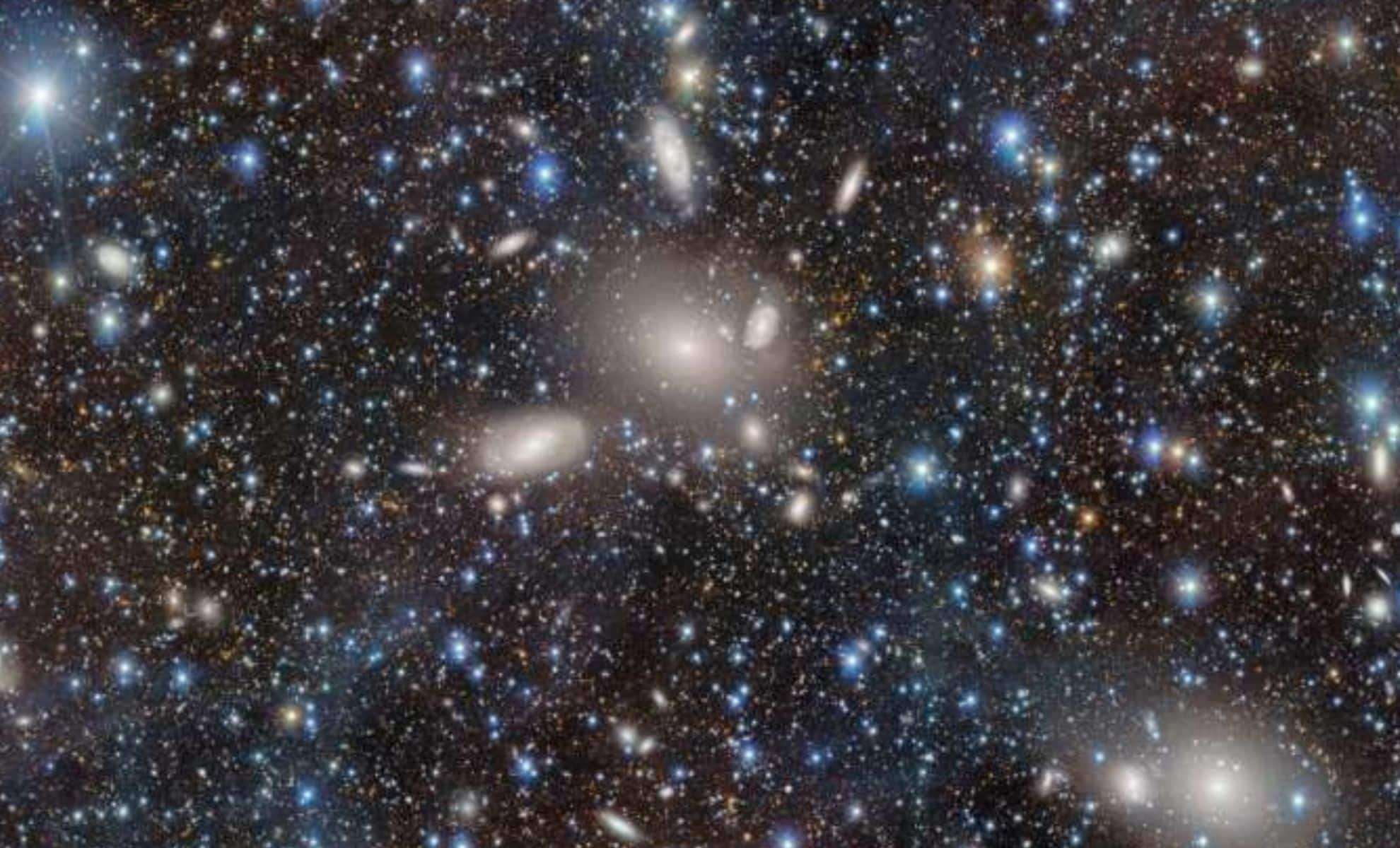
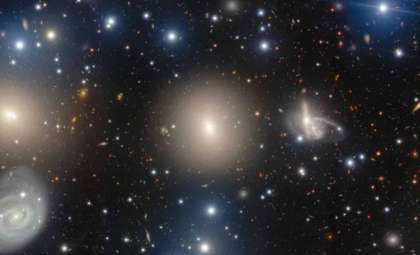
Using the remarkable Dark Energy Camera (DECam), astronomers have unveiled a breathtaking image of the Antlia Cluster, exposing hundreds of galaxies in stunning clarity. Situated roughly 130 million light-years from Earth, this vast cosmic assembly exemplifies the universe's incredible gravitational architecture. DECam, which boasts a 570-megapixel sensor and is installed on the Víctor M. Blanco 4-meter Telescope in Chile, has become a pivotal instrument for studying this cluster's significance in galactic development and the role of dark matter.
The Antlia Cluster comprises over 230 identified galaxies, featuring a variety of forms from giant ellipticals to diminutive dwarfs. It provides a detailed portrait of the complex interactions driving galaxy clusters, which are among the universe's largest formations. These clusters emerge as dark matter’s gravity pulls galaxies together, culminating in dense, massive systems. Antlia stands out as a vivid example of this cosmic gathering, displaying a rich assortment of galactic types with diverse structures and histories.
Delving Into the Cluster’s Makeup and Framework
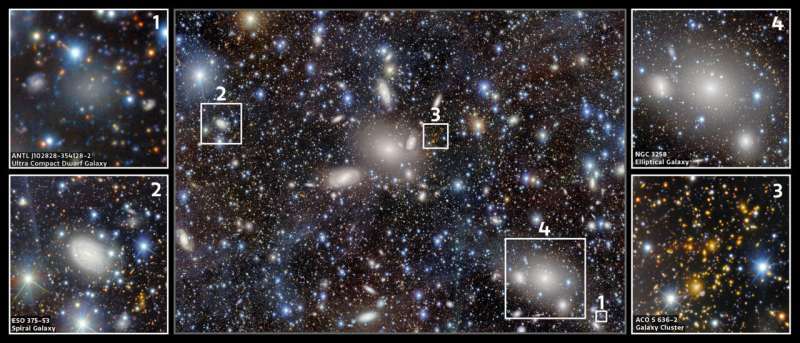
The Antlia Cluster is anchored by two dominant elliptical galaxies, NGC 3268 and NGC 3258. Encircling these colossal galaxies is a varied assembly of galaxy types that demonstrate the cluster’s complexity. Ellipticals, noted for their smooth shapes and lack of new star formation, coexist with lenticular galaxies—intermediate forms that exhibit minimal gas and star-forming activity. Furthermore, irregular and dwarf galaxies contribute to the cluster’s diversity, representing different phases in galactic evolution.

Rarer galaxies such as ultra-compact dwarfs and blue compact dwarfs also reside in the cluster. These small, faint galaxies offer valuable insights into galaxy formation in densely packed environments. Studies reveal that many of these dwarf galaxies contain substantial amounts of dark matter, which is essential for maintaining their cohesion and influencing their dynamics within the cluster.
X-ray data suggest the two central elliptical galaxies might be in the midst of merging. A distinct chain of globular clusters seen in this region supports this hypothesis. This merging activity could represent the gradual combination of smaller galactic groups in the cluster, highlighting the continuously changing nature of such cosmic systems.
Cutting-Edge Technology Illuminates New Cosmic Details
The extraordinary image of the Antlia Cluster was achieved thanks to DECam’s sophisticated imaging capabilities. Initially created for the Dark Energy Survey, this instrument excels at capturing faint celestial objects over expansive fields, propelling the analysis of galaxy clusters to new heights.
DECam’s deep sensitivity has uncovered characteristics of the Antlia Cluster previously unseen. It reveals faint intracluster light—diffuse glow generated by stars stripped from galaxies during gravitational encounters. This glow serves as a vital clue for studying galactic collisions and mapping dark matter’s influence within the cluster.
Alongside intracluster light, DECam’s refined imaging exposes intricate details about the cluster’s diverse galaxy population. This has empowered astronomers to chart the complex interplay among various galaxy types, delivering unprecedented insights into their evolution and interrelations.
Galaxy Clusters as Pillars of Cosmic Development
The Antlia Cluster offers an exceptional environment to explore the mechanisms driving galactic and cosmic evolution. Clusters like Antlia construct the universe's large-scale framework. Investigations into these clusters reveal how galaxies form, transform, merge, or disperse over billions of years.
They also provide a window into the nature of dark matter, an enigmatic component making up about 25% of the cosmos. By studying how light and mass are spread throughout clusters, astronomers infer dark matter’s presence and behavior. In Antlia, the observed gravitational interactions and the diffuse intracluster glow offer indirect yet compelling evidence of this elusive substance.
Moreover, the cluster houses vestiges of ancient cosmic phenomena, such as the Antlia Supernova Remnant discovered in 2002. This feature enriches our understanding of stellar life cycles and the influence of supernova explosions on their environment.
Pathways for Upcoming Exploration
The Antlia Cluster stands as a springboard for continued research into galaxy clusters and their cosmological roles. Future initiatives like the Vera C. Rubin Observatory’s Legacy Survey of Space and Time (LSST) are set to broaden these explorations. This ambitious survey will compile extensive data on thousands of clusters, allowing astronomers to contrast structures throughout the universe.
Such comparisons aim to enhance models of galaxy formation, interaction, and progression within clusters. They will also help decode dark matter’s contribution to the universe’s grand design. The LSST, in particular, will advance the mapping of faint intracluster light, facilitating more precise dark matter distribution studies.
Opening New Perspectives on the Cosmos
The remarkable Antlia Cluster images captured by DECam transcend mere artistry, serving as powerful scientific tools to decode the cosmos. Revealing the intricate processes within this cluster helps astronomers unravel fundamental cosmic mysteries.
With ongoing technological strides, discoveries like those in the Antlia Cluster will deepen our understanding of the universe’s complexity and splendor, highlighting the vast, interconnected cosmic structures we inhabit. This cluster’s rich galactic variety and evolving dynamics exemplify the universe’s vibrant and ever-changing essence.
- Categories:
- News






0 comments
Sign in to Comment