
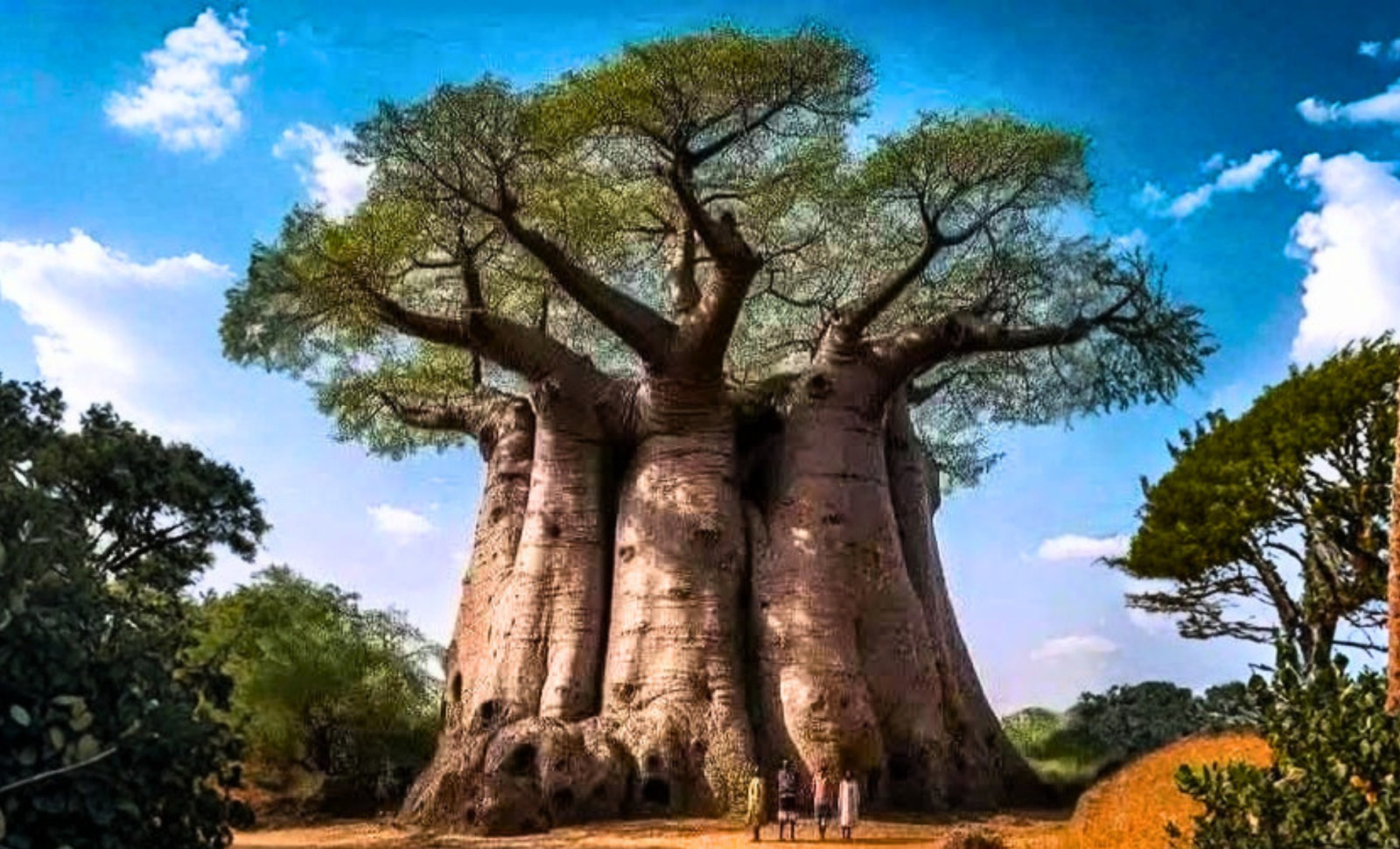
The baobab tree is capable of storing vast quantities of water within its bulbous trunk, causing its form to visibly transform with the seasons. In the arid savannahs of Africa, this remarkable adaptation has made the tree a symbol of resilience in environments where most large vegetation struggles to survive.
Scientifically recognized as Adansonia, baobabs are not merely ancient trees with immense trunks. They encompass a unique group of species distributed across Africa, Madagascar, and Australia, with some African trees estimated to be between 1,100 and 2,500 years old. Their narrative blends endurance, impressive stature, and unexpected vulnerability, as several of the largest baobabs recorded in modern times have collapsed or perished.
Water Storage at the Core of the Baobab
The most familiar species is the African baobab, Adansonia digitata, which is native to 32 countries across Africa’s dry expanses. In these harsh climates, its vast trunk serves not only as a distinct feature but also as a water reservoir, expanding during periods of rain.

The baobab genus includes eight species, six of which are endemic to Madagascar, while one thrives in north-western Australia. The Royal Botanic Gardens, Kew characterizes the baobab as a tree typical of dry environments, capturing its intimate relationship with arid habitats and challenges related to seasonal water scarcity.
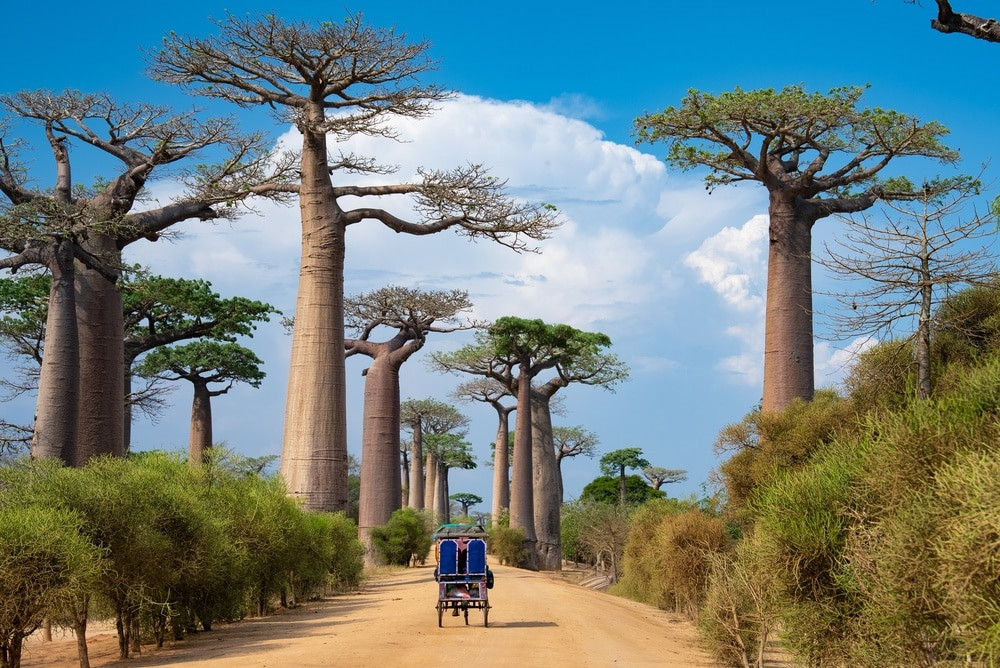
The sheer magnitude of fully grown baobabs is astonishing; some achieve heights of up to 30 meters and a trunk circumference reaching 50 meters. Their enlarged trunks offer sustenance and refuge for wildlife and local communities alike. In many savannah societies, people have relied on baobabs for shelter, nourishment, and water, often settling near these life-sustaining giants.
Baobabs also serve as living witnesses linking natural history with human settlement. They frequently stand near ancient sites, with archaeological findings indicating connections to early medieval or Portuguese eras. Although detailed records are sparse, it is evident that these majestic trees have long provided landmarks and meeting points for humans.
Sagole Big Tree Holds the Title for Largest Living Baobab
Presently, the largest living baobab is the Sagole Big Tree, located in Masisi, Vhembe, South Africa, near the border with Zimbabwe. As per Guinness World Records, recent assessments document its base spanning 60.6 square meters, with a height of 19.8 meters and a combined volume of wood and bark totaling 414 cubic meters.
Rather than being defined by height or mass alone, the baobab’s size is most notably measured by volume. Despite its massive proportions, the Sagole tree weighs approximately 54 tonnes in dry mass, which is modest compared to other giant trees. This is due to the exceptionally light nature of baobab wood, allowing an enormous structure without the corresponding heavy weight.
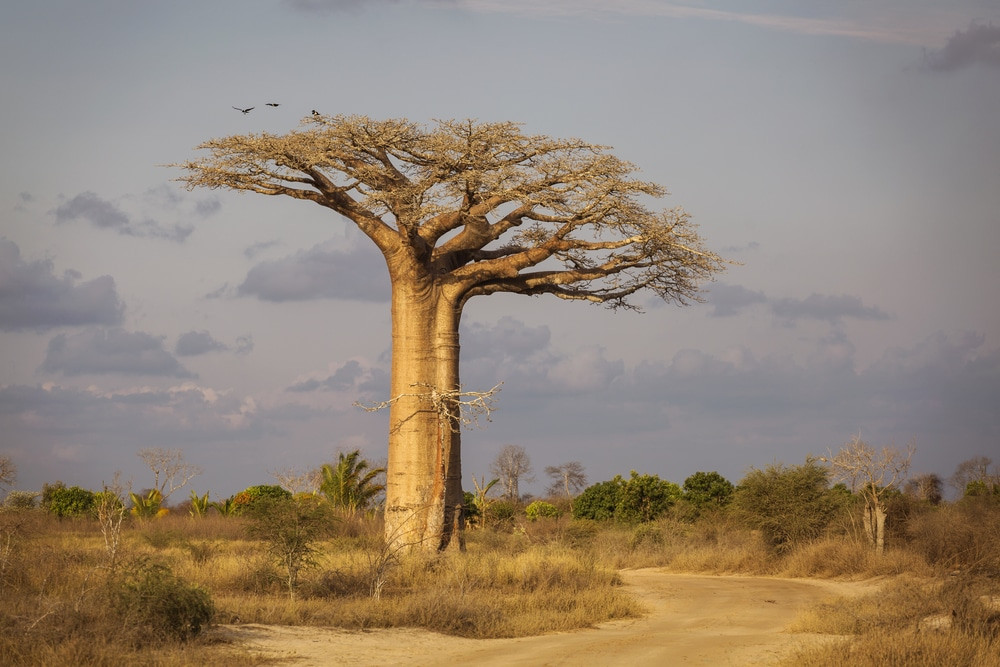
Sagole’s status as the record holder is also a testament to the loss of other giants. Larger or similarly sized baobabs have succumbed to collapse in recent years, making this record a dynamic snapshot rather than a permanent fixture.
Fallen Giants of Madagascar and South Africa
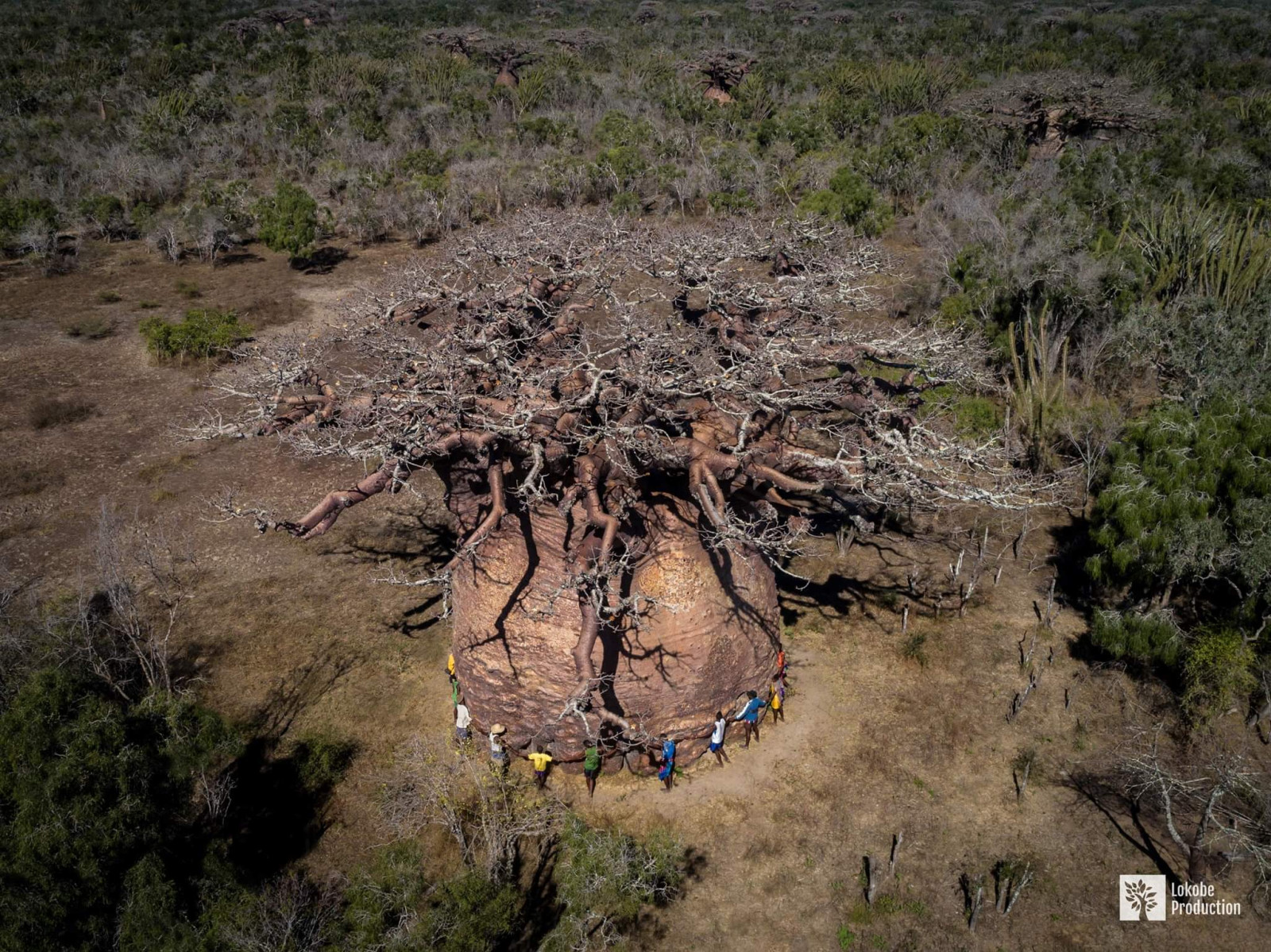
Before 2018, the largest baobab in existence was the revered Tsitakakoike Baobab, belonging to the endangered species Adansonia grandidieri. This tree resided near Andombiro in Madagascar’s Ambiky Forest. It had a compact, barrel-shaped trunk with a base coverage of 59.6 square meters.
Although shorter than Sagole at 14.6 meters, Tsitakakoike boasted a greater volume of 455 cubic meters—380 cubic meters from its trunk and an additional 75 from the canopy. Its dry aboveground mass was estimated at around 59 tonnes, further illustrating the disparity between bulk and weight in baobabs.
In February 2018, Tsitakakoike partially collapsed, leaving only about 40% of the tree intact. Although future collapse was anticipated, there is no confirmed follow-up in the source details. This event ended its reign as the largest living baobab and elevated Sagole to the top position in terms of volume.
Another monumental baobab, known as the Platland Tree or Sunland Tree, stood in Modjadjiskloof, South Africa. Throughout the 21st century, it featured a base area of 67.9 square meters, towering 18.9 meters tall with a total volume of 448 cubic meters. Unfortunately, it suffered significant collapse and died in 2016, preceding Tsitakakoike’s downfall.
The recurring theme of these losses challenges the common perception of baobabs as enduring symbols. A study published in Nature Plants explored the demise of some of the oldest and largest African baobabs, highlighting that even these colossal survivors can suffer structural failure after centuries of existence.
Massive Trees Composed of Extremely Lightweight Wood
One surprising aspect of the baobab is its wood’s exceptional lightness. While balsa wood is renowned among model builders for its low density of about 0.15 grams per cubic centimeter, baobab wood is even less dense, averaging around 0.13 grams per cubic centimeter.
This low density helps clarify why volume measurements are crucial in identifying the largest baobabs. Despite its substantial trunk and base, the Platland Tree’s estimated aboveground dry mass was only 58 tonnes. Before its partial collapse, Tsitakakoike had an estimated dry mass of 59 tonnes coupled with an immense volume of 455 cubic meters.
The difference becomes clear when comparing baobabs to Australia’s giant eucalyptus trees, which are often considered some of the largest hardwoods by weight. Baobabs distinguish themselves through their enormous, water-filled trunks and significantly lower wood density. Their impressive size reflects a combination of volume, structural engineering, and adaptation to survive dry habitats, rather than simply timber weight.
Currently, the Sagole Big Tree remains the largest living baobab recognized by volume, with a wood and bark volume of 414 cubic meters.
- Categories:
- News




0 comments
Sign in to Comment