
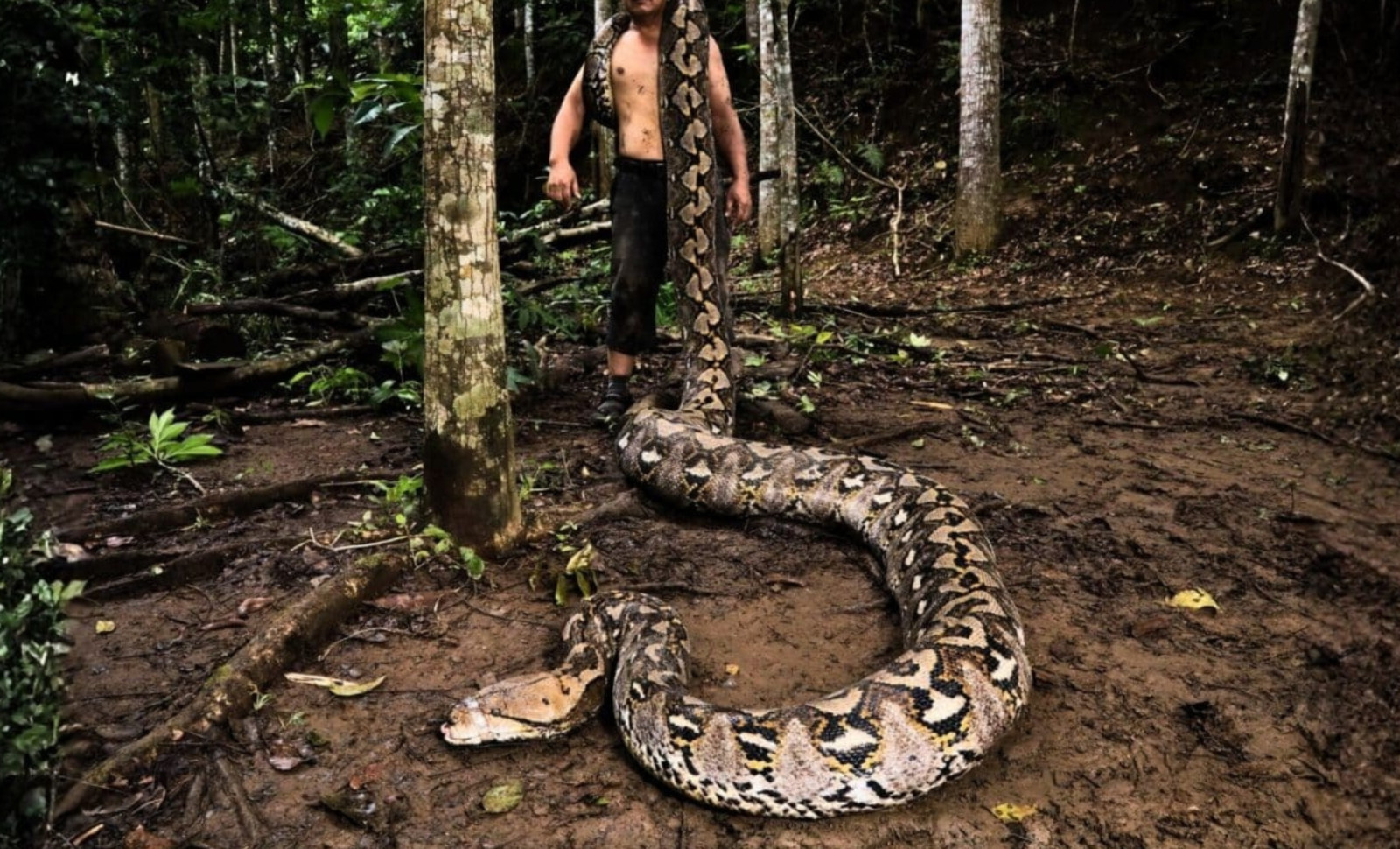
News had already spread throughout the Maros area of South Sulawesi about a snake that came with a reputation usually fraught with danger. She was a massive female living close enough to human settlements to be at risk. In Indonesia, pythons of this size often face threats of being killed, sold, or simply disappearing before anyone gets the opportunity to accurately gauge their true size.
When local conservationist Budi Purwanto took steps to protect the creature, the goal was not publicity but to ensure this rare python survived long enough for proper study. Photographer Radu Frentiu and wildlife guide Diaz Nugraha traveled to Sulawesi after hearing whispers of an enormous python, understanding that delaying might mean losing the chance to document her existence.
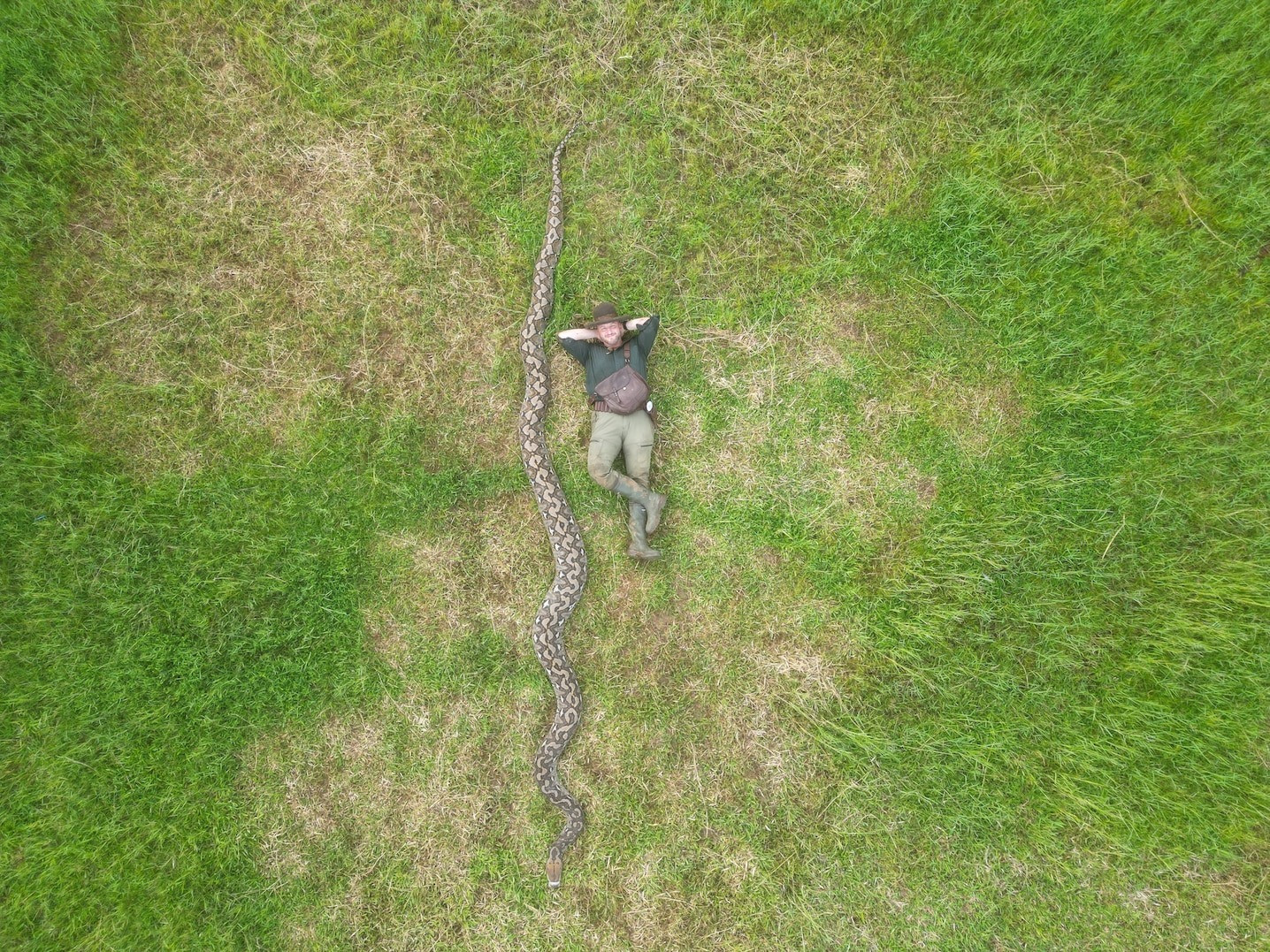
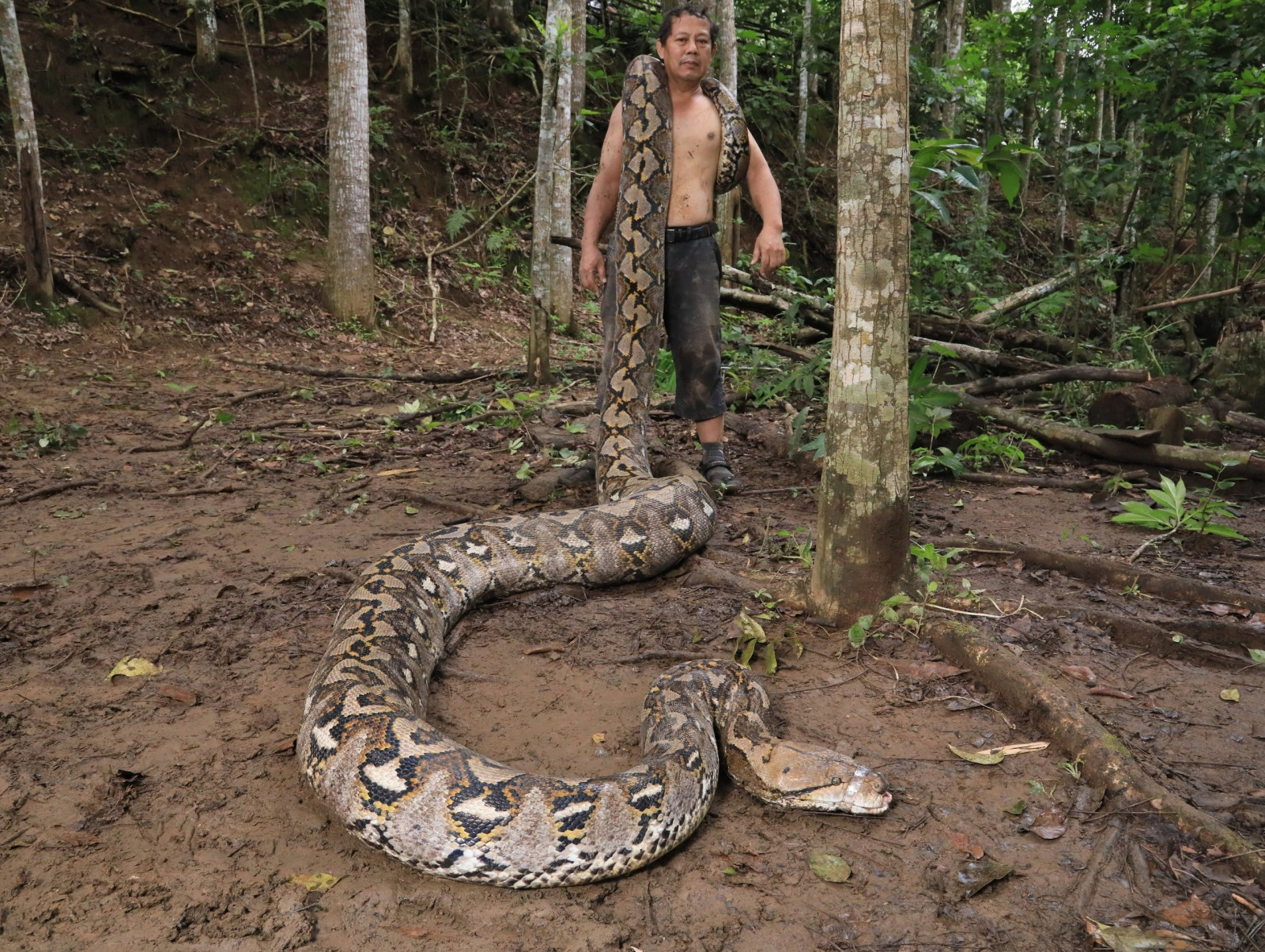
The team’s discovery was Ibu Baron, or “The Baroness,” a female reticulated python verified by the Guinness World Records as the longest wild snake ever officially measured. On January 18, 2026, with a surveyor’s tape and careful photo-video documentation, they recorded her length at 7.22 meters (23 feet 8 inches). Her weight was an impressive 96.5 kilograms (213 pounds), despite an empty stomach.

Long Before Records, She Made an Impact
While reticulated pythons hold the distinction of the world’s longest snake species, confirming record claims often proves difficult. Legends of snakes measuring 10 meters or more have circulated for many years, but these largely rely on anecdotal accounts or unverified specimens. What makes this case stand out is the solid proof supporting the measurement.
This evidence is especially crucial because giant snakes frequently become targets for exploitation. Frentiu shared with National Geographic that such creatures commonly disappear soon after discovery, often due to being prized possessions or unfortunate incidents. Ibu Baron's survival long enough for proper documentation earned her a place in official records.
The measurement itself was cautiously taken, with the tape following her natural posture while awake, not stretched or sedated. Guinness noted that if measured under anesthesia, when the snake’s muscles relax, she could stretch approximately 10 percent longer—putting her near 7.9 meters (26 feet). However, the organization emphasized sedation should only be used for health reasons rather than record-setting purposes. Frentiu echoed this by estimating sedation might extend her length by 10 to 15 percent.
Using a Team, a Sack, and a Scale to Document the Giant
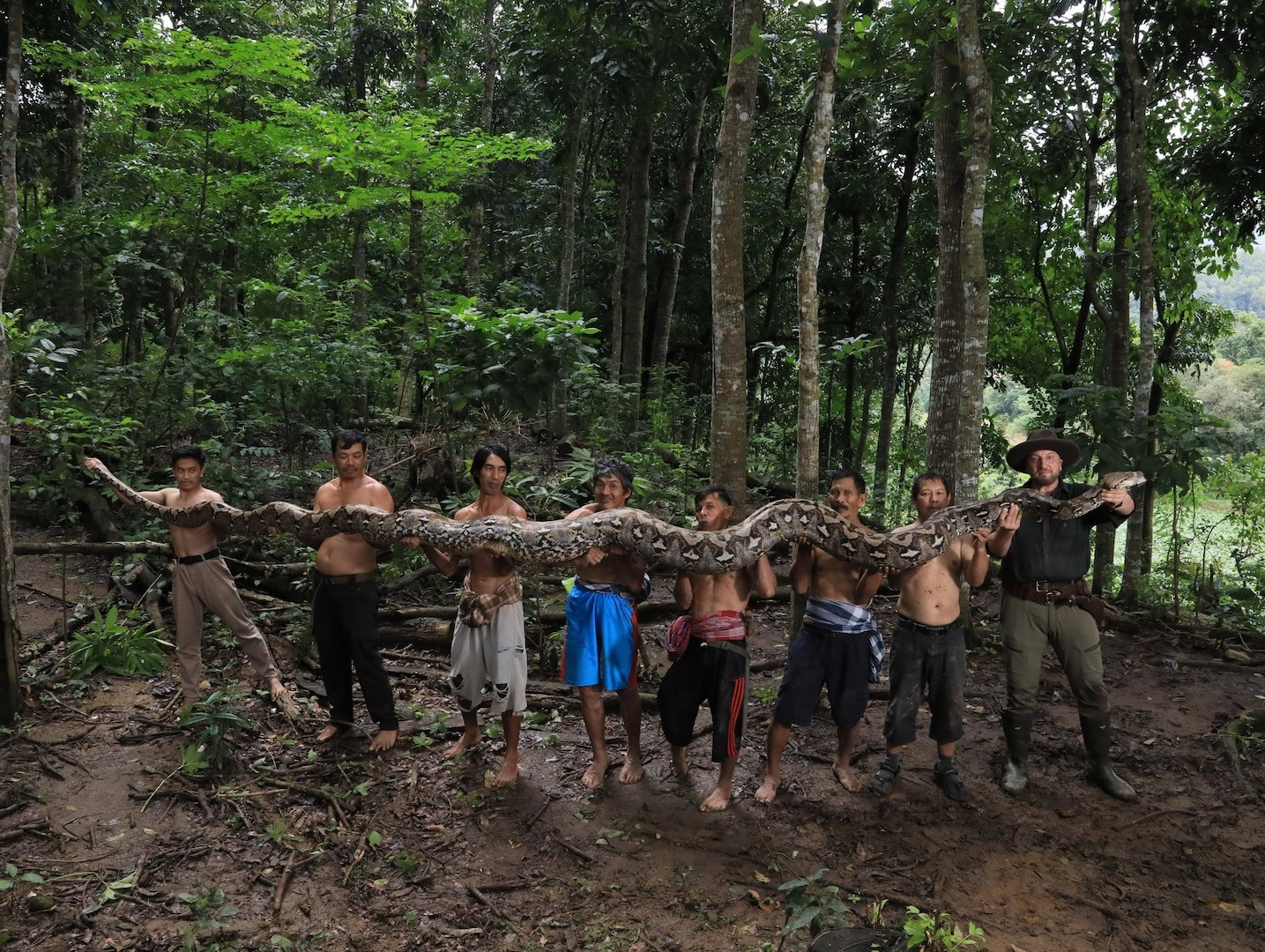
The physical nature of the documentation added weight to the story. Ibu Baron was weighed inside a large canvas sack with scales typically used for rice bags. Safely lifting her for group photos required at least eight people, underscoring her massive bulk visible even in pictures.
Frentiu described the snake more as a compact powerhouse than merely a long, thin creature; each coil represented concentrated strength. He also noted the python was sizable enough to consume a calf or even an adult cow, translating her enormity into relatable terms. Guinness restated this by highlighting that her length almost spanned the width of a standard FIFA soccer goal.
Despite the remarkable documentation, the team avoided making sweeping claims. Frentiu told National Geographic, “I don’t believe for a second this is the largest wild snake. I was fortunate.” Nugraha told Guinness that snakes over 9 meters may still be found, possibly in Indonesia. The claim is specific: the longest wild snake verified through rigorous measurement and documentation.
What Draws Such Giant Snakes Near Human Settlements?
Ibu Baron's story also reflects environmental pressures. Nugraha told Guinness sightings of giant snakes are increasing due to shrinking habitats and decreasing natural prey, exacerbated by poaching. National Geographic noted this dynamic across Indonesia, where loss of habitat and fewer prey animals push large snakes closer to farms and villages.
This proximity poses challenges for both snakes and humans. Although reticulated pythons are non-venomous, their size enables them to prey on livestock and occasionally threaten human safety. Fear often leads to the snake’s premature death. Additionally, they are targeted for bushmeat and illegal wildlife trade, further contributing to their scarcity and making documented sightings exceptionally rare.
Thanks to Purwanto’s intervention, this narrative took a hopeful turn. Instead of being killed or sold, Ibu Baron was taken in and cared for in a shelter alongside other rescues. The team including Frentiu, Nugraha, and Purwanto hopes that Guinness World Records recognition will inspire local communities to value and protect such remarkable creatures — whether for conservation efforts, cultural pride, or wildlife tourism.
- Categories:
- News









0 comments
Sign in to Comment