
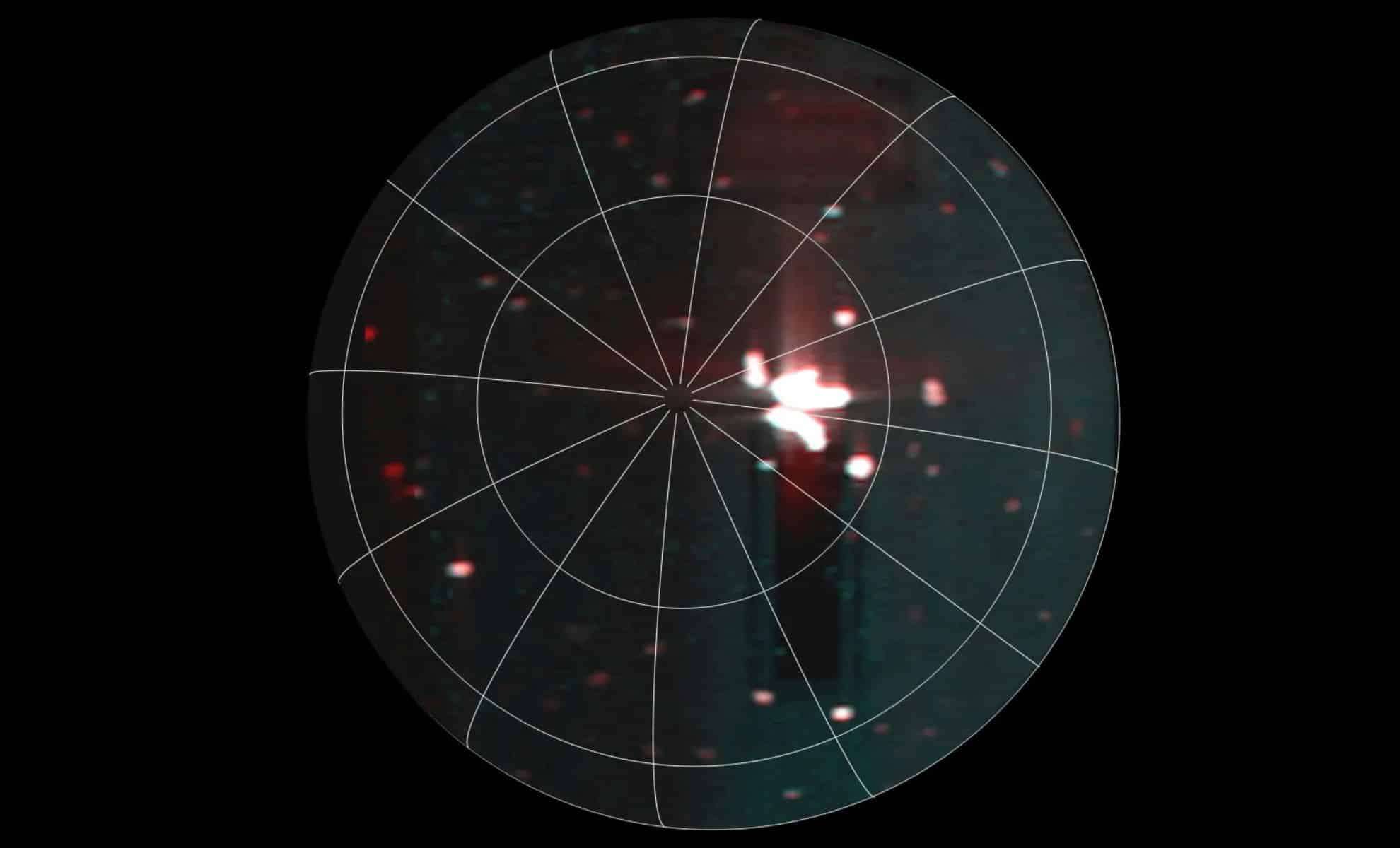
NASA's Juno spacecraft has documented the most intense volcanic explosion ever observed on Io, Jupiter’s volcanically active moon. Despite Io’s reputation for relentless volcanic activity—with over 400 active volcanoes continuously reshaping its terrain—this recent phenomenon stands out as the most powerful display yet. The eruption, spotted in the moon’s southern hemisphere, was so extreme that it caused the infrared sensors on Juno’s Jovian Infrared Auroral Mapper (JIRAM) to max out.
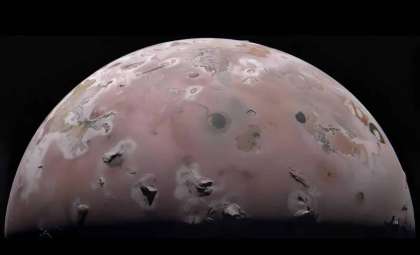
Similar in size to Earth’s Moon, Io holds the title of the solar system’s most volcanically vibrant object, driven by the immense gravitational forces from Jupiter. These tidal forces generate internal friction, which powers ongoing volcanic eruptions. The detection of a massive new volcanic hotspot covering more than 100,000 square kilometers (40,000 square miles)—an area almost as vast as Iceland—has offered unparalleled insights into the moon’s subterranean volcanic dynamics.
Data from Juno’s recent encounters reveal that this eruption is unprecedented, lending support to the theory that Io’s volcanic activity stems from extensive, interconnected magma chambers beneath its crust. These findings have the potential to radically enhance our understanding of volcanic processes both on Io and across other celestial bodies.

In-Depth Flybys Uncover Io’s Extraordinary Volcanism
NASA’s Juno probe, initially launched to investigate Jupiter’s atmosphere and magnetic environment, has yielded some of the most comprehensive investigations of Io’s volcanic activity since its mission expanded to include Jupiter’s moons. While prior close flybys in December 2023 and February 2024—passing within 930 miles (1,500 kilometers) of Io’s surface—had already uncovered remarkable volcanic phenomena, the flyby on December 27, 2024, conducted from a distance of 46,200 miles (74,400 kilometers), detected an even more extraordinary event.
“Juno performed two remarkably close flybys of Io during its extended mission,” stated Scott Bolton, Juno’s principal investigator at the Southwest Research Institute. “Each flyby delivered data that surpassed our expectations, but this latest, despite being from farther away, truly astonished us. This is the most intense volcanic event ever identified on the solar system’s most volcanic world—that’s a remarkable milestone.”
The sheer strength of this eruption stunned the research team. The hotspot recorded by the JIRAM instrument was so bright in infrared that it saturated the sensor onboard, a rare occurrence in planetary science. This suggests the eruption comprises not a solitary event but a succession of closely spaced volcanic blasts, likely fed by an enormous subterranean magma reservoir.
Understanding Io’s Volcanic Inferno
Io’s explosive volcanism is powered by tidal heating, a process where Jupiter’s colossal gravitational pull repeatedly compresses and stretches the moon during its orbit. This mechanical stress generates intense internal friction, melting material below the surface and fueling relentless volcanic outpourings. Unlike Earth’s volcanism, predominantly driven by localized mantle plumes, Io’s volcanic systems appear connected through vast networks of magma chambers beneath the crust.
Alessandro Mura, a Juno co-investigator affiliated with the National Institute for Astrophysics in Rome, emphasized the eruption’s magnitude: “JIRAM detected extraordinarily strong infrared emissions—indicative of a massive hotspot—in Io’s southern hemisphere that fully saturated our detectors. Our evidence shows this intense activity results from multiple, nearby hotspots emitting simultaneously, pointing to the presence of an extensive subsurface magma chamber system. These observations mark the most powerful volcanic eruption ever documented on Io.”
This new data suggests that Io’s volcanic outbursts may be sequentially triggered rather than isolated, akin to cascading earthquakes caused by deeper geological dynamics. Such an enormous magmatic network implies that Io’s volcanic processes could be far more interconnected than previously understood.
Implications for Planetary Volcanology
The enormity and intensity of Io’s recent eruption carry significant implications for the study of volcanism throughout the solar system. By deepening our grasp of the internal mechanisms shaping Io’s volatile surface, scientists may unlock parallels applicable to volcanic activity on other worlds—from the lava plains of Venus to icy cryovolcanism on Enceladus, Saturn’s moon.
Scott Bolton stressed the broader impact: “Observing a new record-setting hotspot is thrilling, but it potentially advances our understanding of volcanic phenomena beyond Io. This discovery could enhance models of volcanism applicable across various planetary environments.”
If Io’s volcanism is governed by extensive, linked magma chambers, this could serve as a new framework to decode eruption dynamics on rocky planets and moons elsewhere in the cosmos.
Future Observations and Research
NASA’s Juno mission will continue its exploration of Io, with a flyby scheduled for March 3, 2025. This upcoming pass will help scientists track changes in the recently identified hotspot and observe any surface alterations caused by the eruption. Researchers anticipate enduring geological evidence such as:
- Widespread pyroclastic material—volcanic rock fragments scattered over the terrain
- Expanding lava flows potentially emerging from subterranean fissures
- Sulfur-rich volcanic plumes affecting Io’s tenuous atmosphere
Complementary observations from Earth-based telescopes may also provide additional perspectives on the eruption’s aftermath.
Through Juno’s ongoing data collection, scientists are gaining unprecedented insights into Io’s violent volcanic environment. Whether this massive eruption is a rare incident or part of a broader volcanic cycle, one fact remains: Io’s fiery landscape is more extreme than ever imagined.
Advancing the Study of Volcanic Worlds
With this record-breaking observation, NASA’s Juno mission has once again expanded the boundaries of planetary science, highlighting the largest volcanic eruption ever witnessed on Io. The findings shed light on the mechanisms powering this fiery moon and deepen our comprehension of planetary evolution across the solar system. As additional analysis continues and future flybys approach, the discoveries from Io promise to reshape how we understand volcanism on Earth and beyond.
Scientists eagerly await further revelations from Juno, confident that Io remains a captivating world of relentless volcanic activity.
- Categories:
- News






0 comments
Sign in to Comment