
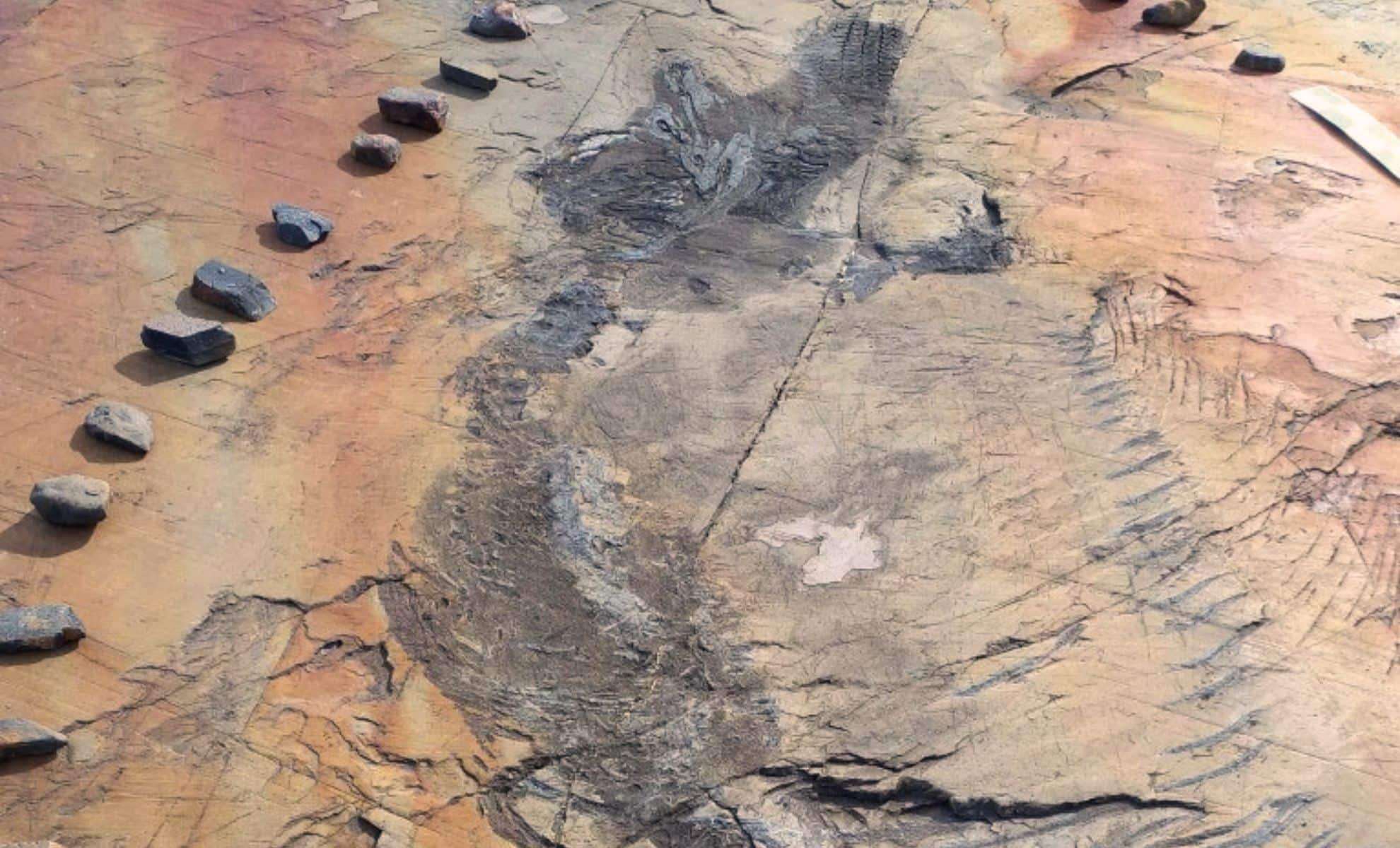
A remarkable paleontological finding in southern Chile has unveiled the first fully preserved pregnant ichthyosaur fossil dating back to the Early Cretaceous period. This specimen, nicknamed Fiona, was excavated near the Tyndall Glacier within Torres del Paine National Park and identified as Myobradypterygius hauthali.
Detailed in a recent publication in the Journal of Vertebrate Paleontology, this discovery provides fresh insights into the reproductive biology, behavioral ecology, and evolutionary strategies of ichthyosaurs during a pivotal epoch in Earth's geological timeline.
Patagonia's Ancient Nursery Revealed
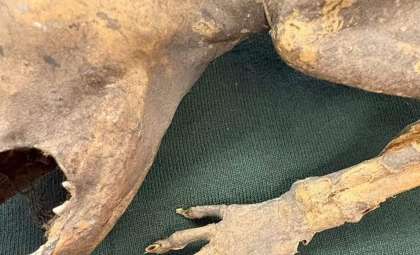
Fiona spans nearly 13 feet in length and was impeccably preserved across five rock fragments. Excavations uncovered an approximately 20-inch-long fetus inside her, positioned as if ready for delivery, establishing this as the first documented pregnant ichthyosaur fossil from the Hauterivian stage of the early Cretaceous, roughly 131 million years ago.

The excavation area, dubbed the "sea dragon graveyard," has produced 88 ichthyosaur fossils, predominantly adults and neonates, indicating that this locality likely served as a protected breeding ground. The abundance of specimens alongside a lack of competing predators suggests favorable environmental conditions and rich food availability, ideal for reproduction.
"The duration of their stay remains uncertain, but we know newborn mortality was very high during their initial days," explained Judith Pardo-Pérez, affiliated with the University of Magallanes and the Cabo de Hornos International Center (CHIC).
Scientists propose that Myobradypterygius hauthali may have migrated seasonally to the Magallanes area of Chilean Patagonia for birthing, although their entire migratory habits are yet to be fully understood.
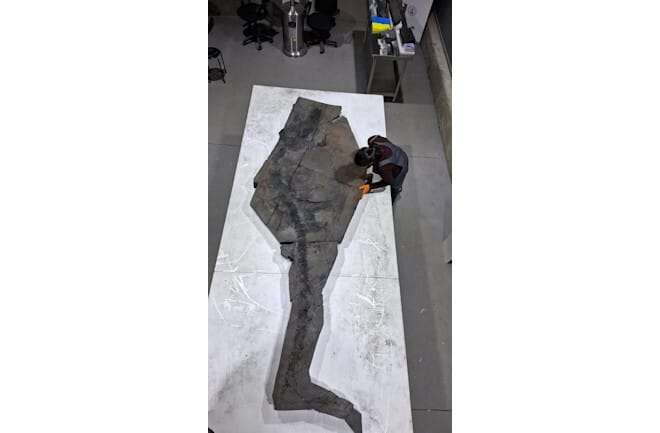
Insights into Marine Life During an Era of Environmental Turmoil
The Hauterivian period was marked by profound global transformations, involving the splitting of continents, pronounced volcanic eruptions, and severe oceanic anoxic events where vast ocean regions experienced oxygen depletion. Fiona’s fossil context offers vital evidence on how ancient marine vertebrates survived these extreme environmental stresses.
Geologist Matthew Malkowski highlights that rapid burial by underwater landslides and turbidity flows contributed to the exceptional preservation of these creatures. However, ongoing glacier recession now exposes these fossils to weathering and degradation, threatening their survival. This contrast underscores how climate change simultaneously uncovers and imperils critical records of Earth’s distant past.
Remarkable Similarities Between Ichthyosaurs and Dolphins
Though ichthyosaurs bore a striking dolphin-like silhouette, they are unrelated to current marine mammals. These aquatic reptiles evolved from terrestrial ancestors around 250 million years ago, adapting features such as limb modification into flippers, crescent-shaped tails for propulsion, and streamlined bodies optimized to reduce water resistance.
Unlike modern dolphins, ichthyosaurs retained their hind flippers, signaling their land-based lineage. "Their evolution occurred over a different timeline compared to dolphins," noted Pardo-Pérez. "Yet, the morphological similarities are a stunning example of convergent evolution."
Research on Fiona confirms that ichthyosaurs shared key reproductive adaptations with whales and dolphins, including live birth and a thick insulating layer of blubber to regulate body temperature in cold marine environments.
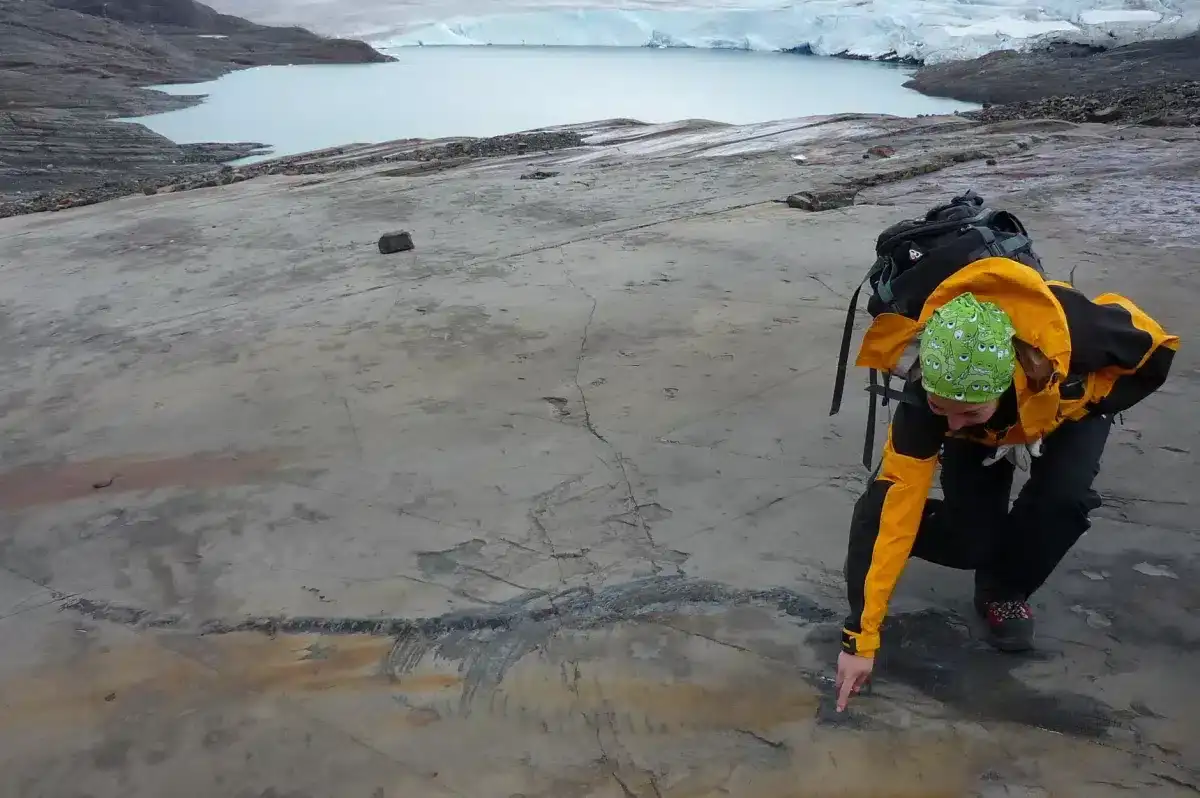
Glacial Melt Threatens Precious Fossil Treasures
Fiona’s discovery is as much about scientific progress as it is a call for conservation. The glaciers that protected these fossils for millennia are rapidly dwindling due to climate change, leaving invaluable paleontological sites vulnerable to natural damage. Processes like freeze-thaw cycles, wind erosion, precipitation, and invasive plant roots risk annihilating these irreplaceable specimens.
Paleontologist Erin Maxwell cautions that "while climatic warming has facilitated fossil study, continuing temperature rises will ultimately jeopardize their preservation." Fiona’s fossil stands as both a remarkable scientific asset and a poignant symbol of the fragile relationship between Earth’s climate and the safeguarding of its prehistoric heritage.
- Categories:
- News




0 comments
Sign in to Comment